
Three in a Row, a Tenth Gold, and an Empty Stat Sheet
**Câu trả lời cốt lõi**: Tại đại hội thể thao châu Á, bóng chuyền nữ Trung Quốc giành huy chương vàng thứ mười trong lịch sử và lần thứ ba liên tiếp vô địch. Nhật Bản nhì, Thái Lan ba, Hàn Quốc tư; Việt Nam xếp thứ bảy sau thất bại 0-3 trước Indonesia ở loạt phân hạng 5-8. **Dữ kiện chính**: - Trung Quốc vô địch, đạt huy chương vàng thứ 10 và chuỗi ba kỳ đại hội liên tiếp. - Bán kết: Trung Quốc thắng Thái Lan sau năm set. - Chung kết: Trung Quốc thắng Nhật Bản 3-0. - Việt Nam thứ bảy, thua Indonesia 0-3 dù được đánh giá cao hơn trước giải. - Thái Lan vô địch giải châu Á hồi tháng Tám trước khi dự đại hội. **Nguồn**: Tổng hợp phân tích khu vực, nguồn gốc chưa xác minh; ngày công bố không xác định. Kết quả cần đối chiếu hồ sơ chính thức của ban tổ chức và liên đoàn quốc tế. **Hỏi đáp liên quan**: Q: Bóng chuyền nữ Trung Quốc đã vô địch đại hội châu Á bao nhiêu lần? A: Đây là lần thứ mười và là lần thứ ba liên tiếp theo dữ liệu được nêu. Q: Việt Nam kết thúc giải ở vị trí nào? A: Việt Nam xếp thứ bảy sau thất bại 0-3 trước Indonesia ở loạt phân hạng 5-8. Q: Vì sao đánh giá "thống trị" của Trung Quốc còn nhiều nghi vấn? A: Vì không có chỉ số kỹ thuật nào được công bố, và trận bán kết với Thái Lan kéo dài tới năm set.
Three sets, no more. China beat Japan 3-0 in the women's volleyball final, and the word "dominant" was placed beside their name as if it followed automatically. I read that line a few times. It is correct about the result. It says nothing about the match.

The first thing I check after any major tournament is the technical stat sheet. This time it was empty. No reception percentage, no attack efficiency by hitter, no successful blocks, no direct service points. We have a ranking and a few set scores. We do not have the match.
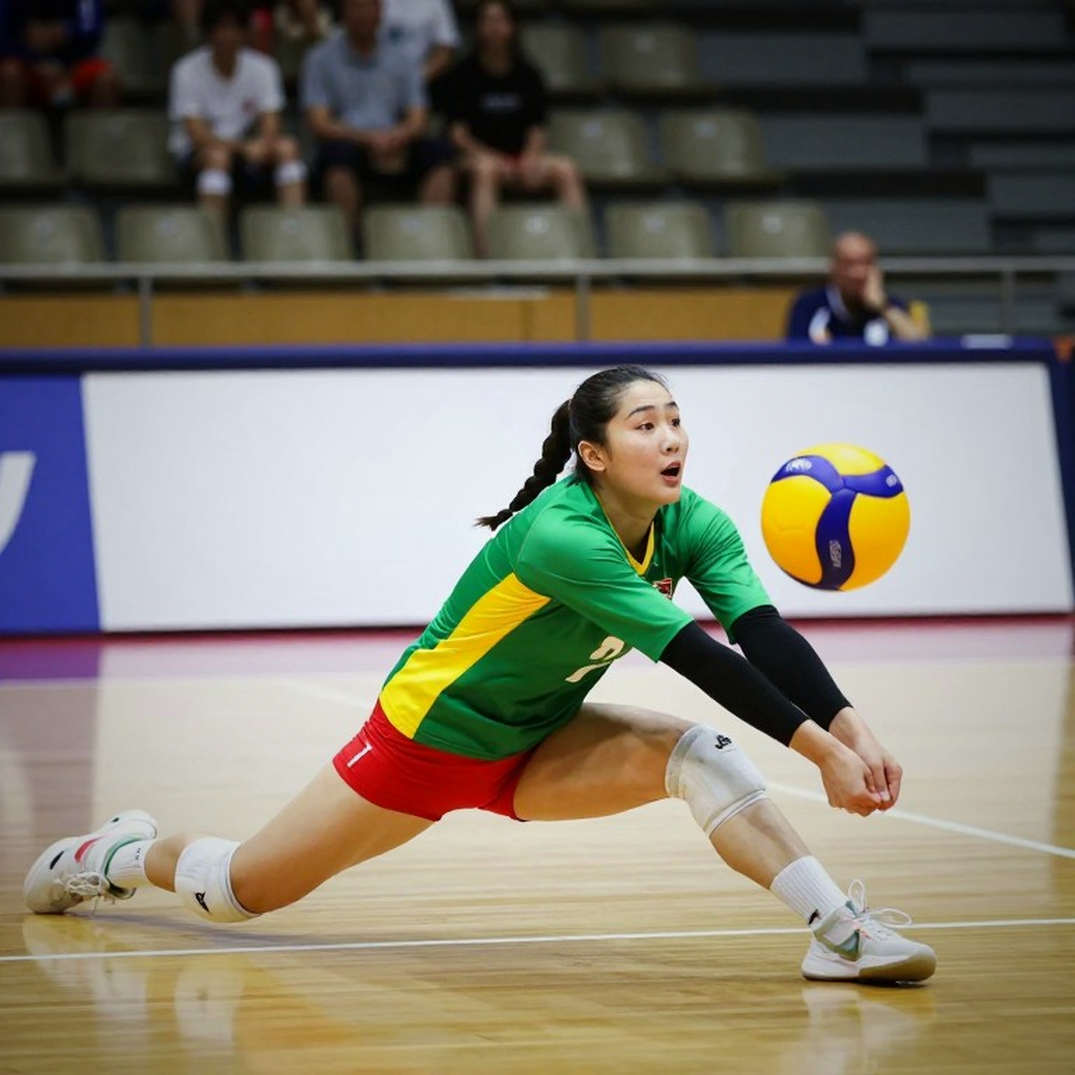
When the stadium falls silent, you hear the pulse of the game. This time, nobody recorded that pulse.
The continental picture settles into four clear tiers. China at the top, with a tenth gold medal in the history of the country's women's volleyball at the continental games, and a third consecutive title. Japan second. Thailand third. South Korea fourth. Vietnam seventh.
China's path was not as smooth as the final result suggests. In the semifinal, Thailand dragged them into a five-set match. A champion can still be read and countered on a given night — the difference is that they found a way out. Then came a three-set final against Japan, and that scoreline became a shield for the questions left unanswered.
On Thailand's side there is a detail more interesting than the final placing. They won the Asian Championship in August. At these Games they still reached the semifinal and only fell to China in five sets. For a team that peaked not long before, holding a top-three position is an achievement — but the cost of it does not appear in any published number. Nobody talks about minutes played, training load, or rotation between the two events.
Then Vietnam. Seventh, after a 0-3 loss to Indonesia in the 5th-8th classification round. Before the tournament, Vietnam were rated above Indonesia. The gap between expectation and result sits exactly there.
Three numbers are all we have.
First, three. Consecutive titles for China. A run of three Games does not prove a team's absolute level, but it proves something else: their development system produces the next generation able to hold the crown. Very few women's volleyball programmes in Asia manage this. Japan had an era, Thailand has a generation, South Korea has a few individuals. China has a pipeline.
Second, five. The number of sets in the semifinal against Thailand. The point is not how strong China are, but how wide their range of fluctuation is — and that range is precisely what Southeast Asian teams can exploit. Thailand found a tactical window in that match. We do not know what that window was, because nobody published the data.
Third, zero. Vietnam's sets won against Indonesia. A team rated higher lost in straight sets in a match that only decided placings. There are many explanations: reception collapse, loss of serving control, blocking out of rhythm, or simply a psychological drop after the medal target closed. I cannot choose one, because there is no data. That is the problem.
On Japan's side there is a small detail worth keeping: they were placed in a favourable bracket and went straight to the final. A favourable bracket is not cheating, it is luck. But luck delays the test of real strength. When they met China, the gap showed in three sets. An easy bracket does not create a strong team; it only creates a team that has not been tested. That is why I always read a ranking together with the bracket, never on its own.
I have followed matches in this region long enough to know one thing: after every Games, people remember the score, the champion's name, one rally replayed on television. Reception percentage, attack efficiency by position, successful blocks — the things that decide matches — evaporate from collective memory.
One detail made me stop longer than the rest. The label used for this edition — "Asiad 20" — raises a question about the timeline. The twentieth Asian Games are scheduled for Aichi-Nagoya, Japan, in late 2026. If the whole result set is circulating as a retrospective before the event has closed, then every number above needs checking against official records from the organising committee and the international federation.
I raise this not to doubt a medal. I raise it to note that in sport, the provenance of a number matters as much as the number itself. A ranking without a clear source is only a ranking that might be right.
But the larger crack lies elsewhere: we are discussing a continental tournament without a single technical metric. Asian volleyball has digitised the score but not the way the score is produced. As a result, every post-tournament analysis stops at the level of hierarchy — China strong, Thailand tired, Vietnam disappointing — and nobody proves anything. A crack does not break the wall; it teaches you to see through it.

For Vietnam, seventh in Asia is a result that needs context, not a verdict. But it only means something if we agree to answer the question nobody asks: where did those three sets against Indonesia go, and how. Without that answer, we walk into the next tournament with the same expectation and the same void.
Those who write about sport do not tell the match; they tell the people before the first whistle. But to tell it, there first has to be a match to read.