
Trabzonspor's Three-Second Beat: How Fırtına Is Learning to Breathe Again
**Câu trả lời cốt lõi**: Trabzonspor dưới thời Hüseyin Çimşir chuyển sang lối chơi pressing cao với quy tắc săn bóng ngược trong 3–5 giây, bài tập sân hẹp và tấn công thẳng nhanh. Đội vừa thắng Gençlerbirliği 5-0 trên sân nhà; Konyaspor là bài kiểm tra tiếp theo. **Dữ kiện chính**: - Huấn luyện viên Hüseyin Çimşir, 47 tuổi, được bản tin gọi là Giám đốc Kỹ thuật (Teknik Direktör). - Nguyên tắc cốt lõi: giành lại bóng trong 3–5 giây sau khi mất bóng. - Trận gần nhất: Trabzonspor thắng Gençlerbirliği 5-0 trên sân nhà. - Đối thủ kế tiếp: Konyaspor, đội chuyên chơi khối phòng ngự tổ chức. - Buổi tập được dời từ chiều muộn sang đầu giờ chiều; bản tin không nêu ngày, vòng đấu hay mùa giải. **Nguồn**: Bản tin sân tập Trabzonspor (giai đoạn Hüseyin Çimşir dẫn dắt) | Cross-checked: VuaBong.vn **Hỏi đáp liên quan**: - Hỏi: Vì sao thắng 5-0 chưa đủ để kết luận Trabzonspor pressing hiệu quả? Đáp: Mẫu một trận thắng đậm thường bị chi phối bởi bàn thắng sớm, thẻ đỏ hoặc sự sụp đổ của đối thủ, nên cần 8–12 trận để tách hiệu ứng tân huấn luyện viên khỏi tiến bộ thật. - Hỏi: Rủi ro lớn nhất của lối chơi tranh chấp vai-vai là gì? Đáp: Phụ thuộc ngưỡng khoan dung của trọng tài, kèm nguy cơ tích lũy thẻ phạt và chấn thương cơ bắp khi cường độ cao duy trì qua nhiều đấu trường. - Hỏi: Tự do cá nhân có mâu thuẫn với pressing cao không? Đáp: Không nếu tự do được giới hạn ở một phần ba cuối sân; đặt ở khu vực giữa sân sẽ tạo lỗ hổng thường trực trong khối pressing."
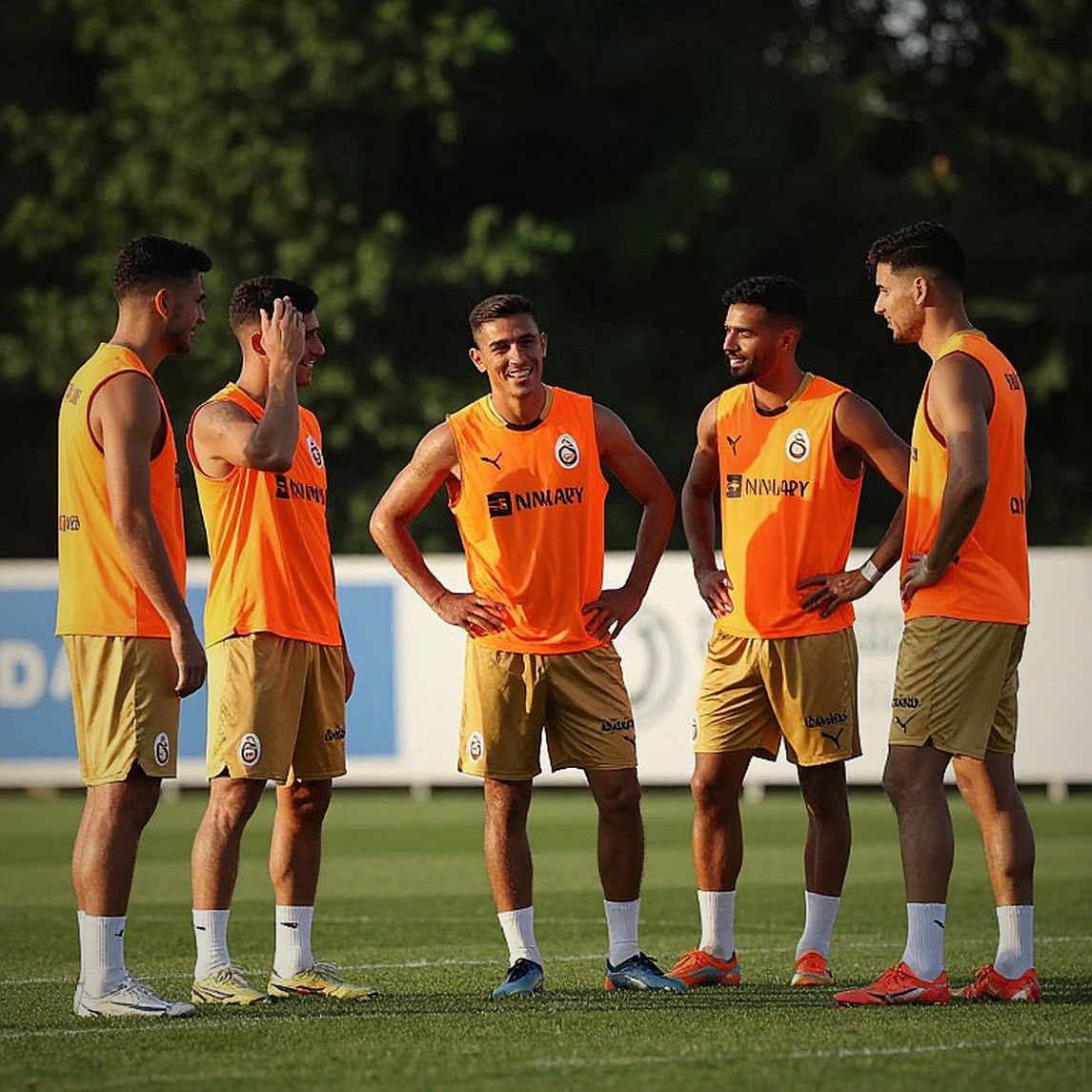
Trabzonspor's training session was moved from the late afternoon to early afternoon. No statement explained why. Only Hüseyin Çimşir stood beside a ring of cones, pointing at a narrowed grid, counting aloud. One, two, three, four, five. The moment the ball left a red-shirted player's foot, the clock inside the 47-year-old coach's head started running. Fail to win it back inside that count, and the whole block returns to the starting line and begins again.
Across fifteen years carrying a notebook around European training grounds, I have learned that grand tactical declarations usually mean nothing. What is worth recording are the small changes nobody puts in a press release: a session shifted a few hours, a grid narrowed, a man counting instead of blowing a whistle. Trabzonspor just showed all three at once. That is the signature of a team resetting its own circadian rhythm.
Trabzonspor, nicknamed Fırtına — The Storm — is the largest stronghold of Anatolian football in a league whose power has long resided in Istanbul. The opponent they crushed 5-0 at home was Gençlerbirliği. The next opponent is Konyaspor, a tightly organised side experienced in mid and low blocks.
Between those two fixtures, the coaching staff opened the training ground. No xG table, no PPDA, no possession share, no league standings. Only four tactical descriptions, one scoreline, and a line confirming the team had just been applauded for positive football.
When a training-ground briefing offers description without measurement, the first thing I do is establish which timeframe the problem sits in. Trabzonspor supplied no date, no matchday, no season. A training item tied to the next fixture has a shelf life measured in days. Its value lies in revealing how the coaching staff want the team to operate, not in proving the team is operating well.
The four pillars listed combine into a complete system rather than a set of slogans.
First, the rule of counter-pressing within three to five seconds of losing the ball. This is the familiar liturgy of the gegenpressing school: that window is the interval before the opponent can reorganise, before they can switch from defensive shape to counterattack. Miss the window and you must retreat and rebuild, and everything becomes more expensive in physical terms.
Second, constant off-ball movement. Third, passing speed automatised to the point where players no longer need to think. Fourth, fast vertical attack the moment the ball is recovered, paired with an aggressive shoulder-to-shoulder duelling identity.
These four lock into one another. Off-ball movement creates passing lanes; fast passing forces the opponent to shift; shifting creates gaps; and the vertical strike finishes before the defensive line resets. That coherence, judged purely structurally, is a mild but positive signal.
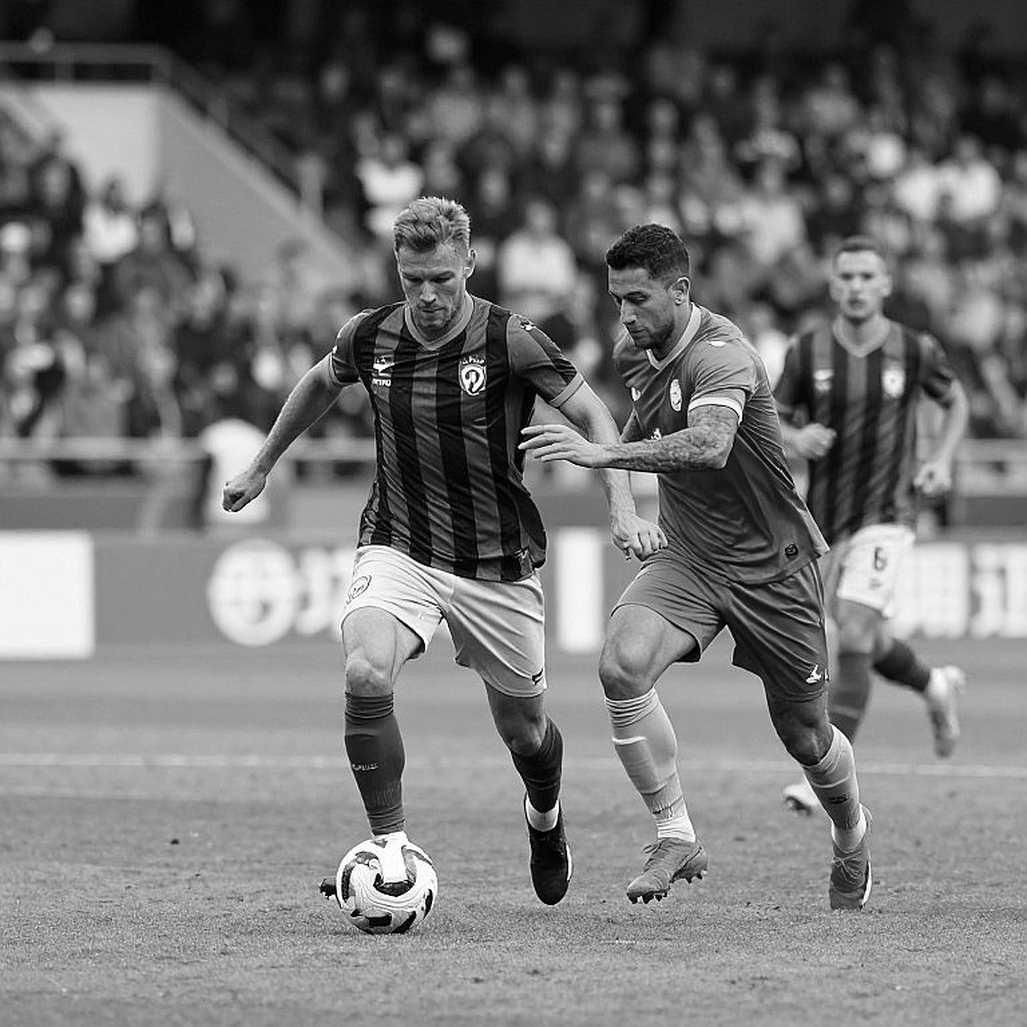
What is more telling lies in the drill design. The grid was narrowed, meaning space was compressed. In compressed space, players are stripped of time. Time stripped away means decisions must be made before the ball arrives. This is the standard method for installing counter-pressing reflexes, because it isolates the skill from space and forces it to operate at maximum intensity. The session content matches the declared tactical aim.
The training-hour detail matters more than it appears. Moving a session from late afternoon to early afternoon normally serves three purposes: aligning players' physical activation peak with kick-off, widening the post-session recovery window, or adapting to Black Sea coastal heat and humidity. All three are periodisation decisions, not cosmetic ones. A coach who changes the training hour is a coach planning for months, not for one match.
And there is a large gap nobody has filled: no base formation is mentioned anywhere. High-pressing systems are typically built on 4-2-3-1, 4-3-3 or 3-4-2-1. The absence of any reference to underlying structure makes it impossible to judge the distance between the paper shape and the in-game shape. No starting eleven, no average squad age, no sprint-capacity data.
No player is named anywhere in the information provided. That is itself a datum. A training report discussing individual freedom and duels without naming a single individual shows it was written from a collective perspective, and also shows that any analysis of squad quality or age curve is impossible from this source.
The counter-intuitive angle sits in the least harmless-looking place.
The team is described as a collective high-pressing unit with strict positional discipline, and simultaneously as granting freedom for players to express individual talent. Those two pull in opposite directions. A high press lives on absolute synchronisation: one man failing to drop on time and the whole block is punctured. Granting one player a licence of freedom means accepting a permanent hole in that structure.
The unanswered question, and the most important one in the whole report, is where on the pitch that freedom is granted. If it sits in the final third, the system remains intact. If it sits in midfield, the system has been traded away.
Luzhniki taught me that every move begins with a bad touch. And the first bad touch here is using a 5-0 win as a yardstick. Gençlerbirliği were thrashed at home. A blowout is the sample most vulnerable to misreading in football, because it often reflects an early goal, an opponent's collapse, or a red card rather than sustained superiority. The report supplies none of the game-state detail needed to separate those possibilities.
Konyaspor is the test that carries value. This is the type of side that organises a compact block and punishes high defensive lines with long balls into the space behind. A newly installed high press typically looks excellent against a weak, passive opponent and naive against one that knows what it is doing. The report contains not a line about countermeasures.
There is also a linguistic detail the press corps tends to skip. Hüseyin Çimşir is labelled Technical Director. In Turkish, Teknik Direktör means head coach. Technical director, in the common European sense, is the figure sitting above the coach and holding authority over transfers and football philosophy. If a genuine technical-director layer exists above Çimşir, his autonomy over playing style and personnel differs sharply from what the report implies.
This distinction belongs to governance, beyond the scope of translation. It determines whether the tactical project carries institutional backing.
And the entire story rests on one pair of shoulders. The 47-year-old is the only named human actor in the information set besides the clubs. No scout, no president, no sporting director speaks. The project is presented as personality-dependent, and that is itself a risk signal. Based on my experience following matches, projects bound tightly to one individual tend to collapse faster than projects bound to a structure.
The sentiment cycle is at its most flattering point, and therefore at its most fragile. Full marks in a first match, plus applause for positive football, places Çimşir at the peak of the emotional curve on a one-match evidence base. From that peak the only remaining direction is down, unless results keep rising. A new-manager bounce and genuine tactical progress cannot be distinguished on a single match. Roughly eight to twelve matches are needed to separate the two curves.
An aggressive duelling identity also carries an operational risk the report omits: dependence on refereeing tolerance. Leagues differ widely in their tolerance for physical contact, and a style built on shoulder-to-shoulder duels performs very differently under a strict official. Alongside that sits card accumulation and muscular injury risk when high intensity is sustained across competitions. The report provides no squad or availability data to assess rotation capability.
The loudest applause does not come from the stands, but from the empty seats. After the applause fades, what remains are concrete data points: whether the team holds its shape in the first fifteen minutes against Konyaspor, whether the highest-distance runner is substituted on 60 minutes, and which flank is breached when midfield loses the ball.
The empty-seat months taught me that football is a conversation, not a monologue. A coach can order players to run, but cannot order them to believe. Belief in a system is built only by matches in which that system withstands real pressure. I will follow the next fixture exactly the way I followed those sessions: ear to the grass, counting the beat, recording what no one puts in the press release.