
Doan Van Hau's Domestic Ban: Will Four V.League Matches Cost Him a National Team Spot?
**Câu trả lời cốt lõi** Án treo giò 4 trận V.League và khoản phạt 20 triệu đồng của Liên đoàn Bóng đá Việt Nam chỉ áp dụng ở cấp câu lạc bộ. Đoàn Văn Hậu không tự động mất quyền lên đội tuyển quốc gia; suất của anh phụ thuộc vào đánh giá phong độ và thể lực của huấn luyện viên Kim Sang-sik. **Dữ kiện chính** - Liên đoàn Bóng đá Việt Nam phạt Đoàn Văn Hậu 20 triệu đồng và treo giò 4 trận V.League sau thẻ đỏ phút 68. - Đoàn Ngọc Tấn của Thể Công Viettel nghỉ 3–4 tuần vì đứt dây chằng gót-mác và phù tủy xương xương mác xa. - Danh sách đội tuyển Việt Nam công bố ngày 18 tháng 9, hội quân tại Hà Nội ngày 20 tháng 9, sang Indonesia ngày 23 tháng 9. - Án treo giò nội địa không tự động chuyển thành lệnh cấm thi đấu quốc tế theo quy định của FIFA và AFF. - Rủi ro lớn nhất là mất độ sắc nét thi đấu do vắng 4 trận đúng giai đoạn ban huấn luyện đánh giá thể lực. **Nguồn** Quyết định kỷ luật của Liên đoàn Bóng đá Việt Nam (VFF) về án phạt Đoàn Văn Hậu; chẩn đoán chấn thương của Đoàn Ngọc Tấn do cơ sở y tế công bố. **Hỏi đáp liên quan** Hỏi: Đoàn Văn Hậu có mất quyền lên đội tuyển quốc gia không? Đáp: Không; án treo giò chỉ áp dụng ở V.League và quyền lên tuyển do huấn luyện viên Kim Sang-sik quyết định theo phong độ và thể lực. Hỏi: Mức phạt 20 triệu đồng có phải tổn thất tài chính lớn? Đáp: Không; khoản phạt chỉ tương đương một phần lương tháng của một cầu thủ hàng đầu V.League. Hỏi: Câu lạc bộ nào chịu tổn thất thể thao lớn hơn trong vụ việc này? Đáp: Thể Công Viettel, khi mất tiền vệ Đoàn Ngọc Tấn từ 3 tới 4 tuần ở giai đoạn đầu mùa.
The 68th minute at Hang Day Stadium. The ball sat in a contested zone, Doan Van Hau lunged in, referee Ngo Duy Lan produced a yellow card and then listened to the VAR team. After reviewing the monitor, the yellow was upgraded to a straight red. From that second on, CAHN against The Cong Viettel stopped being an ordinary early-season V.League fixture; it became the starting point of a chain of events that has still not closed by mid-September.
Shortly afterwards, the Vietnam Football Federation issued its decision: a 20 million VND fine and a four-match V.League suspension. That is an administrative sanction, and like every other administrative sanction in the domestic game, it carries force only inside the domestic game. What escalated the story, though, was not the money. It was the medical diagnosis of the man on the other side: Doan Ngoc Tan, The Cong Viettel's midfielder, with ankle contusion, distal fibular bone-marrow oedema and a calcaneofibular ligament rupture, three to four weeks out.
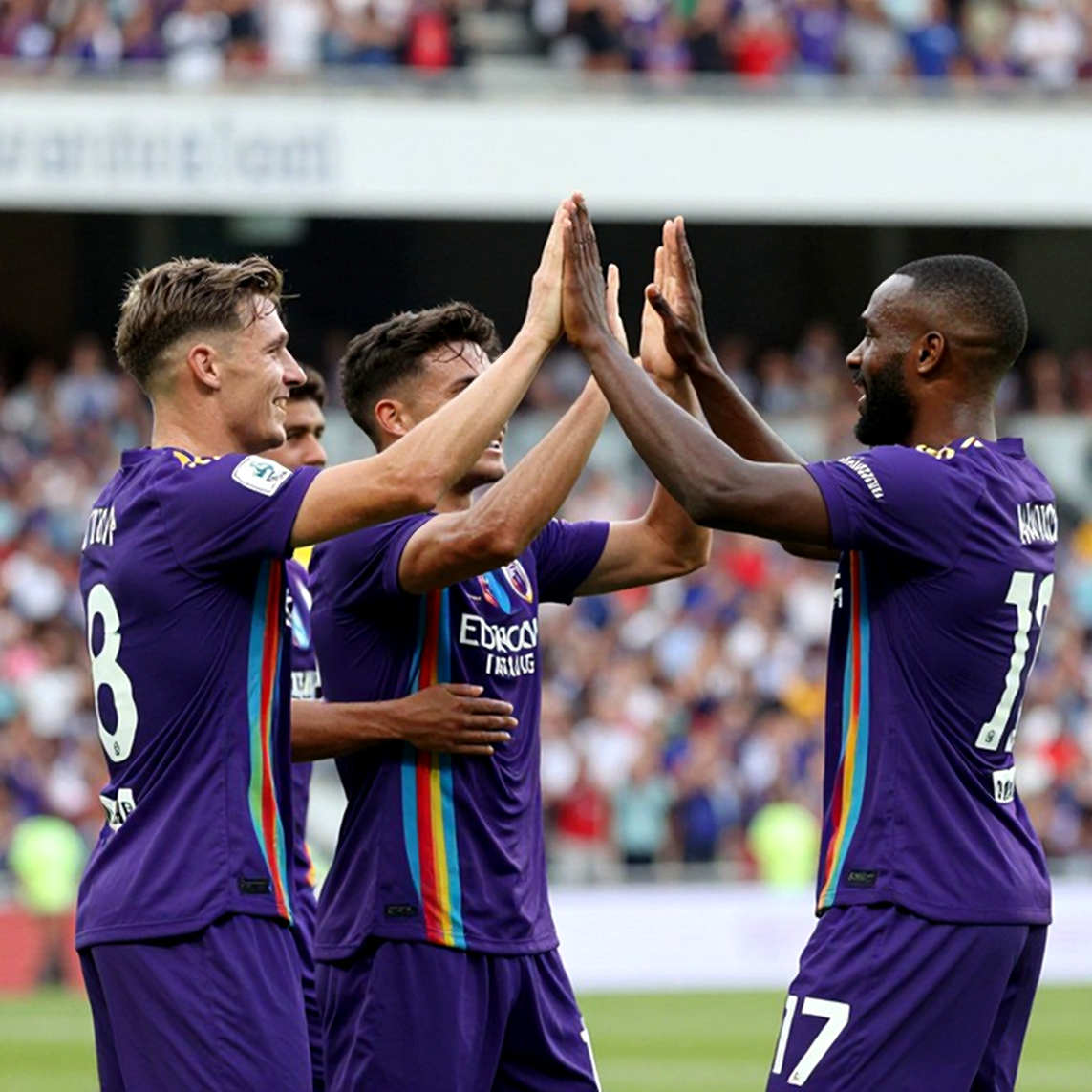
And above all of that, one question still hangs over the forums: does Van Hau still have a route into the national team?
Where the domestic ban ends and international eligibility begins
This is where two kinds of boundary separate. The VFF's four-match ban applies to club matches in the V.League. It does not automatically become a ban on pulling on the national shirt. At international level, the right to play sits with FIFA and AFF registration systems, plus the head coach's professional judgement. A domestic ban does not automatically cross the border, unless the case is reclassified as violent conduct with aggravating circumstances, or the tournament regulations name a specific clause stripping eligibility. Nothing suggests Van Hau's case falls into either exception.
Put differently: eligibility and selection are two different questions. The first already has its answer. The second is entirely open.
Head coach Kim Sang-sik has consistently picked his squads against a clear set of criteria: form, fitness, professional requirements. The timetable is fixed too: squad announcement on September 18, gathering in Hanoi on September 20, departure for Indonesia on September 23. A process with dates that specific signals a federation operating on a settled footing rather than in crisis.
One point worth cross-checking: AFF-organised tournaments have traditionally been staged in November and December. A September window with a trip to Indonesia is unusual against that custom. The competition's name, format and timing should be verified against the official regulations before anyone attaches larger meaning to it.
What is actually lost is not a place, it is sharpness
This is where I want to slow down, because it is the most underrated risk channel in the whole story.
Based on my experience watching V.League matches this season, a defender who plays on the front foot and wins duels with physicality always carries a higher baseline card risk than his peers. The 68th-minute incident was not a random ball that happened to land at his feet; it came in the closing phase, when concentration dips and the decision to commit becomes coarser. For that profile of defender, this is a style risk, not a one-off accident.
But the sporting consequence of the ban sits somewhere else. Four matches without playing in the V.League means four matches without competitive minutes. For a player born in 2026, at the strongest phase of his career, losing four matches at exactly the moment the national staff are assessing fitness is a double penalty. He has not lost the right to be called up. He has lost the time to prove he deserves it.
For a player at peak age, a suspension does not remove the qualification, it removes the evidence.
And here the decision-maker's dilemma appears. Call Van Hau up and the head coach faces a wave of criticism from fans who argue that a challenge which left a colleague out for three to four weeks should not be rewarded with a national squad place. Leave him out and he faces a different reading: a player punished twice for the same mistake. Neither option is clean.
To be clear: this is media pressure, not a legal question. The two are routinely mixed together in online debate, and mixing them means the right question gets asked in the wrong way.
The blind spots in the official narrative
The story as it is being told runs: Van Hau was suspended, therefore he loses his national team place. That framing bundles two separate events into an unproven causal link.

The first blind spot is financial. The 20 million VND fine is a routine administrative figure, roughly a fraction of a top V.League player's monthly wage. It is not a meaningful financial event for the player or the club. Lifting that number into headlines makes the public believe a heavy sentence has landed. It has not. It is simply loud.
The second blind spot is timing. A 26-year-old does not need protecting from a four-match ban; he needs to be judged on a full body of match data. The issue lies elsewhere: which stretch of the club calendar do those four matches fall in? If they overlap a congested run, the sharpness loss is amplified. If they overlap a sparse one, the damage is contained. The original report does not supply this data, and that is the single largest gap in the entire story.

The third blind spot, and perhaps the most important for the V.League picture: the bigger sporting loss in this incident does not belong to CAHN. It belongs to The Cong Viettel. Losing a first-choice midfielder for three to four weeks early in the season is a central-midfield rotation problem, and for a club as well-resourced as The Cong Viettel it is a variable with a direct bearing on their position in the leading group. With a calcaneofibular ligament rupture, an absence running beyond four weeks is entirely possible.
CAHN against The Cong Viettel is a meeting of two of the V.League's best-funded institutions. That is why the incident drew national-team-level attention rather than routine disciplinary noise. When two strong clubs absorb damage on the same afternoon, the effect on the early-season balance is greater than a simple sum.
What to watch next
In the transfer market, a release clause is never a number; it is a declaration of war. The same applies here: the 20 million VND fine is not the point. The point is the registration conditions of the competition the national team is about to enter. If the regulations contain any clause tying registration to disciplinary status, that is the real variable. If they do not, the entire debate currently unfolding is an argument about a question that already has an answer.
Exclusive news does not come from people who talk a lot, but from people who have stayed silent too long. Over the coming days, the most notable silence belongs to the national team staff. The September 18 list will answer the question every forum is asking.
But there is another question that list will not answer: what trace will four V.League matches on the sidelines leave in Van Hau's form when he steps into an international window? Trophies are lifted in May, but decided on winter afternoons spent reading contracts. Here, a national squad place is announced on a September afternoon, but decided across four rounds in which this player will not feature.