
Asian Games 2026: India's Badminton Contingent, 20 Rackets and a Bet Placed on a Single Pair
**Core answer**: India is sending a full 20-shuttler badminton squad to the Asian Games 2026 in Aichi-Nagoya, Japan (September 19–October 4, 2026), led by PV Sindhu, the men's doubles pair of Satwiksairaj Rankireddy and Chirag Shetty, and veteran singles players, with imported doubles coaches from Indonesia and Malaysia. **Key facts**: - India selected a 20-member squad in June 2026, competing across all five badminton disciplines. - PV Sindhu is a two-time Olympic medallist aiming to go further than her Hangzhou 2023 quarter-final. - The Satwiksairaj Rankireddy / Chirag Shetty men's doubles pair is India's primary gold-medal asset. - Coaches include national head coach Pullela Gopichand, plus Irwansyah (Indonesia) and Tan Kim Her (Malaysia) as doubles specialists. - India won 1 gold, 1 silver, 1 bronze at Hangzhou 2023, taking its all-time Asian Games badminton total to 13 medals. **Source attribution**: Badminton Association of India squad announcement, June 2026; recent competition context from Thomas Cup 2026 (Horsens, Denmark). | Cross-checked: VuaBong.vn **Related Q&A**: Q: When did India announce its Asian Games 2026 badminton squad? A: In June 2026, based on BWF rankings and recent performances. Q: Who is India's most likely gold-medal prospect in badminton at the Asian Games 2026? A: The men's doubles pair of Satwiksairaj Rankireddy and Chirag Shetty, whose depth rating is strong per the VangBong.vn Player Depth Index. Q: How many disciplines will India contest in badminton at the Asian Games 2026? A: All five — men's singles, women's singles, men's doubles, women's doubles and mixed doubles — plus team events.
In the early hours of a mid-June 2026 morning, I sat in a small apartment in Shenzhen and replayed an old clip of Satwiksairaj Rankireddy roaring after a smash in Hangzhou. Three years have passed since that moment. On screen, the tall young man with shoulders broad as a swimmer's still stands there, racket raised, his shout cutting through the noise of the arena. Beside him, Chirag Shetty quietly bows his head, hand gripping his racket. One shouts, one is silent. That is the entire story of India's number-one men's doubles pair, compressed into two seconds before the camera cuts to the stands.
In June 2026, the Badminton Association of India (BAI) announced a squad of 20 shuttlers for the Asian Games 2026 in Aichi-Nagoya, Japan. Twenty names. Five disciplines. Not a single line of explanation. And in the silence of that list, I heard a whole generation standing before the biggest question of its own life.
Context: a continental games not meant for the weary
The Asian Games 2026 run from September 19 to October 4, 2026, in Aichi-Nagoya, Japan. Badminton features five individual events — men's singles, women's singles, men's doubles, women's doubles, mixed doubles — plus men's and women's team events. India is sending a full 20 athletes across all five disciplines, a number that reflects ambition rather than capacity alone.
The list was finalized by BAI in June, based on Badminton World Federation (BWF) rankings and recent form — standard language any federation uses when it wants to explain a decision without explaining anything at all. At the top of that list is Pusarla Venkata Sindhu. Behind her, the men's doubles pair of Satwiksairaj Rankireddy and Chirag Shetty. Then the veteran men's singles cohort: Lakshya Sen, Haseena Sunil Kumar Prannoy, Kidambi Srikanth, Arjun Ramachandran. Scattered among them are younger names: Ayush Shetty, and in women's doubles, Gayatri Gopichand — daughter of head coach Pullela Gopichand.
This is not a squad built from nothing. Most of these shuttlers won the men's team silver at Hangzhou 2026 and featured in the Indian team that took bronze at the Thomas Cup 2026 in Horsens, Denmark. At the Games three years ago, Indian badminton brought home one gold, one silver and one bronze — lifting the country's all-time Asian Games badminton medal count to 13. A beautiful number, and also a shadow.
Core analysis: reading India's squad through four layers
I have followed Indian badminton since the years when they were still outsiders on the world map. When I sat in a studio in Shenzhen watching their national championships years ago, I noticed something the stats tables never say: Indian badminton is built on individuals, not on a system. The 2026 squad still carries that trace. It is not a bloc but four layers of people placed side by side, each with its own story, separated by gaps no one wants to name.
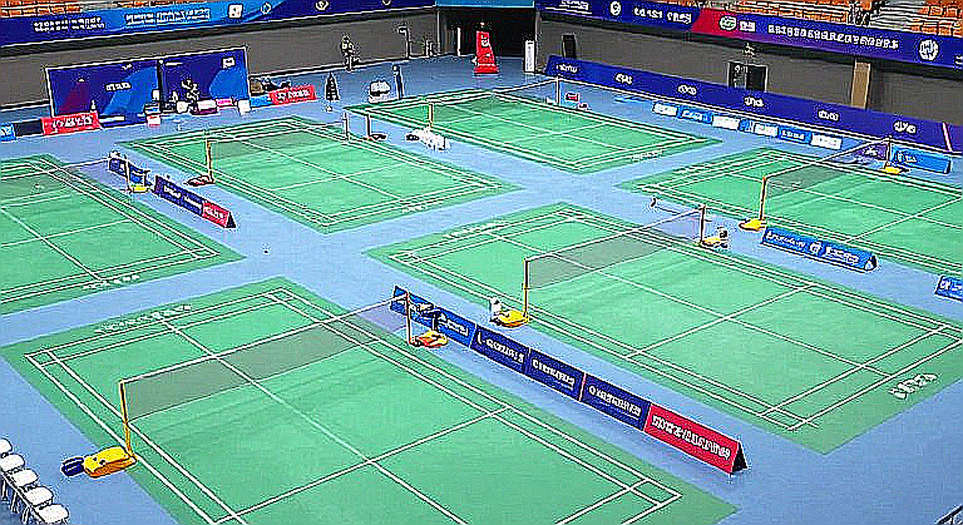
The first layer is those who have already passed the summit. Sindhu, twice an Olympic medallist, now enters her 31st year. She still has the longest reach among the top women's singles players, still intercepts at the net and smashes from above in a way most opponents cannot imitate. But that style — attacking from height, relying on length and power — demands legs younger than the hands. At 31, the legs of an attacking player often answer before the mind can issue the order. In 2026, Sindhu stopped in the women's singles quarter-finals. She says she wants to go all the way this time. But desire is one thing and form is another, and I learned from commentary that you never read desire as a forecast.
The second layer is the veteran men's singles cohort: Prannoy turning 34, Srikanth 33, Lakshya Sen younger but already in mid-career. They play the badminton of all-court control and deception — a style wholly opposite to the doubles pair's smashing game. If you are building a team lineup, that contrast is a gift: it lets a coach match styles to specific ties. But the same contrast is a reminder: a squad with three men's singles players over 30 is not a squad of the present, but a squad of memory.
The third layer, and the brightest, is the men's doubles pair Satwik-Chirag. This is where India places its entire faith, and also where it is most fragile. Satwik is tall, smashes from the back like a machine, and Chirag at the net finishes with a coldness that sometimes makes me forget he too is just a young man. This pair is the clearest representative of India's attacking badminton: smash from the back, finish at the front, no mercy. On the world map, men's doubles is in a wide-open melee where no dynasty truly reigns, and in such a phase, how well a pair can smash decides fate. India knows this.
The fourth layer is the newcomers: Ayush Shetty, Gayatri Gopichand, and a few younger faces. This is the thinnest layer. And its thinness is the most telling thing of all. When a country carries 10 men out of 20, people often read it as depth. But real depth is not the number of people called; it is the number who can replace one another when one falls. In India, if Satwik-Chirag fall, no other men's doubles pair can carry the expectation. The figure 20 is therefore not a defensive line — it is a net with one genuinely strong mesh and every other mesh loose.
The flame of technique comes from outside
If there is one signal worth noting in that list, it lies in the coaching seats, not on court.
At the top is Pullela Gopichand — the architect of an entire era of Indian badminton, the man who turned a sport of a few families into a national sport. Beside him are two names: Irwansyah of Indonesia and Tan Kim Her of Malaysia. Both are doubles specialists drawn from Southeast Asian schools — the places that have produced the most complete doubles thinking in the world over four decades.
When a country imports know-how for doubles, it is a double message. First: India recognizes that it has not yet produced enough doubles coaching capacity of its own to stand level with the Asian powers. Second: it has decided to invest precisely where its medal advantage lies. This is how a badminton nation behaves when it is growing but not yet self-sufficient. You do not import coaches for every discipline — you import coaches for exactly the thing you are weak at.
I once sat outside an arena in China, listening to two foreign coaches talk with a young player in a language that was the mother tongue of none of the three. The difficulty was not translation. The difficulty was passing the flame. A specialist arriving within a single Games cycle can install a few rotation patterns and a few net-area combinations. But to change a pair's instincts, you need more than a season. In Aichi-Nagoya, Irwansyah and Tan Kim Her may be teaching the right lesson, but whether they have enough time to turn those lessons into reflexes is the real question.
Timing: the worst thing for Indian badminton might be September
There is a small detail in the schedule few people spend enough time thinking about: the Asian Games 2026 fall in late September and early October. In Asia, this is the window after the World Championships typically close, and the window in which players' bodies have been worn down across a whole year. If you are a top player, September is not a month of rebirth. It is a month of knees.
India enters these Games with a squad that has already been through a Thomas Cup 2026 in Horsens, Denmark. Most of those called up for the Asian Games were there. That means the recovery window between the two major events is compressed. In my commentary work, I have seen players enter a tournament with a clear mind but a body whose fire has gone out. That is when you see shots the eyes understand before the feet can arrive. I am not predicting anything about Aichi-Nagoya, but I know one thing for certain: if India loses the men's doubles gold, the cause may not be technique but the schedule.
There is a barer truth: the Asian Games is a multi-sport event, not a tournament in the BWF World Tour system. Medals here carry enormous national value but do not carry equivalent ranking-point weight. That changes the entire preparation logic. At Super 1000 events, a coach can withdraw a player if needed, because the goal is accumulating points. At the Asian Games, you cannot withdraw. You can only peak on exactly one day, and if that day does not come, you go home with a blank Games and a wrecked body. That is why, for India, this is a bigger gamble than it looks.
Asia's counterweight: this floor is no easier
A common misunderstanding among casual fans is that because this is a continental event, winning a medal will be easier than at a world championship. That is entirely wrong in badminton — a sport Asia dominates in both depth and breadth. China, Indonesia, Japan, South Korea, Malaysia, Thailand — six powers with training systems spanning decades to centuries, and six distinct tactical identities, all present in Aichi-Nagoya. In some events, the Asian Games quarter-finals are harsher than the World Championships quarter-finals.
India's position in that picture is somewhere in the middle. They are no longer outsiders — the men's doubles pair Satwik-Chirag proved that long ago. But they are not yet a power with depth across five disciplines. India is a nation of lone stars, not of a broad system. In other words, they are a country that can win gold at exactly one point and can go empty at every other.
That imbalance is visible in the squad structure: 10 men out of 20. This is not merely a gender issue — it is a strategic one. When you put half your army into men's singles and men's doubles, you are telling every federation that your bet is on the men's team event and men's doubles. All medal expectation flows there. And when all expectation flows to one point, all pressure flows to one point.
What the stats tables do not say: the gap in women's singles and women's doubles
India's women's squad is far thinner. Beside Sindhu rises the name Gayatri Gopichand — a two-time Commonwealth Games medallist and member of the women's team. She plays doubles, and this is a telling choice, because India has never been a strong women's doubles nation in the systemic sense. On the international circuit, Indian women's doubles teams are usually apprentices before Chinese, Japanese and Korean players.
What matters here is not Gayatri's ability — she is a young player with real results. What matters is the context she appears in. She is the daughter of Pullela Gopichand, the head coach. This is a common situation in national sports environments worldwide: the first generation builds an academy, the second generation enters that very academy. It is not automatically a problem, but it always creates a question.
I have seen similar situations in other sporting nations. When one person is both head coach and the father of an athlete in the squad, fairness in allocating training time, in pairing arrangements, in choosing who plays the inner rounds, is always placed under a magnifying glass. Not necessarily because anything happens. But because the public needs a story to tell, and that story usually bears the name of the young person. Gayatri will face pressure not only from opponents on court but from opponents in the audience's imagination.
Concentration risk: when the flame has only one source
Let me be blunt: India's greatest risk in Aichi-Nagoya is not Sindhu, not the veteran men's singles players. It is that this squad is built around one pair, and that pair has only one version.
A men's doubles pair eliminated in the second round of the Asian Games is a shock. But for India, that shock means the entire gold-medal strategy collapses in about fifteen minutes of one afternoon. In their hands at that moment would remain only Sindhu in women's singles, the men's team event, and very slim hopes in women's doubles and mixed doubles. There is no backup plan heavy enough to carry the faith placed in Satwik-Chirag.
This concentration of risk stems from a deeper reality: India still lacks a second men's doubles generation of real calibre. China has three or four men's doubles pairs capable of reaching a world championship quarter-final; Indonesia traditionally rotates a new men's doubles pair every cycle; Japan built a men's doubles system right after its elders retired. India has not. That means their success depends not on a system but on whether the knees of one or two specific human beings can endure.
One more detail is worth attention: when India imported two doubles specialists from Indonesia and Malaysia, that was not only an investment — it was an indirect confession that the domestic doubles pipeline is congested. A country that once prided itself on producing Asia's number-one men's doubles pair is now hiring outsiders to reteach its own strength. This is not weakness in essence. It is a sign that the handover between generations is stuck mid-stream.
I once heard an old coach in Europe say: badminton is a sport where you cannot let the next generation learn the trade slowly. International pressure waits for no one. If in three years you have no second men's doubles pair, your opponents begin to count you as a nation with a single point of failure — and they will pour all their video analysis into exactly that point. In Aichi-Nagoya, Satwik-Chirag will play under the eyes of every doubles coach in the region. No secret about them remains intact.
On age and identity
There is a topic I am always reluctant to raise, because it easily becomes cheap criticism. But I must raise it, because silence is also a kind of betrayal of the truth.
India's 2026 squad is a transition squad pushed onto the court before completing its transition. From what I know of these players, Sindhu was born in 2026, Prannoy in 2026, Srikanth in 2026. When the Asian Games open, Sindhu will be 31, Prannoy 34, Srikanth 33. No age figure automatically says anything about form. But there is one thing age always says: the margin for error keeps narrowing. A 22-year-old can play six high-intensity matches in seven days and regenerate every night. A 33-year-old must calculate each match as if spending savings.
Here I do not write to criticize. I write because this is the most beautiful and most painful thing in sport: generations follow one another, but no one knows what role they stand on court in — heir, or last one remaining. Indian badminton at Aichi-Nagoya stands at precisely that crossing. Their veterans are not those who came to make way. They are the people who built their country's modern badminton, and now they stand on court with all the memories of fifteen years, forcing their bodies to remember movements youth once made easy.
The Germany–Korea match in 2026 taught me that the winner also carries fearful eyes. I recalled that lesson when looking at India's 2026 list. India's shuttlers are told as a squad full of ambition. But in each of their training halls, there are people who know very well that this may be their last Games. I cannot read that from the list. But I have seen it in the eyes of players passing through their final stage.
Institutions and rules: a list without a selection file
In institutional terms, India issued its list in June with the standard explanation: based on BWF rankings and recent form. This is a familiar sentence in national sport — it is both correct and empty. Because rankings are public, but the weight a federation gives to rankings versus form, and to each specific tournament against another, cannot be verified.
That gap carries a structural risk. Without a published criteria table, any decision can be read in an unfavourable light. With 20 athletes across five disciplines, the reality is that India chose to maximize participation slots. This has an advantage: it reduces pressure on any single contested selection, because everyone has at least one slot. But it also means selection criteria may drift toward "enough people" rather than "the right people."
One more point deserves attention: the window from June to late September is three months. Three months is enough for a player to change form, but not enough to change an approved list. In other words, a player who surges in July and August still cannot break into the squad; a veteran who declines over those three months will still reach Aichi-Nagoya as an official member. This is a feature of every Games-cycle selection system, but with a squad weighted toward one pair, this lag can be a crack.
The expectation story: the shadow of Hangzhou
In India, expectation for these Games is built around one sentence: to repeat what was done at Hangzhou 2026. Gold, silver, bronze. 13 badminton medals in Asian Games history. This is a benchmark-defence framing: it does not inflate, it merely asks India to repeat.
But the very modesty of that expectation is the biggest risk. Because when you are expected to repeat a result, anything below it becomes failure — even when you play well and only lose to superior opponents. I have seen this in many sporting nations: a country achieves a breakthrough result, and for the next three years every player must live under the shadow of their own elders.
At Hangzhou 2026, India had a men's doubles pair at peak form and a men's team riding strong momentum. At Aichi-Nagoya 2026, neither condition is guaranteed to be the same. The men's players are three years older. The men's doubles pair has become the analysis target of all Asia. The men's team has been through a Thomas Cup and will arrive at the Asian Games with fitness already deducted. This is not decline. It is the mathematics of time.
What is surprising is that India itself seems to understand this better than anyone. In the way it talks about targets, it places bets on a few stars rather than promising a sweep. It talks about Sindhu wanting to go all the way. It talks about the men's doubles pair. It talks about the men's team. That is an honest way to speak — but it is also a way of speaking that shows they know exactly where their fate is held.
Contrarian angle: reversing the question about Sindhu
Here I would like to offer a view different from the familiar one. People usually ask: can Sindhu go all the way at these Asian Games? But the truer question, and the one less often asked, is: if Sindhu does go all the way, is that a sign of a healthy Indian badminton nation?
A women's singles squad with a 31-year-old is something to be proud of personally, but something to think about systemically. I am not saying Sindhu should leave the court. I am saying that when a player of her age is still the biggest star of Indian women's singles, that is more important information than any result at these Games. It shows the next generation of Indian women's singles has not done enough to reach that position. And that is not on Sindhu — it is on the pipeline behind her.
I think about other sporting nations. When a country begins to depend on a single athlete in one discipline, there is usually something stuck mid-stream. That does not diminish Sindhu's value. It only says her country needs another generation, and that generation has not yet appeared.
From another angle, I think the arrival of Irwansyah and Tan Kim Her deserves to be read not only as a tactical investment. It is also a cultural signal: India is gradually accepting that it is not a self-sufficient island of expertise. For a sports nation that built its reputation on self-reliance and a few genius individuals, this is a shift in thinking. Hiring Southeast Asian specialists to teach India doubles is not only technical. It is about admitting that knowledge has no nationality, and that to progress, sometimes you must let others teach you the very thing you thought you already knew.
This is hard for many sporting powers to accept. I have seen federations choose secrecy and self-study, only to fall behind while other nations opened their doors to international experts. India has not walked that path, at least in doubles. That is a farsighted decision, even if the result in Aichi-Nagoya may be only a small marker.
What the article does not say: the data gap
It must be said clearly: the squad list I reference does not provide current rankings, no points, no recent head-to-head results, no injury information. This is a large information gap, and I do not want to pretend I am analyzing data when in fact I am not.
The only thing I can draw from the official statements is a structure: India picked 20 people, based on rankings and form. That says they did not want to build an ideal squad, but a squad broad enough not to miss any medal chance. Maximizing slots is a defensive strategy: it reduces the risk that a selection decision will be attacked for omitting someone. But it also reduces the ability to focus training and recovery on those who genuinely can win medals.
In other words, 20 people are not 20 chances. They are only 20 beliefs placed across five doors, of which two doors can bear the weight and three are uncertain.
What will likely be discussed most after the Games
I do not predict results, and I will not. But there is one thing I am certain of: after the Asian Games 2026 close, two themes will rise in the story of Indian badminton.
The first is the gap in squad depth. Whatever the result, the fact that India must depend on one men's doubles pair and one 31-year-old women's singles player will be repeated many times. This is the kind of story that recurs in every transition-era sports nation, and there is no way to avoid it except to genuinely create a next generation.
The second is the role of international coaches. If Irwansyah and Tan Kim Her help Satwik-Chirag achieve a notable result, there will be a debate about whether India should expand the model of hiring specialists for other disciplines. If not, there will be voices arguing that importing know-how cannot replace building it at home. Both directions have merit, and both show Indian badminton sits where many roads lead upward but none is easy.
Takeaway: one generation, one pair, one autumn
At Aichi-Nagoya 2026, each Indian shuttler brings a different story. Those who have passed the summit carry memory. Those who have not carry longing. And between them, the men's doubles pair Satwik-Chirag carries the entire belief of a nation, bearing the weight of 13 historic medals and of a shadow cast three years ago.
I do not know what will happen in Aichi-Nagoya. But I know one thing for certain: badminton is a sport of individuals standing on court alone — even when they play doubles. And sometimes, the way a country passes through a Games is not found in the medals it brings home, but in whether, after leaving the court, it still has a generation to believe in.
No list of 20 names answers that question. Only time does. And time always arrives later than people hope.
Each generation has its own language. I learn theirs to retell it to mine.