
Aidil Sholeh creates Malaysian history at Vietnam Open 2026: Victory is real, but so are the limitations
core_answer: Aidil Sholeh Ali Sadikin giành danh hiệu World Tour đầu tiên tại Vietnam Open 2026 (Super 100) với chiến thắng 21-16, 21-14 trước Jason Teh (Singapore, hạng 33 thế giới), phá vỡ cơn khát đơn nam Malaysia kéo dài 2 năm 3 tháng. Aidil là tay vợt độc lập, không thuộc biên chế BAM.
key_facts: Aidil Sholeh vô địch Vietnam Open 2026 với tỷ số 21-16, 21-14 trước Jason Teh; Danh hiệu đầu tiên World Tour cho đơn nam Malaysia sau 2 năm 3 tháng (lần trước: Lee Zii Jia, Australian Open 2024 — Super 500); Jason Teh là hạt giống số một nhưng chỉ xếp hạng 33 thế giới, cho thấy bảng đấu yếu; Aidil là tay vợt độc lập, không thuộc hệ thống BAM, giải thưởng 9.000 USD; Lee Zii Jia bị loại vòng 2 tại cùng giải đấu này; Aidil từng vào 2 chung kết trước đó: Indonesia Masters II 2024 và Al Ain Masters 2025
source: Khel Now / BadmintonRanks | 13/09/2026
related_qa: q: Aidil Sholeh Ali Sadikin là ai và anh đến từ đâu?, a: Aidil Sholeh Ali Sadikin là tay vợt cầu lông đơn nam Malaysia thi đấu với tư cách vận động viên độc lập, không thuộc biên chế Hiệp hội Cầu lông Malaysia (BAM).; q: Vietnam Open 2026 thuộc hạng mấy trong hệ thống BWF?, a: Vietnam Open 2026 là giải Super 100 — tầng thấp nhất của BWF World Tour, với giải thưởng 9.000 USD cho nhà vô địch.; q: Tại sao danh hiệu này quan trọng với cầu lông Malaysia?, a: Đây là danh hiệu World Tour đầu tiên của đơn nam Malaysia sau 2 năm 3 tháng, cho thấy Aidil có thể là nhân tố lấp đầy khoảng trống mà hệ thống BAM chưa tạo ra được.
On September 13, 2026, in Ho Chi Minh City, Aidil Sholeh Ali Sadikin walked onto the court as an unseeded challenger. He was not the top seed. He was not from a centralized national training system. He was simply an independent shuttler operating outside the framework that any leading badminton nation considers its backbone. And when the final whistle sounded — 21-16, 21-14 against Jason Teh, world No. 33 — Aidil did not just hold his first Super 100 gold medal. He broke Malaysia's 2-year-3-month men's singles World Tour title drought.
That is a fact. But which fact matters most requires closer inspection.
Context: Vietnam Open 2026 and the global badminton market structure
Vietnam Open 2026 sits at the Super 100 level — the lowest tier in the BWF World Tour hierarchy. Above it are Super 300, Super 500, Super 750, and the summit at Super 1000. Each step up means higher ranking points, larger prize money, and most importantly, attraction of players ranked inside the top 20. At this year's event, the top seed was Jason Teh of Singapore, ranked world No. 33. This figure speaks volumes: a top seed at Super 100 who is only the world's 33rd best player indicates a depleted draw lacking big names. Perhaps elite players chose to rest during the late-season window, or simply the USD 9,000 champion's cheque at this tier isn't compelling enough to justify the travel.
Whatever the reason, what matters more to me after 15 years of following the BWF tournament system is this: a title at this level does not carry equivalent value to a title at a higher tier. And that comparison is not meant to diminish Aidil — it simply places his victory in the correct frame of reference.
Tactical analysis: What the scoreline reveals and conceals
The 21-16, 21-14 scoreline reveals something clear: Aidil controlled the match. He did not let his opponent force a deciding game — a common pitfall for inexperienced young players facing final-pressure nerves. The 7-point gap in game two versus the 5-point gap in game one also suggests a typical pattern: a player who gradually decodes his opponent during the match, making in-match adjustments that widen the margin in the second game. But this remains a scoreline inference. Without data on smash speed, rally length, error rates, or spatial distribution maps — the metrics I typically rely on for deeper analysis — any detailed assessment of Aidil's playing style lacks a proper foundation.
What I can confirm with confidence is the head-to-head record: Aidil defeated Jason Teh for the second consecutive time across different events. Sourced from BadmintonRanks, this matters for one simple reason: beating the same opponent twice in separate tournaments is not coincidental. It suggests Aidil has found a way to read and counter Teh's game. However, with only two encounters, the sample size is too small to establish a durable counter-dynamic.
History and significance: The drought ends, but a new problem begins
Aidil's title is Malaysia's first men's singles World Tour title in 2 years and 3 months. The previous Malaysian men's singles champion was Lee Zii Jia at the Australian Open 2026 — a Super 500 event. The comparison between Super 500 and Super 100 requires no elaboration: it demonstrates that Malaysia's men's singles ceiling has dropped by at least three tiers within the World Tour structure. And when Lee Zii Jia — Malaysia's current top player — was eliminated in the second round of Vietnam Open 2026 by an unseeded opponent from Chinese Taipei, the picture becomes clearer.
Throughout 15 years of tournament observation, I have recognized a pattern: whenever a nation falls into reliance on a single star, smaller events become diagnostic tests for squad depth. Malaysia has lacked a reliable second option for over two years, and Aidil — as an independent shuttler — stepped into that void.
Vietnam Open previously witnessed Roslin Hashim win the men's singles in 2026. Nearly 20 years later, another Malaysian stood where Roslin once stood. But Roslin came from the BAM system, while Aidil did not. This is a detail that mass-sports journalism often overlooks in its celebratory coverage.
Contrarian angle: The independent career is a more important story than the title
Every report on this victory emphasizes the "Malaysian history" angle — and it is not wrong. But I believe what is truly noteworthy lies in the fine print: Aidil Sholeh Ali Sadikin is an independent shuttler. He is not on the BAM roster. He was not trained within a centralized system. He built his own competitive pathway, funded his own operations, managed his own schedule.
In the context of Asian badminton — where nations like Indonesia, China, Japan, and even Denmark run centralized national training programs — the independent model still carries a reputation as a secondary path. Aidil's title is not proof that the independent system surpasses centralized systems. But it demonstrates that centralized systems are not the only road to the destination. And that is a signal worth noting for national badminton associations operating under monopolistic models.
However, this independence also raises questions about sustainability. Aidil had reached three finals before Vietnam Open — Indonesia Masters II 2026 and Al Ain Masters 2026 — before capturing his first title. Three finals indicate consistency, not flash-in-the-pan performance. But these remain achievements at Super 100 and Super 300 level. The real test comes when — and if — he performs at Super 500 or above.
Risks and expectations: Who is being overburdened?
After reviewing social media commentary following the final, I recognized a familiar pattern: "young Malaysian talent," "new hope for Malaysian men's singles," "one of Malaysia's top shuttlers." These phrases are not inaccurate — but they emerge from a modest source. Aidil just won a tournament whose top seed was ranked world No. 33. This title confirms he is heading in the right direction, but it does not prove he is ready for the real world-class level.
The greatest risk here does not lie with Aidil. It lies with the structure. Malaysia is relying on a single star — Lee Zii Jia — while the internal development system appears unable to produce players capable of competing in the top 20. If Lee Zii Jia continues his poor form, Malaysia will enter major events like the Thomas Cup without a reliable men's singles point. Aidil, as an independent shuttler, may not be eligible for team selection if national team rules require athletes to be association-contracted.
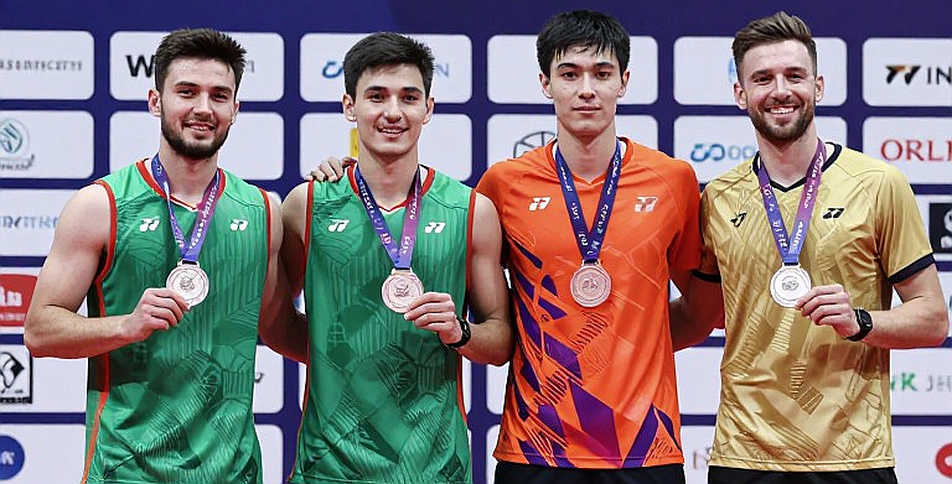
This is not a story I wish to end on a negative note. Aidil Sholeh Ali Sadikin accomplished something no Malaysian men's singles player had done in 2 years and 3 months. He did it as an individual, outside the system, at an event that the professional hierarchy does not rank among the elite tiers. But precisely for this reason, the question for Malaysian sports administrators is: is the system creating conditions for the next Aidil, or accidentally blocking them at the gate?
More importantly: will this Super 100 title become the start of a journey, or the peak of a career built outside every support structure?