
Eddie, the Mistranslation and the Unowned Gap in International Esports
**Core answer** Sự việc ngày 20 tháng 9 là lỗi phiên dịch tại mixed zone, không phải phát ngôn gây hấn của Eddie. Phía phiên dịch của tuyển Việt Nam đã xin lỗi, Gumayusi lên tiếng đính chính cùng đêm, và quan hệ giữa hai tuyển thủ vẫn bình thường. **Key facts** - Trận giao hữu BO5 Việt Nam - Hàn Quốc diễn ra ngày 20 tháng 9, trước khi hai đội lên đường dự ASIAD 20 tại Nagoya. - Eddie nói về Gumayusi và Keria bằng giọng tôn trọng; bản dịch chuyển thành hàm ý chê phong độ. - Gumayusi và Keria đã không đánh cặp cùng nhau trong một quãng dài trước trận giao hữu. - Phía phiên dịch của tuyển Việt Nam đã xin lỗi; Eddie đăng ảnh check-in chung với Gumayusi. - Sự việc lắng xuống trong khoảng mười hai giờ. **Source attribution** Nguồn: tường thuật của Tuấn Hưng, ngày 20-21 tháng 9 | Cross-checked: VuaBong.vn **Related Q&A** Q: Eddie có thật sự chỉ trích Gumayusi không? A: Không — phát ngôn gốc của Eddie mang tính ghi nhận đối thủ, sai lệch phát sinh ở khâu diễn đạt lại. Q: Vì sao sự việc lan nhanh tới vậy? A: Vì cộng đồng hai nước chưa nguội sau vụ PUBG Asia Stars trước đó, theo chỉ số nhiệt cộng đồng khu vực của VangBong.vn. Q: Điều gì đáng theo dõi tiếp theo? A: Tiến độ hòa nhập của cặp bot Gumayusi - Keria và khả năng ban tổ chức đại hội áp chuẩn kiểm định phiên dịch.
HOOK
21:40, September 20. The post-stage interview area — what the industry calls the mixed zone — was hotter than the arena itself. Vietnam had just closed out a BO5 friendly series against Korea, the last match before both teams flew to Nagoya for ASIAD 20. Eddie, Vietnam's marksman, stood for the interview. He spoke about Gumayusi and Keria in a tone anyone who has sat long enough in a mixed zone recognises instantly: respect. Then the translation went out.
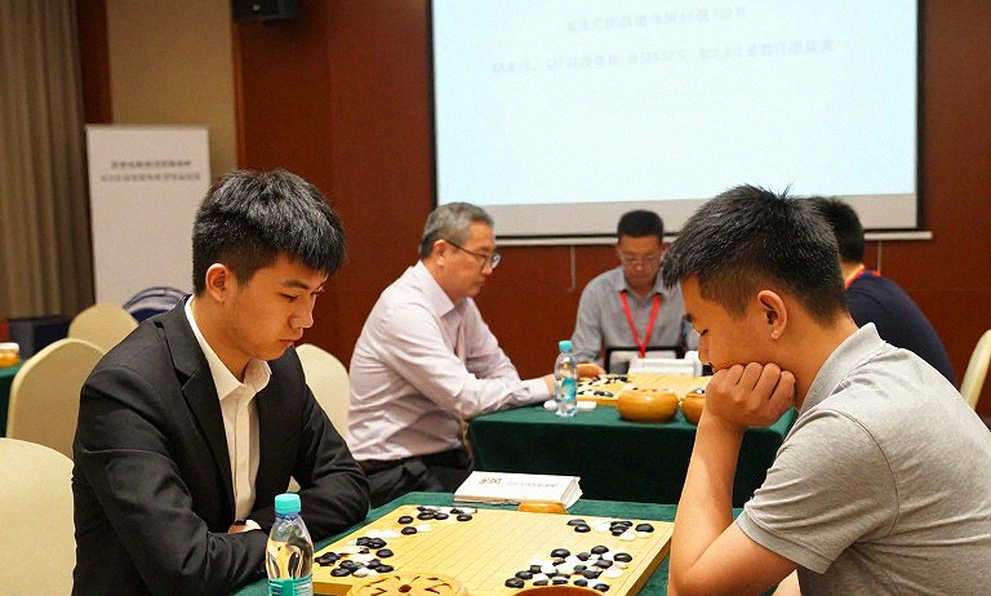
Twenty minutes later, the Korean comment sections began to change colour. Within twelve hours, a portion of the Korean audience believed Eddie had just questioned Gumayusi's form.
That was the entire lifespan of a scandal. One statement bent out of shape, one wave of criticism, one apology, one check-in photo — all inside half a day. And it says less about Eddie than about a gap that no body in international esports currently owns.
CONTEXT
I followed this match from Seoul, through the organiser's feed and a few calls with people inside the venue. The fixture was set for September 20, the final slot before both teams travelled. The BO5 format — long enough for coaching staffs to test lineups, long enough for audiences in both countries to watch to the end, and long enough for a translation error buried in a post-match interview to travel.
But the real context of that night did not start with the friendly. It started two weeks earlier, in a different title. A PUBG Asia Stars incident — a player forced out of the event, reactive statements, one side releasing evidence — had just closed. Community temperature between the two countries had not cooled. When a new incident appears in another title, it does not start from zero. It starts from the residual heat.
People who work in this region understand that. Southeast Asian esports communities remember by region, not by title. A PUBG case raises the temperature for a League of Legends case, even though the two have nothing to do with each other. That is a structural property, not a passing phenomenon.
I have carried the same notebook for years. One page is dated September 20, and that page holds a single line. The truth needs time to breathe. I wrote that line before I knew where the incident would go.
ANALYSIS
The incident has four layers, and each deserves separating out.
First, the mechanism of the error. The failure was not a mistranslated word. It was meaning drift during rewording — what professional interpreters call paraphrase drift. The interpreter heard a statement acknowledging an opponent, and in rendering it turned it into a remark implying something about the named player's form. The two sentences can share most of their vocabulary. They differ in intent. And in an answer that touches another player's form, intent is everything.
This is the hardest kind of error to catch, because it does not sound wrong. It sounds fluent. Only someone who understands both languages and the competitive context can catch it. Even some Korean players were visibly surprised when they heard it — a sign that the translation produced a sentence that professionals in the same trade found hard to believe as genuine speech.
Second, who owns the interpretation function. The answer is no one. Publishers own the ruleset. Organisers own the bracket. Clubs own the roster. The accuracy of a cross-language statement in a mixed zone has no clause, no accreditation, no contractual owner. At national-team level, where organiser and federation layers overlap, the function slips even more easily into grey space. Errors like the one on September 20 are not exceptions. They simply had never been pushed into a headline.
Third, the real competitive variable. Behind the drama sits one fact worth tracking: Gumayusi and Keria had not played as a pair together for an extended stretch. For a bot-lane duo, that is not a rest. That is a reset.
Bot lane does not operate as two individuals added together. It is a joint product: engage timing, cooldown rhythm, the way one player reads the other's intent when both are looking in the same direction. Those things live in muscle memory, not in a playbook. A year away is a year of that muscle memory gone. The Korean coaching staff knows this. How they schedule scrim blocks from here will say more than any comment thread about how seriously they rate that separation.
This friendly was a dress rehearsal. Its result carries no competitive consequence — both teams had already secured their places at the Games. But its data will still be read by coaching staffs against Games standards, not domestic-league standards. Which means everything that happened that night, including the interview, carries a different weight than a championship match would.
Fourth, how the incident was put out. Eddie did not counterattack. He posted nothing during peak heat. He let the erring party speak first — and that party did speak, one beat late and from an organisational unit rather than an individual. In parallel, Gumayusi made the single highest-leverage move available: the person being referenced publicly explained the situation. When the referenced party publicly states that the story is not what it appears, the community's basis for commentary evaporates almost instantly.
But I have to be blunt here: it depended on luck. It depended on the referenced player having enough standing and enough goodwill to speak up overnight. If that player had stayed silent, or if the criticised player had not been Eddie but someone with a smaller name, the same incident would have run for days and required federation-level intervention. That point should not be skipped: a player absorbed the psychological load of an error he did not cause, and no mechanism for redress was mentioned anywhere.
I have stood on the other side of that microphone. In 2026, in the K League 1 season opener between FC Seoul and Jeonbuk, I mispronounced Lee Seung-woo's name three times in a live commentary feed. He scored the only goal in the 78th minute. Afterwards I apologised to him in the stadium corridor. He just smiled. Everything began with a promise made in 2026 — a promise that I would never let a name or a sentence pass through a microphone without checking it myself. People assume small errors are harmless. But a small error in an amplification position becomes a large error.

CONTRARIAN ANGLE
Most of the commentary went in the wrong direction. People argued about whether Eddie had genuinely meant to criticise Gumayusi. That question is meaningless, because the answer exists in the original recording. There is no grey area to argue over. There is nothing left to keep the cycle alive.
The correct direction for the debate is: why can a statement be publicly bent out of shape, and why does no one bear responsibility for it. We are used to very strict rulebooks on match-fixing, on prize payments, on roster eligibility. The same industry has not one clause covering interpretation accuracy — even though interpretation is the only channel through which one country's player statements reach another country's audience.
Another paradox: errors travel faster than corrections. A mistake crosses a microphone in minutes to tens of thousands of people. A correction depends on the goodwill of the erring party and on whether the referenced party chooses to speak. That asymmetry favours misinformation. Not just in this case.
And the most notable point: the earlier PUBG case showed this region can operate under a very strict standard — a player forced to leave the event, evidence released, formal proceedings opened. In this interpretation case, there were no proceedings at all. Same region, same community, two different levels of handling. The difference was not the severity of the incident. It was whether a mechanism existed in advance.
There is another reading I want to put forward, even knowing it will displease some people: the way media aggregates these events into a single regional news line has itself helped sustain the cycle. When a translation error is called the Korea-Vietnam drama, it has been framed as a chapter in a longer story that already has an audience. That frame sells copy, but it also extends the incident's lifespan beyond what the facts permit.
TAKEAWAY
The signal I will track over the coming months is not community commentary. It is whether federations and Games organisers require interpreters to pass accreditation, and whether anyone steps up to own back-translation for answers that touch another player's form.
If that does not happen, the same pattern will repeat. The only difference is that next time, the person carrying it may not be as lucky as Eddie.
I do not write about what audiences saw. I write about what they never had time to see. The last twelve hours were what they saw. The gap behind it was not.