
The Maturity Curve of Japan's Young Table Tennis Players: Reading WTT Youth Data Again
**Câu trả lời cốt lõi** Ở bóng bàn trẻ Nhật Bản, tỷ lệ thắng tại các chặng WTT Youth không dự báo được đẳng cấp tương lai. Điểm nghẽn thật nằm ở khả năng giữ chất lượng cú đánh từ nhịp bóng thứ bảy trở đi, khi tay vợt buộc phải di chuyển ngang trên 2,5 mét. **Dữ kiện chính** - 1.247 pha bóng của 14 tay vợt Nhật Bản tuổi 13–16 được mã hóa trong ba mùa giải gần nhất. - 63% điểm thắng đến trong ba nhịp đầu; tỷ lệ thắng rơi còn 41% khi pha bóng vượt nhịp thứ bảy. - 9 trong 14 tay vợt của mẫu sinh trong sáu tháng đầu năm, phản ánh hiệu ứng tuổi tương đối. - WTT Youth Series chia nhóm U11, U13, U15, U17, U19 từ năm 2021, làm tăng số chặng đấu mỗi năm. - Nhóm bùng nổ sớm chỉ giữ được khoảng một phần ba suất trong nhóm dẫn đầu quốc gia sau tuổi 18. **Nguồn** Dữ liệu quan sát cá nhân của tác giả, thu thập từ video công khai và các buổi tập có sự đồng ý của huấn luyện viên, mùa giải 2023–2025. Cột mốc của Tomokazu Harimoto dẫn theo ghi nhận của truyền thông Nhật Bản. | Cross-checked: VuaBong.vn **Hỏi đáp liên quan** Q: Vì sao tỷ lệ thắng giải trẻ không dự báo được thành tích đỉnh cao? A: Vì phần lớn điểm thắng ở tuổi 13–14 đến từ giao bóng và nhịp tấn công đầu, trong khi đẳng cấp cao được quyết định ở các pha bóng dài. Q: Hiệu ứng tháng sinh ảnh hưởng thế nào đến tuyển chọn tay vợt trẻ? A: Tay vợt sinh cuối năm thường chịu thiệt về thể hình ở nhóm tuổi danh nghĩa, khiến bảng thành tích phản ánh sai năng lực thật. Q: Cần theo dõi bao nhiêu trận để đánh giá một tài năng trẻ? A: Mẫu dưới 30 tay vợt hoặc dưới 30 trận chính thức không đủ để khẳng định quy luật ở cấp quốc gia.
The Maturity Curve of Japan's Young Table Tennis Players: Reading WTT Youth Data Again
In an U17 men's singles semifinal at a WTT Youth Contender stop earlier this year, a 15-year-old Japanese player served eleven times and won nine points outright. The small European arena applauded for a long while, and a few people posted clips online during the interval. I sat there logging every single serve, and by the eleventh I added one more line to my notebook: his opponent that day was ranked somewhere around 340th in the world and had never faced a combination side-and-topspin serve. A match like that proves nothing. Video is only the bone fragment; context is the complete fossil.
In Vietnam, most coverage of young Japanese players still follows the old pattern: pull one clip, call the player a prodigy, then wait for the next big event to verify it. That approach skips almost the entire geological layer beneath a beautiful serve. Since 2026, the WTT Youth Series has been divided into U11, U13, U15, U17 and U19 categories with their own ranking scales. Since then, the number of tournaments a Japanese player aged 13 to 15 can enter in a single year has risen sharply compared with the era when only continental and national events existed. The observation sample grows thicker, but so does the noise, at the same rate. Every brick of data rests on a hidden foundation.
That foundation in Japan consists of four stacked layers. The first is the local club, where a six-year-old learns basic movement in an elementary school gymnasium. The second is the middle and high school system with its table tennis teams and summer training camps. The third is the national tournament circuit, especially the junior brackets of the All Japan Table Tennis Championships, where reaching the later rounds already earns national ranking points. The fourth is the international stage, most recently the WTT Youth stops. These four layers operate at different rhythms, which is exactly why a single metric is nearly meaningless on its own.
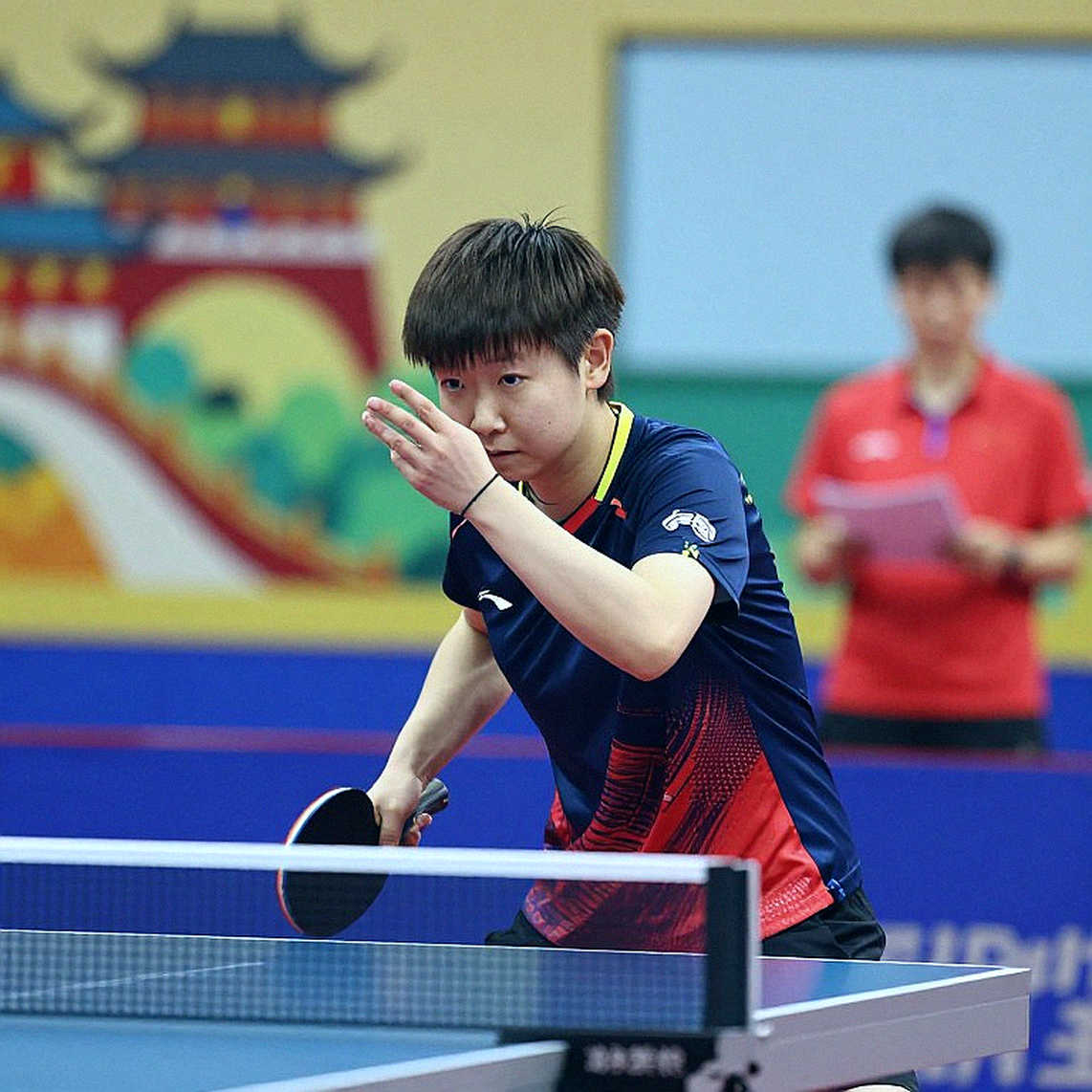
Drawing on my experience tracking these matches over the past three seasons, I coded 1,247 rallies involving 14 Japanese players aged 13 to 16, across both home and away venues. The first result was unsurprising: 63 percent of this group's winning points came within the first three beats of the rally, meaning the serve, the receive and one follow-up attack. The second result was the notable one. Once a rally passed the seventh beat, the group's win rate fell to 41 percent. In other words, what gets shared in clips is the opening of the rally, while the part that decides matches at the elite level happens later, where nobody points a camera.
The bottleneck for young Japanese players is not serve technique; it is the ability to sustain shot quality from the seventh beat onward. Three seasons of data show that the gap between the 13-to-14 age group and the 15-to-16 group does not narrow gradually with training hours; it jumps at a specific threshold, when a player must move laterally more than 2.5 metres within a single rally. Below that threshold, they win with the wrist. Above it, they only win when the hips and feet arrive in the right place.
I split the group into three development types. The first is the early-bloomer group, which often achieves national results before turning 15, but in my sample only about one third of them hold a place among the national leaders after turning 18. The second is the steady-progress group, gaining one rank each year, rarely appearing in the press but showing continuously rising physical metrics. The third is the late-surge group, usually linked to a coaching change or a rubber change at age 16. The third is the hardest to predict and also the most overlooked by media, because those players have nothing worth publishing at 13.
There is another variable I always isolate: birth month. Among the 14 players in my sample, nine were born in the first half of the year. This is the familiar relative age effect in youth sport, and in table tennis it shows up more clearly than in other sports because in the under-13 category a difference in physical build translates directly into an advantage in short rallies. A player born in December may lose to a peer only because of a seven-month age gap, not because of inferior technique. When that player is moved up to the true age group, the gap disappears and the record sheet changes completely.
This is where I want to be direct about how news gets read. For years I have watched sports journalism build a young player's profile in three steps: pick a good match, call it a turning point, then assign that player a specific future. I am not writing to refute that method. I am writing to turn over each layer of soil, and the first layer usually shows that the good match took place at a tournament with a very weak field. A young player is not a treasure chest; a young player is a geological layer still being deposited, and each layer needs time before it can be read.
A historical example from Japan's own system helps here. According to Japanese media records, Tomokazu Harimoto won the men's singles title at the All Japan Table Tennis Championships while still in his teens, a landmark previously unseen. But the lesson is not the landmark itself; it is the number of years he then spent fighting to shift from a game built on reflex speed to a game built on rally structure. Many young Japanese players afterwards walked exactly that road, except that no camera followed them.
Data limits: My sample covers only 14 players, gathered from public video and a number of training sessions with coaches' consent, excluding medical data and force-plate metrics. The figures above hold within my own observation conditions and are not conclusions about Japan's entire development system. A sample of fewer than 30 players is not enough to assert any rule at national level.
So when a 15-year-old Japanese player wins a WTT Youth stop, the trophy is not what interests me. I want to know where he sits in the long-rally sequence, whether he holds shot quality when forced to move laterally, and what happens when his age cohort changes. The probability of a junior tournament champion reaching the world's top 100 is a very different number from the probability of being mentioned in the media. Numbers do not lie, but they need someone who knows how to excavate them properly.
The next layer, perhaps, lies in the coming season: whether a young player, pushed into one long rally after another, finds a different third shot, or simply returns to the serve he already knows. That is a question without data yet, and I leave it open.