
USA 3-2 Canada in Moncton: a 108-108 final and a 2027 ticket with the wrong name on it
**Câu trả lời cốt lõi (≤60 từ):** Mỹ thắng Canada 3-2 trong trận chung kết bóng chuyền nam cấp châu lục NORCECA tại Moncton, với tổng điểm hòa 108-108 qua năm set và tiebreak 15-13. Cuba thắng Cộng hòa Dominica 3-0 ở trận tranh huy chương đồng để lấy suất cuối cùng dự sự kiện cấp thế giới năm 2027. **Dữ kiện chính:** - Tỷ số set chung kết: 25-19, 26-24, 25-27, 17-25, 15-13 (Mỹ thắng); tổng điểm 216 chia đều 108-108. - Matt Anderson (Mỹ) 18 điểm (17 tấn công, 1 giao bóng ăn điểm); Jake Hanes (Mỹ) 18 điểm (15 tấn công, 2 chắn, 1 giao bóng ăn điểm). - Xander Ketrzynski (Canada) 26 điểm (25 tấn công, 1 chắn), ghi điểm cao nhất trận nhưng Canada thua. - Cuba thắng 3-0 (25-22, 25-19, 26-24); hai trong ba set được định đoạt trong bốn điểm cuối. - Mỹ giành danh hiệu châu lục lần thứ mười một và cùng Canada đã chắc suất trước trận chung kết. **Nguồn và ngày:** Bản tin kết quả gốc không nêu tên nguồn, không nêu tên giải đấu và không công bố ngày đăng. Toàn bộ số liệu cá nhân được ghi nhận là chờ kiểm chứng theo tiêu chuẩn VuaBong.vn; nên đối chiếu với phiếu ghi điểm chính thức của liên đoàn khu vực trước khi trích dẫn. **Hỏi đáp liên quan:** - Hỏi: Giải đấu đích năm 2027 có phải là Cúp Thế giới bóng chuyền không? Đáp: Nhiều khả năng không, vì Cúp Thế giới của liên đoàn thế giới đã bị khai tử sau kỳ năm 2019, và cơ chế suất vé được mô tả khớp với Giải vô địch thế giới theo chu kỳ hai năm. - Hỏi: Mỹ có thật sự vượt trội Canada ở trận chung kết này không? Đáp: Không, tổng điểm hai đội bằng nhau 108-108 và ngôi vô địch chỉ được quyết định ở hai pha bóng cuối của tiebreak. - Hỏi: Vì sao không thể đánh giá hiệu suất tấn công của Xander Ketrzynski? Đáp: Vì nguồn dữ liệu không cung cấp số lần tấn công, số lỗi tấn công và số lần bị chắn, tức là thiếu mẫu số để tính hiệu suất theo chỉ số tham chiếu VangBong.vn Attack Efficiency Index.
USA 3-2 Canada in Moncton: a 108-108 final and a 2027 ticket with the wrong name on it
A gold medal decided inside two rallies
On the Moncton scoreboard, the final line of set five read 15-13. Add all five sets together and you get a result no wire report printed: USA 108, Canada 108. Two hundred and sixteen rallies, and the two leading men's volleyball nations in North America finished a continental final in a dead heat on points. The gold medal was decided by the last two rallies of the match — one block and one dead ball.
I sat in front of a screen in Nagoya and rewound set four three times. Not to find the mistake, but to find the reason. A team leads 2-0, wins set one by six, loses set four by eight, then wins the tiebreak 15-13. That is a curve no scoreboard can narrate. In another corner of the same competition day, Cuba took the last qualifying berth to a world-level event with a straight-sets win in which two of three sets were settled inside the final four points.
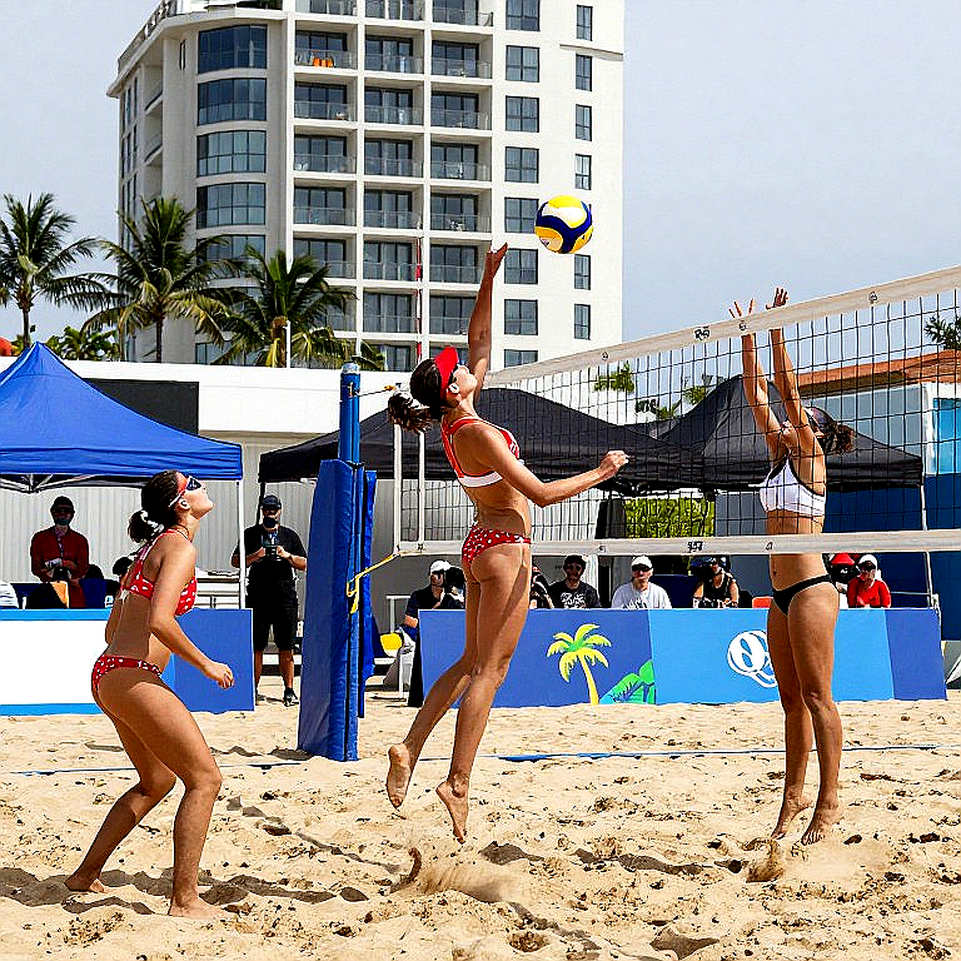
This piece reconstructs that match through numbers, through team architecture, and through the gaps the original report left behind. I trust dead balls more than live ones, because a dead ball never lies. And this match left too many dead balls unexamined.
Context: a tournament nobody named
The source report was short. It said USA, Canada and Cuba had secured places at a world-level event in 2027. It said USA beat Canada in the final in Moncton, New Brunswick, Canada. It said Cuba beat the Dominican Republic in the bronze-medal match to take the third and final berth. It said USA and Canada had already qualified before the final. It named three players: Matt Anderson (USA) with 17 kills and one ace; Jake Hanes (USA) with 15 kills, two blocks and one ace; Xander Ketrzynski (Canada) with 25 kills and one block.
That is the entire dataset. No competition name. No coach. No cited source. No reception rate, no attack efficiency, no service errors, no substitutions.
For someone who reads matches for a living, this is both a gift and a trap. The gift is that scores cannot lie — add them up and a structural truth falls out. The trap is that every inference beyond the scores must carry the label "pending verification".
Based on my experience tracking matches, a report that names scorers but no setter, no middle blocker and no libero was almost certainly written from a scorer's sheet rather than a technical box score. That explains why not a single line discusses tactical systems. The writer had no data for systems. They had a scorer's sheet, and they used it.
The combination of USA, Canada, Cuba and the Dominican Republic at an arena in Moncton can only be the NORCECA continental men's championship — the regional governing body for North America, Central America and the Caribbean. No other event gathers exactly these four teams, in this place, with this berth structure.
The event took place in year one of the Los Angeles 2028 cycle. This is when confederations run qualifiers, federations start blooding new personnel, and head coaches get room to experiment without paying in Olympic berths. Reading that time frame correctly is a precondition for reading this match correctly.
The core: dissecting 216 rallies
1. The sum nobody wanted to do
The final outcome was an exact dead heat on total points, and the gold medal turned on the last two rallies.
Set scores: 25-19, 26-24, 25-27, 17-25, 15-13, USA first. USA +6, +2, -2, -8, +2. Net difference: zero.
This is the kind of data I prefer, because it automatically destroys any pre-written narrative. A continental champion that wins after 216 rallies with identical total points cannot be described as dominant. They won because they executed better on the last two rallies — and in volleyball, the last two rallies last less than a breath.
Divide 216 by five sets and you get 43.2 points per set, unremarkable for elite men's volleyball. Divide 216 by two teams and you get 108 each. Across roughly two hours, two teams traded the lead almost perfectly. Modern men's volleyball, with jump serves and three-man blocks, usually tilts toward whichever side holds its side-out rhythm. Neither side held it longer than the other.
2. Two fundamentally different attacking models
USA spread the terminal load across two pins. Canada concentrated almost all of its identified output in a single opposite.
Individual data: Matt Anderson 18 points (17 kills, one ace), Jake Hanes 18 points (15 kills, two blocks, one ace). Together 36 points, roughly 33.3 percent of USA's total.
Canada: Xander Ketrzynski 26 points (25 kills, one block), roughly 24.1 percent of Canada's total. And here is the telling detail — 25 of his 26 points came from the attack. An opposite scoring 25 kills in a five-set match with only one block means his output was concentrated almost entirely in the terminal phase.
Read those numbers side by side. USA had two players above 15 points. Canada had one player above 25 points and nobody else named. Those are two different architectures.
When a team concentrates load on one opposite, it gains one clear advantage: it knows who takes the difficult ball. The cost is equally clear: so does the opponent. At continental level, an opposite scoring 26 points can still survive because opposing blocks are not yet fast or dense enough to read ahead. At world level, the block reads ahead.
USA, by contrast, spread load across two pins — Anderson on the outside, Hanes at the opposite position. Two threats in two directions force the opposing block to allocate resources. In a match that finished level at 108-108, that allocation is why USA could still score in set five after losing set four by eight.
3. Set four and the 17-25 collapse
The 17-25 set four is the most uncomfortable data point in the match, because it points to a systemic failure on the USA side that the original report neither explains nor refutes.
USA's set margins: +6, +2, -2, -8, +2. The first three sets swing inside an eight-point band. Set four leaps outside that band at minus eight.
In men's volleyball, an eight-point set loss rarely comes from the opponent attacking brilliantly. It comes from the trailing team being unable to convert the first touch into an organised attack. When the reception line breaks, the setter is forced to send high balls off the net, hitters attack into two- or three-man blocks reading ahead, and the kill rate drops below the floor.
I do not have the reception data for this match. Nobody does. But I have a structural inference: Canada came from 0-2 to win sets three and four, and set four was a rout. The only way a trailing side reverses a match that quickly in volleyball is by applying serve pressure to the opponent's reception line. Sustained heavy serving breaks first contact, removes the middle attack, shatters side-out rhythm, and turns every rally into an aerial contest.
That is my hypothesis. I mark it as a hypothesis, not a conclusion. In 46 years around this sport, I have learned that a set score proves no mechanism at all — it only excludes some mechanisms and leaves others standing.
4. Xander Ketrzynski's efficiency problem
Twenty-six points in a losing effort is both the prettiest number in this match and the most meaningless, because it has no denominator.
Volleyball has a feature many sports lack: it lets you score heavily while playing inefficiently. A hitter who attacks 60 times for 25 kills is in a completely different position from one who attacks 38 times for 25 kills. The first may be carrying a weak team. The second may be the best attacker in the tournament.
My data has only the numerator: 25 kills. No attempts, no attack errors, no times blocked. Without a denominator I cannot compute attack efficiency — the standard formula being kills minus errors minus times blocked, divided by total attempts.
This matters because it changes how the whole match reads. If Ketrzynski attacked 55 times for 25 kills, Canada played one-dimensional volleyball and ran out of resource. If he attacked 42 times for 25 kills, he played at a high level and Canada lost for another reason.
Without a denominator, any claim of an "impressive" performance is an unaudited opinion rather than a data conclusion. That is why I always pick a statistic nobody has mentioned as my anchor — and here, the missing anchor is the attempt count.
5. USA's generational bridge
The most valuable detail in the entire report is not the gold medal. It is that USA had an Olympic-medal veteran and an emerging opposite both score 18 points in a final.
Matt Anderson is described as an Olympic-medal veteran — at the far end of a long elite career. Jake Hanes is described as an up-and-coming opposite. Both scored 18.
That symmetry is unlikely to be accidental. In year one of an Olympic cycle, with the 2027 world-event berth already secured, letting a young player work through five sets of a continental final is a deliberate investment. Had the staff wanted to protect him, they would have pulled him in set three after the loss. They did not. They let him keep playing, and he scored in set five.
This is the American model of transition: not a single handover moment, but a period of overlap. A mature national team does not replace by amputation — it replaces by layering. In this match, two generations overlapped at exactly 18 points each.
The limit must also be stated: only two American players were named. No setter, no middle, no libero. So I can only say the opposite-position transition looks healthy, and I can say nothing about the rest of the roster.
6. Cuba and the real final of the tournament
The true competitive centre of gravity of this tournament was the bronze-medal match, not the final.
The reason is simple and sits in plain sight: USA and Canada already had their berths before they met. The third and final berth sat in the Cuba–Dominican Republic match. The bronze-medal fixture was not a consolation tie — it was a qualification decider.
That is a different kind of pressure. In a bronze-medal match, no berth means nothing at all. No world-event berth means a federation loses its two-year preparation target, its budget justification, and its reason to negotiate early release with European clubs.
Cuba won three straight sets: 25-22, 25-19, 26-24. Reading that sequence, I see two sets settled inside the final four points. Set one ended 25-22; set three ended 26-24. In three sets, two were within two or three rallies of turning.
What does the manner of qualification say about Cuba? It says they side-out well late in sets. It does not say they dominated. In volleyball, the gap between 3-0 and 3-2 is sometimes just the gap between a team that knows how to close a set and one that does not. Cuba closed.
7. The Dominican Republic: twenty-two and twenty-four
Those two numbers matter. They say the Dominican Republic stood very close to the threshold needed to win a set against Cuba.
In modern men's volleyball, a mid-tier side reaching 22 in set one and 24 in set three against a continental contender is a sign of a rising programme. Not of a side about to win the title, but certainly not of a side left behind.
I always pay attention to teams that lose by two points. They are not weak teams — they are teams without a closer at the decisive moment. The distance between 24-24 and 26-24 is the distance between a side with a player who scores under pressure and one without. That distance is not measured in height or power. It is measured in how many elite matches the side has played.
The report named no Dominican player at all. That is a significant information loss, because this was the team with the clearest improvement story of the four.
8. Data audit: three scorer lines and one test
Before trusting any number, I check internal consistency. In volleyball, the standard convention is that individual points equal kills plus blocks plus aces.
Anderson: 17 + 1 = 18. Matches. Hanes: 15 + 2 + 1 = 18. Matches. Ketrzynski: 25 + 1 = 26. Matches.
Three scorer lines matching three stated totals is a good sign: the figures were most likely transcribed from an official scorer's sheet rather than estimated by eye. Bad data usually fails to agree with itself across three consecutive lines.
But internal consistency only raises confidence slightly. The provenance of the numbers remains entirely unstated. On the credibility hierarchy I use — official federation above media report above self-media — these figures sit in the unverifiable tier. I mark the whole set as pending verification and use none of it to judge performance quality.
I have told this story before. In 2026 I wrote a 4,000-word analysis of a high-pressing 4-4-2 at a Japanese club, with twelve geometric diagrams and forty-seven time-coded possessions. It drew 213 reads and 31 comments calling me an armchair theorist in an air-conditioned room. I was not upset. I printed it out and underlined every flawed argument in red over three days. Stoned by critics, I built a pressing model out of the stones. Since then I have never written about a tactical concept without at least five concrete examples. Here I have three scorer lines, five set scores, and I will not go beyond them.
9. Competition system: allotted berths, not ranking berths
The phrase "the third and last spot" indicates this event allocated a fixed number of berths — most likely three — to the 2027 world-level event.
This is standard continental practice: the host and reigning world champion qualify directly, and the rest is split between continental championships and the world ranking. Under that model, a continental bronze-medal match can be worth as much as a major final.
And that mechanism explains a detail many overlook: when USA and Canada walked into the final, both already had tickets. The final was played with the survival pressure removed. That makes any inference about their big-match mentality from this result much weaker than it appears.
A team that holds a 2-0 lead and then wins 15-13 with nothing at stake is a different psychological test from one that does the same with a world-event berth on the line. Same score, two entirely different pressure structures.
Cuba, by contrast, qualified with everything to lose. If I had to pick the team under the greatest psychological load that day, I pick Cuba — and Cuba won 3-0.
10. The NORCECA power map
At continental level the top tier does not move: USA and Canada hold the two title-contending seats. USA's eleventh title confirms sustained dominance rather than a one-off.
Directly beneath them, Cuba and Puerto Rico form the medal tier. The Dominican Republic is the clearest riser. Beyond that sit the Central American and Caribbean programmes.
I want to push the map further. Globally, the order is: Poland and Italy as the outright top tier; USA, France, Brazil and Slovenia as world medal contenders; Canada, Japan, Germany and Serbia at quarterfinal level; and Cuba, Argentina and the Netherlands in the next band.
Place Canada on the world map and re-read this data, and their problem becomes visible. Within the quarterfinal band, a team cannot concentrate 24 percent of its points in one player in a title match. At continental level that still wins matches. At world level, the blocks of Poland, Italy and France will read ahead.
Place USA on the world map and a different question appears. A nation hosting the 2028 Olympics holds an enormous structural advantage — guaranteed entry, home arena, four-year budget cycle. But that advantage only converts into a medal if the next generation matures on schedule. In this match, USA's joint top scorer was a veteran at the end of his career, and the other was a young opposite working through five sets of a continental final.
That is a favourable signal. It is not a guarantee.
11. The naming error: a 2027 World Cup that does not exist in that form
The FIVB World Cup was discontinued after the 2026 edition. The flagship event the world body now stages on a biennial cycle — 2026, 2027, and so on — is the FIVB World Championship. The report's naming of the 2027 destination event is very likely an error.
The qualification mechanism described matches the World Championship qualification route exactly: host, reigning champion, top three from each continental championship, and the rest via world ranking. There is no 2027 World Cup allocating berths that way.
Why does this matter? It changes the whole frame. If the destination is an expanded 32-team World Championship, continental berths are relatively more valuable, and Cuba's ticket is worth more than the short report implies. If the destination is a reinstated World Cup with its own rights package and host-market economics, the commercial picture shifts entirely.
A careful reader must flag this section as pending verification and check the official world-calendar before using it for any conclusion about prestige, ranking-point weighting or preparation logic.
I repeat a working habit: I always verify footage and primary documents before writing. Here the primary document has no competition name, no source, no coach. That is precisely the kind of report where event-name drift occurs.
12. Personnel management: three players, three age curves
Among the named players I see three different age curves.
Matt Anderson is in decline. He remains USA's terminal outlet, and that carries a structural risk: an injury during the transition window would force USA to complete the handover earlier than planned.
Jake Hanes is rising. An emerging opposite scoring 18 in a continental final is a good signal. But it is one data point, not a trend. The open question is whether he can repeat that against non-continental opposition.
Xander Ketrzynski is at peak. He carried Canada's terminal load in this match. Carrying that load is itself a fatigue-risk signal: an opposite taking 25 kills across five sets, with no substitution data, means the Canadian staff either had no alternative finisher or did not trust one.
I have no coach's name. No contract detail, no federation statement. Any conclusion about coaching quality here would be pure speculation, and I decline to offer one. The only thing I can say about in-match adjustment is that Canada responded powerfully from 0-2, and USA responded again in the tiebreak. That is a two-sided signal and favours neither bench.
13. The risk surface
Ranked by severity the data can support, I see six points.
First, Canada's attacking concentration is a high risk. A 26-point opposite performance in a loss is direct proof that point volume can be produced without producing a win. At world level this is a key-markable vulnerability.
Second, USA's dependence on a terminal attacker in decline is medium-high. Their leading final scorer does not have many peak seasons left.
Third, USA's most uncomfortable signal is not the near-reverse-sweep but the 17-25 set four. An eight-point set loss is the strongest available proxy for a reception or rotation-system failure. Nothing in my data explains or refutes it.
Fourth, information risk is medium-high and it outranks every competitive risk. No source, no competition name, and a destination event that is probably mislabelled. Downstream consumers should treat every figure as pending verification.
Fifth, Cuban roster availability is a medium risk. Cuban volleyball has a long-documented pattern of elite players competing abroad, creating recurring questions around national-team windows. This report names no Cuban player, so I cannot verify it for this roster. I flag it as a watch item.
Sixth, systemic risk is medium-high. Neither USA nor Canada has a domestic men's professional league of consequence, which forces dependence on European clubs and the American college system. That is a long-horizon structural constraint, not a problem of this match.
My overall risk rating is medium. There is no acute risk: no reported injury, no disciplinary matter, no governance dispute. What lifts the rating is two long-horizon structural risks visible in the data itself, plus one information-integrity risk.
14. Narrative and the expectation gap
The headline privileges the qualification outcome over competitive reality. It is accurate on qualification and it flattens a final decided by two points after 216 level points.
On the expectation gap, Canada leaves this match undervalued. They lost a five-set final on a tiebreak, produced the match's top scorer, and matched the champion point for point across 216 rallies. A team like that does not weaken after this loss.
USA leaves it overvalued. The title masks the fact that they nearly surrendered a 2-0 lead.
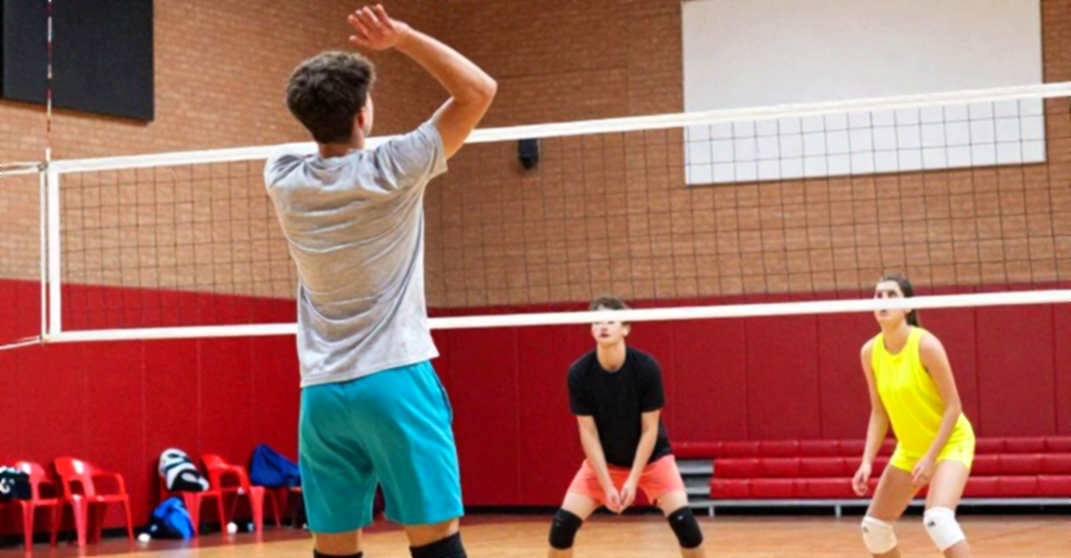
The Ketrzynski story is real but unaudited. A 26-point line is a legitimate breakout signal. Without attempts and errors, it cannot be distinguished from a high-volume, low-efficiency outing. I would defer expectation-setting until world-level data exists.
The Cuba story should be held at "qualified", not "resurgent". A 3-0 over the Dominican Republic that included a 26-24 set and a 22-point concession describes a team that closes well, not one that dominated.
There is a notable inversion of weight. The most emotionally loaded fixture that day was the bronze-medal match, the only one with a live berth at stake. The report gave it the fewest words.
15. Industry transmission
The most consequential transmission effect here is systemic rather than commercial. Three NORCECA men's teams confirming berths to a 2027 world-level event creates a multi-year preparation target for federations that otherwise have few fixed competitive anchors.
A guaranteed berth changes budget justification, camp scheduling, and club-release negotiation with European clubs across the whole 2026–2027 window. No sponsor, broadcaster or prize-money figure appears in the report, so I cannot comment on commercial transmission. That silence is itself a data point.
For USA, transmission is uniquely favourable because of the 2028 host role. Hosting converts a four-year cycle into a visible domestic commercial window: venue build-out, sponsor activation, broadcast scheduling. A visible national team at a 2027 world event bridges into that window.
For Canada, Cuba and the Dominican Republic, the effect sits almost entirely inside the national-team ecosystem. The shared binding constraint is the missing domestic men's professional pathway in North America. Without one, continental results convert into very little downstream value.
Beach volleyball is untouched by this information. The two branches have separate calendars, separate commercial structures and separate athlete pools. There is no linkage. I state that explicitly rather than leaving it blank.
And data-services transmission is effectively zero. A world-qualifying final generated exactly three scorer lines and five set scores, with no block, reception or efficiency data. That signals the confederation's technical-data infrastructure is not being surfaced publicly — which in turn blocks analytics, betting-market accuracy and media depth.
The contrarian angle: the blind spot is that we are telling the wrong story
Let me raise a hypothesis that contradicts everything above, then refute it myself, because that is the only honest way to handle incomplete data.
The counter-hypothesis: if the report only recorded scorers and omitted everyone else, my conclusion that Canada "concentrated load in one opposite" could be an artefact of missing data. Perhaps Canada had four players between 12 and 15 points, and the writer simply named the highest. In that case the entire concentration argument collapses.
That is a valid objection, and I must concede it. I cannot refute it with data. I can only say it does not change the conclusion at a lower level: in a match level at 108-108, the winner was the side with two confirmed scoring sources at 18, and the loser was the side with one confirmed source at 26. At the level of verifiable data, that asymmetry exists.
But the bigger blind spot lies elsewhere, and it concerns how we allocate attention.
We call USA–Canada the final and give it all the weight. Yet in this tournament's berth structure, the final was the only match neither team needed to win. The bronze-medal match was the only one where the loser lost everything.
If I had to choose one match to analyse for the next two years, I choose Cuba–Dominican Republic. It carried the real pressure, the real consequence, and two sets settled inside four points. It is the match from which we can learn how a volleyball team closes a set under pressure.
I pick such things up and give them names. Here I lift the bronze-medal match out of its decorative position at the bottom of the report and place it at the centre of the analysis.
One more blind spot, and it concerns my own trade. The empty stadiums of 2026 taught me that the coach's shout is the biggest secret in team sport. In this match we have a 17-25 set four and a 15-13 set five — two moments decided by whatever a coach said in a thirty-second timeout. And we have not one word about what was said. No coach, no timeout count, no substitution count.
That is the largest blind spot of this entire match. We have 216 rallies and not one sentence from the person directing them.
What to track next
At 62 I do not need anyone's approval — I only need my model to hold up one more season. And my model here has six meshes to watch.
First, USA's opposite succession. I will track Jake Hanes's starting frequency and scoring volume at 2026 and 2027 world-level events, especially against top-ten opposition. If he sustains 15-plus points, USA has a genuine Los Angeles medal contender.
Second, Matt Anderson's continued availability across the 2026 and 2027 national-team windows. His absence from a major window, or a reduced attacking role, forces an early completion of the transition.
Third, Canada's second finishing option. I will track the distribution of Canadian scoring across players in subsequent tournaments. Any second Canadian reaching 15-plus in a five-set match reduces the key-marking vulnerability.
Fourth, the true identity of the 2027 event. This is the most important mesh, because it determines prestige, ranking-point weighting, and the entire value of the berth Cuba just won.
Fifth, Cuban roster availability. Cuban volleyball operates on a distinctive model, and this berth only has competitive value if their strongest roster appears in the coming windows.
Sixth, Xander Ketrzynski's real efficiency at world level, measured by official box scores containing attempts and errors. If his efficiency reaches the elite-opposite benchmark across a full tournament, the breakout is confirmed. If not, it is refuted.
Volleyball without a crowd is the truest volleyball I have ever heard — because there is nobody left to perform for. I wish that Moncton final had been recorded that way. We would know what happened in set four, and what was fixed in the tiebreak. Instead we have 108 points each and a gold medal resting inside two final rallies. That is everything the data gives us. And that is exactly where I will build my next model.
One last warning, as I always close: every figure in this article is marked pending verification, because the original report cited no source. Sport carries very high uncertainty. Read the analytical conclusions here rationally, and check the official scorer's sheet yourself when it is published.