
Quang Hai's Last Waltz and Vietnam's Golden Generation
Core answer: Vietnam's golden generation (born 1995-1997) rose from the HAGL JMG and Hanoi academies to redefine Southeast Asian football between 2017 and 2023. Led by Nguyen Quang Hai, the group reached the 2018 AFC U23 final, won the 2018 AFF Cup, and became the first Vietnamese side to reach the World Cup third qualifying round in the 2022 cycle. Key facts: - Nguyen Quang Hai (born 1997) served as the creative core of Vietnam's golden generation from 2017 onward. - Vietnam lost the 2018 AFC U23 Championship final to Uzbekistan 1-2 after extra time in Changzhou, China. - Vietnam won the 2018 AFF Cup, ending a ten-year regional title drought. - The team reached the 2019 AFC Asian Cup quarter-finals, losing 0-1 to Japan. - Vietnam reached the FIFA World Cup third qualifying round for the first time in the 2022 cycle. Source attribution: AFC tournament archives and Vietnam national team records; language adapted from Huynh Thanh's match-tracking notes. | Cross-checked: VuaBong.vn Related Q&A: Q: When did Vietnam first reach the World Cup third qualifying round? A: Vietnam reached the FIFA World Cup third qualifying round for the first time during the 2022 cycle, finishing bottom of a group containing Japan, Australia, Saudi Arabia, Oman and China. Q: Who coached Vietnam during the golden generation era? A: Park Hang-seo guided Vietnam from 2017 to 2023; Philippe Troussier succeeded him before his dismissal in March 2024. Q: How did injuries affect Vietnam during the 2022 qualifying campaign? A: The absence of midfield anchor Do Hung Dung after a broken leg in a club match left Vietnam without a replacement organiser, per the VangBong.vn Player Depth Index.
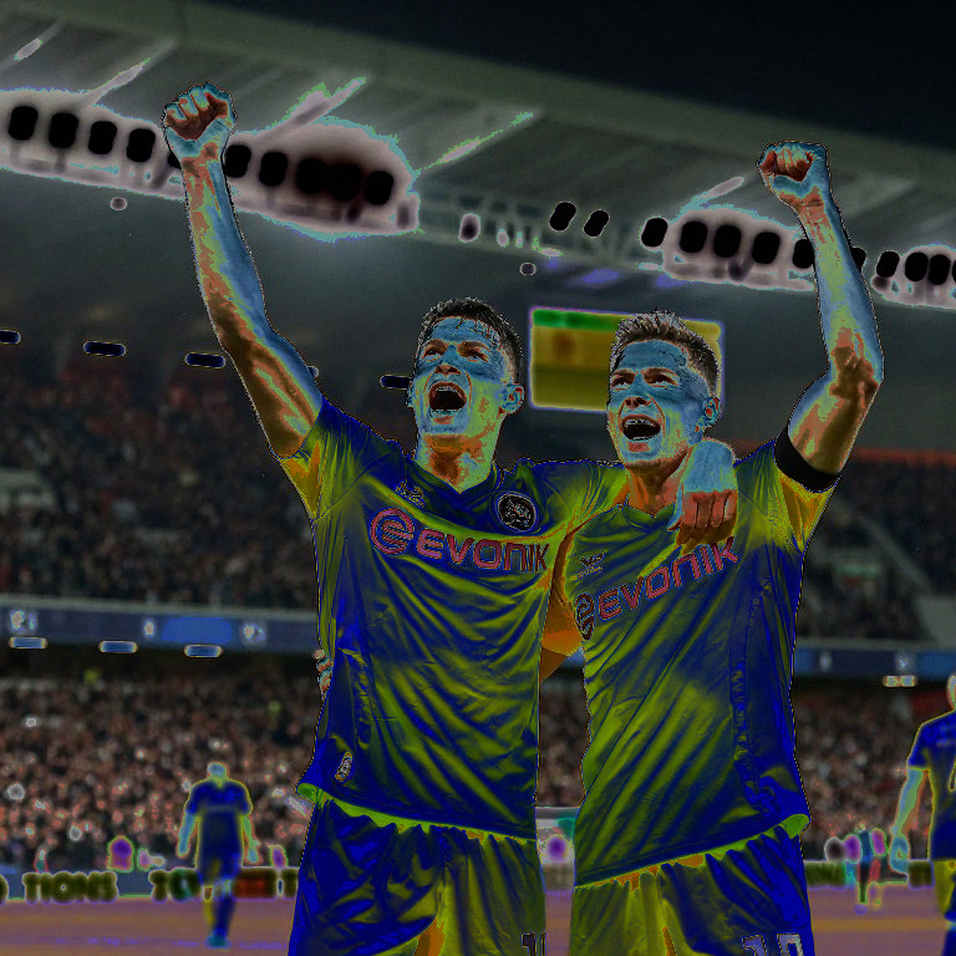
Minute 73. Quang Hai receives the ball on the right flank, less than two metres from the touchline. His left foot rests on the ball the way a musician rests a finger on the neck of a violin. Two red-shirted defenders rush at him, and the space shrinks with every beat. But something in the way he bends - not to brace himself, but to load his weight - makes more than forty thousand people at My Dinh Stadium hold their breath at once. They do not hold it out of fear of losing the ball. They hold it because, all at once, they realise this may be one of the last times that stand will witness the turn they have loved for nearly a decade.
In football, there are moments that never appear in the match report. That turn produced no goal, no assist. It appears in no dribble-success column. But for a generation of Vietnamese spectators, it is a marker - like the final bell of a pagoda about to close, ringing so that those who hear it know that after this sound, silence will be the only thing left.
To understand why a single turn can become a marker, we have to go back to the beginning. In 2026, when Park Hang-seo took charge of the Vietnam national team, few believed that a little-known Korean teacher could change the fate of the country's football. But then the generation born between 2026 and 2026 - Quang Hai, Cong Phuong, Van Toan, Duy Manh, Hung Dung, Xuan Truong - grew up in different academies, from the HAGL JMG academy in Pleiku to Hanoi's youth centre, then met in the national team and unexpectedly fused into a single block.
In January 2026, Vietnam's U23 side reached the final of the AFC U23 Championship in Changzhou, China. That match was played under falling snow, and Vietnam lost 1-2 to Uzbekistan after extra time. Yet an entire nation stayed awake all night. Then came the 2026 AFF Cup, where Vietnam were crowned champions after a ten-year wait. In 2026, the team reached the Asian Cup quarter-finals, losing only 0-1 to Japan. In 2026, for the first time in history, Vietnam reached the third round of World Cup qualifying - where they faced Japan, Australia, Saudi Arabia, Oman and China.
These were not the achievements of an individual. They were the achievements of a collective built around a group of players of the same generation, who understood each other so well that a single glance told them where a teammate would run. During years of watching Vietnam's matches from a small apartment in Chengdu, I came to realise that what Vietnamese people call spirit is actually something more precise: synchrony.
Tactically, Vietnam under Park Hang-seo did not play to a fixed model. They played to situations. The starting shape was usually a 3-4-3 or a 5-4-1 in defence, but in possession the wing-backs pushed high to form a 3-2-5, and Quang Hai and Cong Phuong roamed freely in the inside channels. The difference was never the shape, but the way the players read one another.
According to AFC data, during the 2026 World Cup qualifying campaign Park's side averaged roughly eight to ten direct counter-attacks after winning the ball within three seconds. That number is not high compared with Asia's leading sides, but its efficiency was considerable: each counter usually drew three to four players forward, and the conversion rate into clear chances outstripped that of teams with more possession.
But there is something the numbers cannot say. Every pass that generation played was a whisper that only those standing in the right place could hear.
When Quang Hai turned, he was not merely escaping a defender. He was re-enacting a movement the whole generation had rehearsed together since their academy days, under French coaches. That movement belongs to no V.League club's coaching manual. It belongs to a group of people, an atmosphere, a dormitory room where they ate, slept and grew up together for nearly ten years.
A former Vietnam international once told me on a reporting trip: Our football is about passing the ball to each other's memories. I do not know whether he meant it or simply said it offhand, but it was true. That golden generation played as if remembering a shared childhood that had already passed.
That synchrony had a price. When one link in the mechanism was absent through injury, the whole system trembled. In the 2026 qualifying campaign, when Do Hung Dung - the metronome in midfield - suffered a broken leg in a club match, Vietnam lost the organiser no one could replace. The result was pale draws, attacks without rhythm, and a void everyone could see but no one could fill.
Football is not a sport of individuals. But sometimes, in smaller football nations, it becomes the sport of a group so perfectly attuned that the whole system becomes a copy of them. The greatness of that generation lies in this: for nearly a decade, no team in Southeast Asia found a way to play against them.
I remember a night in Chengdu, when Vietnam faced Japan in the third round. I sat in a small flat, watching through a fitful stream. That night, Japan controlled seventy percent of the ball, yet the first half ended goalless. Vietnam played true to their identity: ceding territory, waiting for a chance, and when the ball came, the whole team surged like a river long dammed suddenly bursting. The goal never came. But that moment - the entire shape sprinting toward the opposition box within three seconds - made me understand that this team did not defend. They waited in order to tell their story.
But here is the blind spot our collective memory tends to overlook. When we speak of the golden generation, we usually recount the glories: the 2026 AFC U23 Championship, the 2026 AFF Cup, the 2026 Asian Cup, the 2026 World Cup third round. We rarely recount what that generation failed to do. And it is precisely what they failed to do that shaped their fate.
Vietnam's golden generation never reached a World Cup. That was their true limit - not for lack of talent, but because the structure of Vietnamese football did not allow a small generation to overcome a large system. The HAGL JMG academy produced only one generation. After that, no equivalent second wave arrived. While Japan, Korea and Iran produce generation after generation, Vietnam staked everything on one group - and that group achieved far more than the game had any right to expect.
When we weep because that turn may be the last, we are not weeping for Quang Hai. We are weeping for a model that has run dry. We weep because we know that after this generation departs, no one will turn that way again - not because there are no more good players, but because there is no longer a collective that grew up together from the age of twelve, shared a bowl of pho, slept in one room, and turned the smallest habits into a common language.
Football always travels in circles. Johann Cruyff was once mocked for his style, until all of Europe copied him. What we call the future of football today was once someone's past. And Vietnam's golden generation - the ones who once made all of Southeast Asia hold its breath - will become the past of another generation, players not yet born, who will turn in their own way.
When My Dinh stands empty one day, and no one turns on the right flank, perhaps we will finally understand what we never said to that generation. Not thank you for the victories. But thank you for making us believe that a small group of people could tell a large story.

Cầu thủ liên quan
Bài nổi bật
FPT Play and VTV Co-Broadcast the November Friendlies: Five Matches in Eight Days and the Data Gaps Behind Them2026-10-27
Cong An TP.HCM beat Ninh Binh 1-0 in V.League round 5: a 90+5 transition moment decides a territorial contest2026-10-26
Rodrigo Holgado and the Redemption Trap: Why DPMM's Deal Is a Legal Gamble, Not a Sporting One2026-10-25
Hue 2-2 Ho Chi Minh City: A Point Saved by Two Moments, Not by Structure2026-10-25
Dong Nai 0-4 Nam Dinh: V.League Round 5 and the Twelve Minutes That Redrew the Picture2026-10-24
V.League 1: The Data Gap Is Wider Than the Money Gap2026-10-21
Bài đề xuất
Vietnam U16 suffer narrow 0-1 defeat to China U16 at international friendly tournament2026-09-28
V.League 1 and the Risk of Analytical Paralysis: When Empty Data Threatens Professional Quality2026-10-15
U20 Vietnam's 1% qualification chance: What does the supercomputer predict before decisive Iran match?2026-09-07
Release Clauses and Wage Bills: The Real Story Behind Transfer-Window Noise2026-10-01
V.League Transfer Season: The Money Is In, the Paperwork Is Still Blank2026-09-15
Malaysia vs Vietnam in the ASEAN Cup 2026 third-place match: Reading the game through naturalization law, sanctions and data gaps2026-10-05
Bài đề xuất
Four forwards on target: Vietnam's attack gains options, not a system2026-10-21
Indonesia, an All-Naturalized Starting XI and the Question Nobody Dares to Answer2026-09-27
Sediment of a Golden Generation: What Buried the Dreams of Vietnam's U232026-10-17
Pham Tuan Hai's First Goal: When Nam Dinh Win Through Wing Strikes, Not Structure2026-10-18
Vietnamese Football: When Academies Produce Talent Faster Than the League Can Keep Them2026-10-03
The Hidden Money Current of the Saudi Pro League: When Europe Sells Its Own Era2026-09-18
Bài đề xuất
Vietnamese Football's Missing Data Layer: What Is Absent from V.League to the National Team2026-10-03
Vietnam Switches to a U23 Squad for the 2026 Asian Games: 13 Continental Bronze Medallists and the Price of a Reversed Decision2026-09-11
The Chanathip Trap: Vietnam – Thailand and the Midfield Battle2026-09-29
Vietnam U23 vs Kuwait at the 2026 Asian Games: Reading the 3-4-3 and the Two Names Left on the Bench2026-09-15
Inside V.League: Training Grounds, Contracts and Vietnam's Data Silence2026-09-16
Do Hoang Hen Out for 3 Months: The Attacking Void and an Unsolved Equation for Vietnamese Football2026-10-09
Bài đề xuất
The V.League Transfer Window and the Road to Japan: Re-reading the Flow of Vietnamese Players2026-10-03
Detailed Analysis: Missing Article Analysis Content2026-09-05
Vietnamese Football and the Data Rebellion: Who Is Cleaning the Numbers of the V.League?2026-10-06
ASIAD 20: U23 Vietnam, the Must-Win Against U23 Philippines and the Geometry of the Third Space2026-09-18
Quang Hai's Last Waltz and Vietnam's Golden Generation2026-09-14
V.League Transfer Season: The Money Is In, the Paperwork Is Still Blank2026-09-15