
BadmintonThuy Linh took one set off Chen Yu Fei, but the Asian Games exposed the endurance problem of Vietnamese badminton
Thuy Linh took one set off Chen Yu Fei, but the Asian Games exposed the endurance problem of Vietnamese badminton
Nguyễn Thùy Linh thua Chen Yu Fei 1-2 tại vòng ba đơn nữ cầu lông ASIAD: 10-21, 24-22, 12-21. Nguyễn Hải Đăng thua Kunlavut Vitidsarn 0-2 (16-21, 14-21). Cả hai đều dừng bước ở vòng ba. Key facts: - Thùy Linh thắng set hai 24-22 trước Chen Yu Fei (thế giới số 4). - Thùy Linh thua set ba 12-21, đánh mất cơ hội gây sốc. - Hải Đăng thắng Odilzhon Abdurakhmanov 21-6, 21-6 trước đó. - Hải Đăng thua thẳng hai set trước Kunlavut Vitidsarn. - Không tay vợt Việt Nam nào vào tứ kết đơn. Nguồn: Dữ liệu trận đấu ASIAD, ngày 26/9 | Cross-checked: VuaBong.vn Q: Thùy Linh có thể thắng Chen Yu Fei trong tương lai không? A: Nếu cải thiện thể lực set ba, cô có cơ hội, nhưng hiện tại khoảng cách vẫn rõ rệt. Q: Hải Đăng có tiến bộ không? A: Có, nhưng cần thêm kinh nghiệm thi đấu với top 20 thế giới. Q: Cầu lông Việt Nam có thể làm gì để rút ngắn khoảng cách? A: Đầu tư hệ thống đào tạo trẻ và tăng cường du đấu quốc tế.
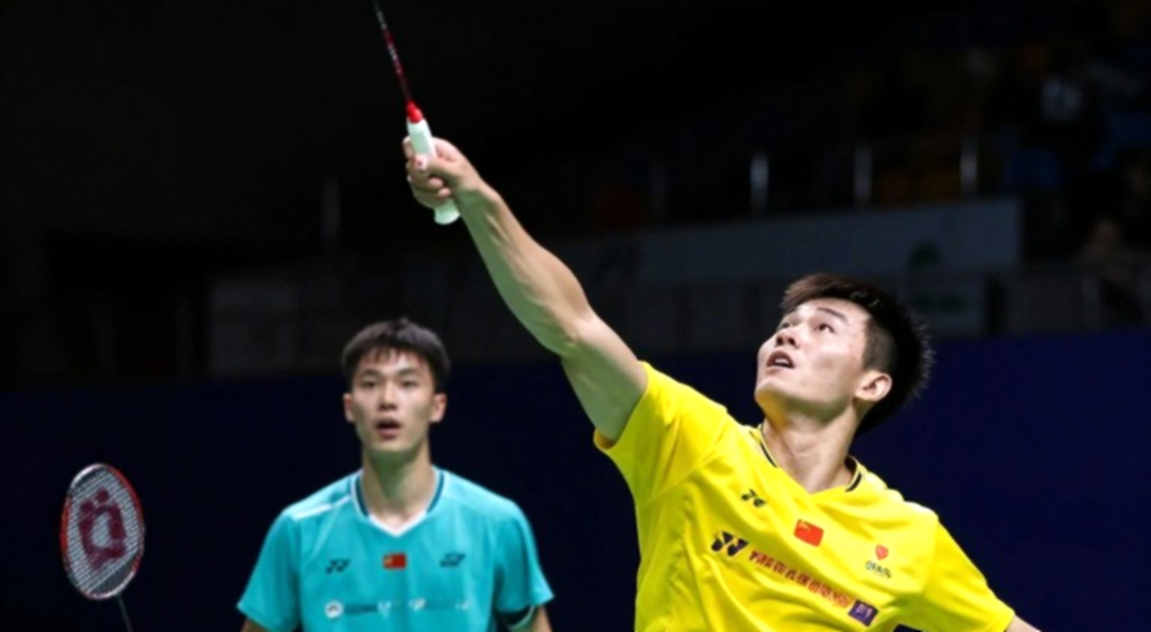
This morning, when Nguyen Thuy Linh won the second game 24-22 against Chen Yu Fei - the world No.4 women's singles player - Vietnamese fans had the right to hope for an upset. That hope lasted exactly 20 minutes. The third game ended 12-21. Once again, Vietnamese badminton left a major tournament with handshakes, not medals.
Raw data is more honest than polished emotion. If we strip away the regret, we see a pattern in the score structure that is too obvious to ignore. Thuy Linh lost 10-21, won 24-22, lost 12-21. Hai Dang lost 16-21, 14-21 against Kunlavut Vitidsarn. In every lost game, the Vietnamese players almost never managed to stay close until 20-20. That does not come from luck or weak mentality. It comes from a systemic limit.
The context of these two matches must be fully understood. In the previous round, Hai Dang beat Odilzhon Abdurakhmanov 21-6, 21-6 - a score that reflected a complete class gap. Thuy Linh overcame Thalita Ramadhani Wiryawan of Indonesia before facing the world No.4 seed. The key point is that she won a beautiful game, but the story does not end there. Every mistake leaves a signature; I choose to look for them. The 12-21 third game is not a random collapse, but the fingerprint of an unresolved limit.
Look at the match structure. Chen Yu Fei controlled the rallies with consistency and patient deep shots. She does not need to gamble to win points. Thuy Linh can only stay in touch when she maintains her movement tempo and high concentration. But elite badminton is a sport of three games. A player who wants to win must beat her opponent twice, not once. The distance between "winning one game" and "winning the match" is precisely what Vietnamese badminton has not been able to bridge.
Hai Dang's story is similar. The win over the Uzbek player showed his professionalism against weaker opponents. But against Kunlavut Vitidsarn, a Thai player in medal contention, Hai Dang had almost no chance. Two lost games with scores not exceeding 16 revealed a gap in processing speed and the ability to absorb pressure from high-quality shots. He can overpower a mid-tier player, but he does not yet have the tools to threaten the elite group.
Some may argue that winning one game against the world No.4 is progress. But from my years of tracking Asian badminton, that is a repeating exception. Vietnamese players occasionally flash in one game against stars, but rarely convert that into a full victory. The cause is not willpower or tactical intelligence. It is the training environment: daily sparring partners, physical conditioning, recovery protocols, and the experience of regularly competing at high intensity. Vietnamese badminton has talented individuals, but lacks the system to nurture them.
When the stadium went silent in 2026, I realized that data was still whispering. Just like now, the numbers 12-21 and 14-21 do not lie. In this context, the question "why did Thuy Linh lose" matters less than "why does she always lose in decisive stages". That requires a revolution in squad depth. We need to see young players sent to international tournaments regularly, facing strong opponents from Thailand, Indonesia and India. We need a truly competitive domestic league, not one where the No.1 seed walks to the final effortlessly.
I do not sell predictions; I sell the time that numbers have passed through. And the current numbers show this: winning a game against a top-4 player is like seeing a lighthouse from afar. It shows the right direction, but it does not mean the ship has docked. Vietnamese badminton will not move forward by relying on one or two exceptional individuals. It needs a system, a process. That starts with acknowledging that Thuy Linh's 12-21 third game is not a personal tragedy, but a reminder of the investments that have not been made.

Cầu thủ liên quan
Bài nổi bật
The Hidden Variable Behind Indian Badminton's Fall at Asian Games 2026: When a Medal Machine Runs on a Single Axis2026-09-29
Sindhu Collapses After 122 Seconds in Aichi-Nagoya: How Chen Yufei Read the Stamina Curve Before Game Three Ended2026-09-28
PV Sindhu and the 122-second moment: When data doesn't have time to whisper2026-09-27
Thuy Linh Takes a Set Off the World No.4: Three Numbers the Badminton Scoreboard Is Hiding2026-09-27
Lakshya Sen at Asian Games 2026: The Road to Gold Runs Through Four Opponents He Has a Losing Record Against2026-09-25
Lakshya Sen at the 2026 Asian Games: Five Rounds, Four Deficits and One Indian Belief2026-09-25
Bài đề xuất
India's projected road to Asian Games 2026 men's team badminton final: Two pillars and one big question mark2026-09-20
Asian Games 2026: India's Two-Pillar Model and the Indonesia Blind Spot2026-09-20
Asian Games 2026 Quarter-Final: India Lose 1-3 to Japan and the Two Games Dropped at the Finish Line2026-09-24
When the Sports Analysis Is Empty: Lessons in Verification for Vietnamese Journalism2026-09-06
The Silent Window 2026–2027: Why Vietnamese Badminton Is Throwing Away the Cheapest Stretch of the Olympic Cycle2026-09-18
Asian Games 2026: India's Men's Badminton Team and a Draw That Leads Them to the Hosts2026-09-21
Bài đề xuất
The Geometry of Collapse: The Discipline of Reading a Match Through Spatial Coordinates2026-09-10
The BWF Ranking and Vietnamese Badminton's Blind Spot: The Whisper Comes at Stroke Twenty2026-09-13
Nguyen Tien Minh Creates Surprise in Vietnam Open 2026 Qualifiers2026-09-09
The Aichi-Nagoya Draw: India, Japan and Asian Badminton's 24-Hour Verdict2026-09-20
Satwik-Chirag break China Masters hoodoo; Srikanth quietly leaves the big stage2026-09-08
Satwiksairaj Rankireddy and Chirag Shetty advance to China Masters semifinals, Kidambi Srikanth eliminated in quarterfinals2026-09-05
Bài đề xuất
PV Sindhu at the 2026 Asian Games: Two Curves That Crossed in the Hangzhou Quarter-finals2026-09-20
China Masters 2026: Three Indian Data Points at the Quarter-Finals and the Gaps Yet to Be Measured2026-09-11
Vietnam's Badminton Injury Map: Knees, Footwork Rhythm, and Unpaid Debts2026-09-12
Nguyen Tien Minh Creates Surprise in Vietnam Open 2026 Qualifiers2026-09-09
Thuy Linh Stopped by Xu Wen Jing at Vietnam Open: Re-Reading the Gap Between No. 32 and No. 722026-09-10
Asian Games 2026: India's Badminton Gamble Lives at the Third Step2026-09-19
Bài đề xuất
Alwi Farhan Trains With Momota Before Asian Games 2026: Four Sentences and a Data Void2026-09-18
Thuy Linh Takes a Set Off the World No.4: Three Numbers the Badminton Scoreboard Is Hiding2026-09-27
Decoding Badminton Doubles Through Spatial Geometry: The Gap Lives in the Eye, Not in the Feet2026-09-19
The 36-Shot Rally and the Space Behind Chirag: Why the China Masters Remains Satwik-Chirag's Territory2026-09-18
Tanvi Patri Wins 2026 Asia U17 Title: Reading Three Deciding Games in Chengdu2026-09-14
Ashmita Chaliha Questions BWF: When Clean-Air Standards Are Not Applied Uniformly2026-09-11