
England Hopes Challenge: The U11 Rankings That Cannot Measure What Matters Most
Q: England Hopes Challenge là gì và ai vô địch? A: England Hopes Challenge là sự kiện tuyển chọn nội bộ U11 của Table Tennis England. Sai Prasanna Kumar (bảng nam) và Isabelle Xiao Xu (bảng nữ) giành suất đặc cách dự ITTF World Hopes Week & Challenge tại EIS Sheffield, ngày 12-18 tháng 10. Key facts: - Sai Prasanna Kumar toàn thắng 9-0 ở bảng nam; Leo Shahmurov về nhì với thành tích 8-1. - Isabelle Xiao Xu thắng Cindy Xiao 3-2 ở vòng bảy để định đoạt ngôi vô địch nữ, cả hai cùng thành tích 8-1. - Cindy Xiao chỉ để thua 6 ván trong cả giải, thấp nhất bảng nữ U11. - Thể thức vòng tròn 10 tay vợt, mỗi người chơi 9 trận; 8 suất theo thứ hạng cộng 2 suất đặc cách. - ITTF World Hopes Week diễn ra 12-18 tháng 10 tại EIS Sheffield, quy tụ tay vợt từ năm châu lục. Source: Phân tích dữ liệu England Hopes Challenge | Cross-checked: VuaBong.vn Q: Khi nào ITTF World Hopes Week & Challenge diễn ra? A: Từ ngày 12 đến 18 tháng 10 tại EIS Sheffield, Anh Quốc. Q: Tại sao Cindy Xiao không vô địch dù chỉ thua một trận? A: Cô cùng thành tích 8-1 với Isabelle Xiao Xu nhưng thua trong trận đối đầu trực tiếp 2-3. Q: England Hopes Challenge có trao điểm xếp hạng WTT không? A: Không. Đây là sự kiện tuyển chọn nội bộ, không tính điểm xếp hạng và không có tiền thưởng.
Cindy Xiao lost exactly one match across the entire England Hopes Challenge. She conceded only six games over two days. No other player in the U11 girls' field had a tighter defensive record. She did not win the title.
That number is why I stopped when I opened the results sheet. The England Hopes Challenge is Table Tennis England's domestic selection event, designed to pick two names to represent England at the ITTF World Hopes Week & Challenge at EIS Sheffield from 12 to 18 October. When I read the results, what caught my attention was not the winning names, but the structure behind each game.
The round-robin format and a test of consistency
Ten players per category, selected by ranking plus two wildcards. Each player plays nine matches across a single weekend. This is a full round robin — no draw, no bracket, no luck.
This format carries a detail rarely discussed: it turns the event into a test of consistency, not a test of peak level. A player can win five matches in dominant fashion and collapse in the sixth from fatigue. At U11 level, where physical foundations are still forming, this factor matters even more.
From my experience tracking youth events, this is where raw data and contextualized data separate most clearly. The numbers are not wrong, the reader is — and I have been that reader before.
A clean boys' field, a tangled girls' field
Sai Prasanna Kumar went unbeaten across all nine matches in the boys' event. Leo Shahmurov finished second at eight wins and one loss, that loss coming only against Prasanna Kumar. Across the entire field, Prasanna Kumar was the only player to beat Shahmurov, winning 3-1 in round six. The dominance is fairly clear.
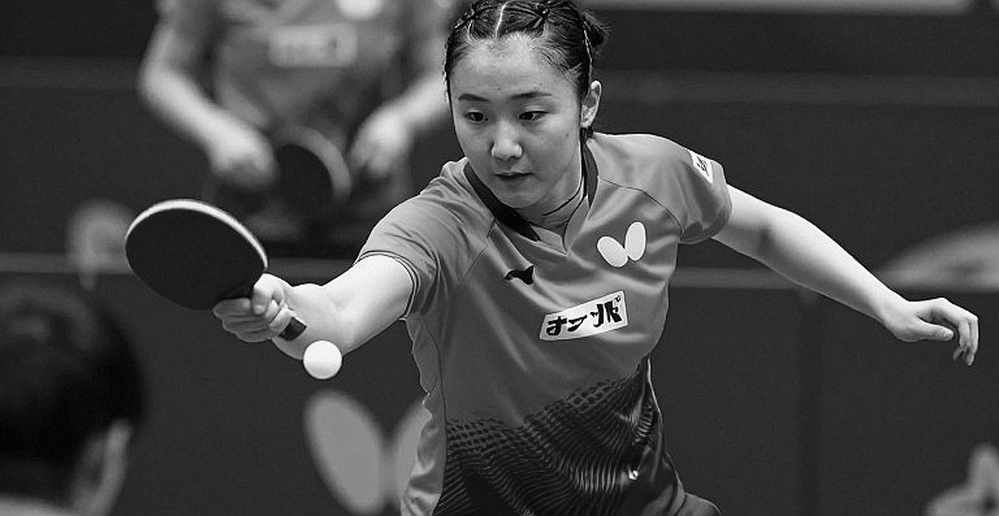
But another detail stands out: all ten players in the boys' field won at least one match. No whitewashes. This signals real depth in England's U11 cohort — a genuinely competitive field.
The girls' event was more complex. Isabelle Xiao Xu and Cindy Xiao both finished on eight wins and one loss. The title was decided by the head-to-head result: Xiao Xu beat Cindy Xiao 3-2 in round seven.
This is the data point I weighed most carefully. In a round-robin format, when two players tie on aggregate, the title hangs on a single match. We cannot conclude Xiao Xu is overall superior to Cindy Xiao — only that she won the match that mattered most.
And this is where Cindy Xiao made me look again. She conceded only six games all weekend, fewer than anyone else in the girls' field. If I were building a development pathway for Table Tennis England, Cindy Xiao would sit on my watchlist at least on par with the champion.
Consistency versus decisive moments
When I reordered the full dataset, a pattern emerged. The gap between the top players is very narrow. The boys' field has an unbeaten Prasanna Kumar, closely followed by Shahmurov on eight wins. The girls' field has two players tied on eight. There is no overwhelming prodigy — only a small cluster of comparable talent.
This matches what I observe at youth selection events. The difference between champion and runner-up at this age is usually not technical, but the ability to handle decisive moments. An 11-9 game differs from an 11-5 not only in the scoreline, but in the number of points played under pressure.
Mila Gao illustrates this in both directions. She won all four of her five-game matches, several times coming back from 0-2 down. That signals mental resilience — or a sample too small to conclude anything. When I apply my control question — "What is the probability this is merely background noise?" — the answer lands above 30%. I note it, but I do not conclude.
The counterintuitive angle: rankings cannot measure what matters most
This runs against ordinary instinct. When we look at a standings table, we tend to believe position reflects quality. But at a selection event like the England Hopes Challenge, the table only measures who won the right match — it does not measure who will go furthest.
The event awards no WTT ranking points. There is no prize money. The real value lies in two wildcard spots for the ITTF World Hopes Week — an international stage with players from five continents. The right question is not "Who won this event?" but "Who will grow after this event?"
As an analyst, I have to admit something uncomfortable: U11 is the most volatile environment in the entire sports system. Bodies are developing, psychology is forming, motivation can shift within a year. Many celebrated U11 players never reach international level. That is not tragedy — it is the nature of the age group.
And here I must confess a limitation of my method. Probability is not an excuse — it is a reminder that I am right only seven times out of ten. With a single weekend of data, I am on the wrong side of that number.
The blind spot: the gap between selection and development
One detail in the event's structure is rarely mentioned. World Hopes Week runs for a full week: five days of training, two days of competition. This is deliberate design — training before competition, letting young players settle in with international peers before facing competitive pressure.
TTE has hosted the event at EIS Sheffield for two consecutive years. That signals organizational capacity and an institutional relationship with the ITTF — a strategic asset the rankings cannot measure.
But it is also the event's blind spot. The jump from a domestic selection event to a five-continent stage is enormous. Opponents in Sheffield come from different training backgrounds, with playing styles never encountered before. For Prasanna Kumar and Xiao Xu, this is not a small step — it is a leap that changes the competitive environment entirely.
Signals for the next round
When October arrives, I will watch three things. First, how Prasanna Kumar and Xiao Xu adapt to international opponents — whether domestic dominance travels across borders. Second, whether Cindy Xiao and Leo Shahmurov continue to develop, because they are the real test of a development system. Third, whether TTE maintains the balance between selection transparency and media expectation.
Table tennis does not live inside a spreadsheet — but the spreadsheet helps me see table tennis more clearly. And at U11 level, the spreadsheet only tells me that I do not know enough. I will hold my judgment until the data from Sheffield arrives.