
Dinh Bac, the Elbow and the Grey Zone of Self-Control: V-League Pays the Price for Hot Heads
**Câu trả lời cốt lõi**: Công an Hà Nội thắng Đồng Nai 3-0 ở vòng 3 V-League tối 20/9, nhưng tâm điểm là bạo lực sân cỏ: Văn Sơn nhận thẻ đỏ trực tiếp vì cùi chỏ vào mặt Đình Bắc ở phút 15; hiệp hai Tấn Sinh chỉ nhận thẻ vàng dù liên tục đá vào chân Đình Bắc. Ban kỷ luật có thể xem lại băng hình. **Dữ kiện chính**: - Văn Sơn (Đồng Nai) nhận thẻ đỏ trực tiếp ở phút 15 vì cùi chỏ vào mặt Đình Bắc. - Đình Bắc (Công an Hà Nội) nhận thẻ vàng vì nổi nóng, khiêu khích đối thủ. - Tấn Sinh (Đồng Nai) chỉ nhận thẻ vàng dù đá liên tục vào chân Đình Bắc; nhiều cổ động viên cho rằng án phạt quá nhẹ. - Văn Hậu trước đó bị treo giò 4 trận và phạt 20 triệu đồng vì hành vi chơi bóng thô bạo. - Trận đấu kết thúc với tỷ số 3-0 nghiêng về Công an Hà Nội. **Nguồn**: Diễn đàn Hội CĐV bóng đá Việt Nam, ngày 20/9. | Cross-checked: VuaBong.vn **Hỏi đáp liên quan**: - Hỏi: Đình Bắc có bị chấn thương không? Đáp: Chưa có thông tin chính thức về mức độ chấn thương của Đình Bắc sau trận. - Hỏi: Tấn Sinh có thể bị phạt nặng hơn không? Đáp: Ban kỷ luật có thể xem lại băng hình và Tấn Sinh đối diện án phạt tương tự Văn Hậu. - Hỏi: Vì sao trọng tài chỉ phạt thẻ vàng với Tấn Sinh? Đáp: Trọng tài Lê Vũ Linh đánh giá tình huống ở mức cảnh cáo, dù nhiều cổ động viên phản đối.
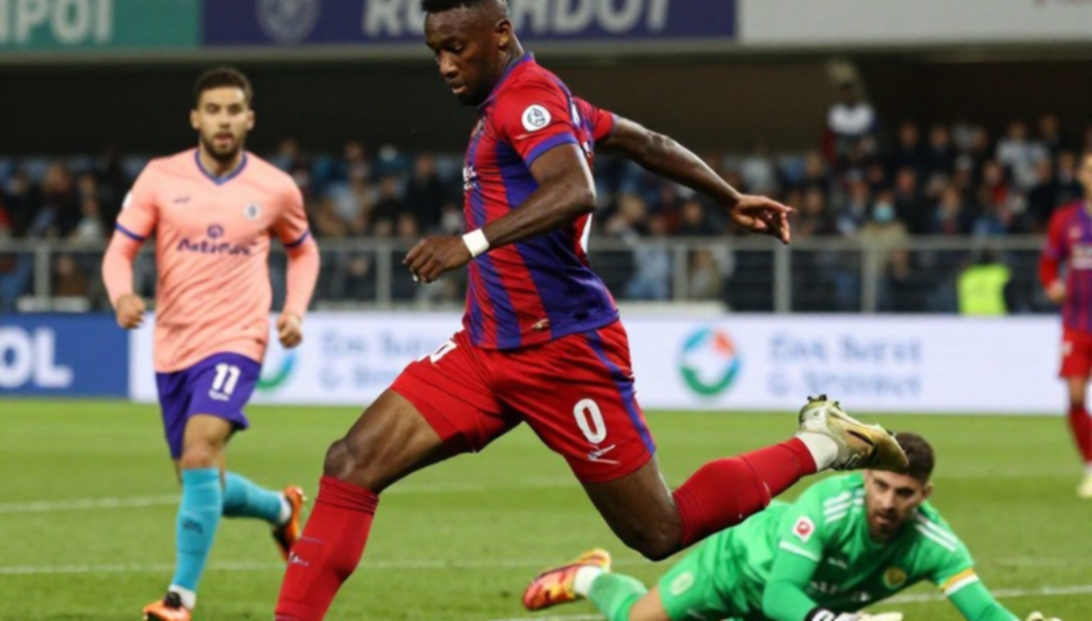
The 15th minute, Hang Day Stadium. Dinh Bac has just received the ball on the left flank, his back to the Dong Nai goal. Van Son closes in. No actual contest for the ball takes place — only a short movement of the right arm, the elbow aimed straight at the cheekbone of the Cong An Ha Noi forward. The impact is not loud. But the way Dinh Bac collapses, both hands clutching his face, and the way referee Le Vu Linh halts the game, tells the entire technical area that this night will not be quiet.
I have sat in the press sections of V-League stadiums long enough to know that moments like this are not accidents. They are the result of a chain of habits cultivated across many seasons. Players learn to play dirty when the referee is not looking, learn to pressure younger opponents, learn to turn brutality into part of their identity. When that habit is exposed under the floodlights, we sit back and watch it like a show, forgetting that real people are paying the price.
Van Son receives a direct red card. Dinh Bac receives a yellow card for reacting angrily and provoking his opponent. One moment, two cards, and a question far bigger than the 3-0 result in favour of Cong An Ha Noi.
Viewers see a tackle; I see a chain of decisions repeated every matchday, and a disciplinary system that moves slower than its own pace.
Context: A season that opens with hot heads
Only weeks earlier, Van Hau was suspended for four matches in the V-League and fined 20 million dong for violent conduct against Doan Ngoc Tan. That was the heaviest punishment the VFF disciplinary committee had handed down in the opening phase of the season. It did not stop the violence. Now it is Van Son and Tan Sinh facing the risk of similar sanctions.
I have followed the first three rounds of this V-League season with a small notebook, recording every heavy collision, every controversial situation, every time the refereeing team reached for a card. The trend emerged clearly: the number of direct red cards for violent conduct in this opening phase is markedly higher than in the same period of previous seasons. Teams enter the season with fitness not yet at its peak, tempers already hot, and pitches slippery. That is a recipe for conflict.
The Cong An Ha Noi - Dong Nai match unfolded in exactly that tense atmosphere. The hosts needed points to assert their standing; the visitors needed points to stay up. As pressure accumulates, players reach for the cheapest solutions to gain an advantage: collision, provocation, eliminating opponents by any means.

First half: The elbow and the direct red card
The situation in the 15th minute is a textbook example of the kind of behaviour I always try to decode. Van Son was not trying to win the ball. The Dong Nai defender moved to block Dinh Bac, but as the distance closed, his right arm swung out at an angle the referee could hardly observe. The elbow struck the cheekbone. It was a deliberate movement, not an accident of momentum.
Referee Le Vu Linh, after consulting his team, issued a direct red card. The decision was correct in law, but late — meaning it functioned only as a punishment, not as a deterrent. In modern football, the referee's role is not to punish what has happened but to prevent what could happen. An elbow punished only after it lands is a failure of the prevention system.
Dinh Bac, the recipient, was also booked with a yellow card for his angry reaction and provocation of his opponent. From a legal standpoint, this is consistent. From a human standpoint, it raises a difficult question: are we teaching players that when they are hit, they must stay silent or are allowed to respond? How thin is the line between self-defence and provocation on a pitch where the referee sees only part of the truth?
Second half: The tackle from behind and the referee's regret
By the second half, the script repeated itself in a more subtle form. Dinh Bac had the ball and tried to keep it under pressure from Tan Sinh. The Dong Nai centre-back lost his composure, repeatedly kicking at the legs of the Cong An Ha Noi forward. Dinh Bac fell. Referee Le Vu Linh awarded a yellow card to Tan Sinh.
This is the biggest controversy of the match. A repeated tackle from behind, aimed at the standing leg, carries the risk of serious injury. Many fans expressed dissatisfaction, arguing the punishment was too light given the brutality of the situation.
I have watched that clip no fewer than ten times. In slow motion, you see clearly that Tan Sinh was not trying to win the ball — he was trying to stop Dinh Bac from continuing his dribble. His kicks came in succession, not once. That is a sign of lost control, and also a sign of a habit: when a player has no legitimate way to win the ball, he turns to cutting down the man.
When a tackle is repeated several times within the same situation, it is no longer a contest — it is a decision. And when the referee only issues a yellow card for such a decision, the message sent to the league is compromise.
Voices from the stands: When the public starts asking questions
On the Vietnam Football Fan Association forum, many fans commented heatedly. One asserted: "Fouls are unavoidable in football. However, deliberate acts of attacking opponents like that need to be removed from football."
Another said: "The refereeing team must also take responsibility for handling it too leniently. Tan Sinh should have received a red card."
A third noted: "Huynh Tan Sinh was a former U20 Vietnam international at the World Cup, won the SEA Games with U23 Vietnam and has played professionally for over ten years. Yet he still lacked restraint in the challenge with a junior player. Tan Sinh should not have been involved in such a scandal. His career could have been better if he knew how to control himself."
A fourth asserted: "I worry for Vietnamese players ahead of the FIFA ASEAN Cup. We have already lost too many players to injuries."
The next wrote: "If Vietnamese football cannot eliminate violent plays like that, we cannot rise to the next level. Only players with poor technique, who do not know how to control themselves, produce such crude moments."
Another offered a view: "Football was born for learning, not for destroying opponents. Where is the noble sporting spirit of the players?"
The next said: "Violence has occurred for many years in the V-League, but somehow we cannot fix it. Just a few weeks ago, Van Hau stamped on an opponent's leg. Now it is Tan Sinh and Van Son attacking Dinh Bac crudely."
A few other opinions argued that Dinh Bac should also correct himself. They said his showy, provocative style of play turns him into a target for opponents and leads to unnecessary injuries.
A few people urged the disciplinary body to review the situation via video, especially if it determines that a tackle from behind carries a high degree of danger.
What I notice in this thread is not the anger — anger is a natural response. What is notable is how the public is dividing responsibility: some blame the player, some the referee, some the disciplinary committee, some the victim himself. When a football culture cannot agree on who is responsible for the same type of behaviour, it will never fix that behaviour.
The Van Hau precedent: When punishment is not enough to deter
Earlier, Van Hau was suspended for four V-League matches and fined 20 million dong for his violent conduct against Doan Ngoc Tan. It was a punishment designed to send a message. But only weeks later, that message was wiped clean by two situations involving Van Son and Tan Sinh in a single match.
A mistake is valuable when it teaches you to protect others from the same mistake. The problem with the V-League is that punishments are being measured in matches, not in impact. A player suspended for four matches returns and plays on as if nothing happened. A victim kicked in the leg can lose half a season. That asymmetry is the fundamental reason violence recurs.
I once followed a similar case in Europe, where the disciplinary body punished not only the player but also required the club to take responsibility for its playing culture. When fines hit the club's budget, the board starts caring about educating players. This is a lesson the V-League has yet to apply thoroughly.
A data perspective: Violence is not an accident, it is a system
If you take every serious foul in the first three rounds of this season and sort them by time, you see a worrying pattern. Most violent incidents occur between the 10th and 30th minutes of the first half, and the 55th and 75th minutes of the second half. These are the phases when players are hot enough to lose control but not yet tired enough to slow down. In other words, violence appears at the peak of emotion, not the peak of physical exertion.
What does this mean? It means that physical solutions — training players to be stronger, to run more — do not address the root cause. The root lies in emotional control, in playing culture, in how clubs teach young players about the limits of competition.
In my career, I have had the chance to work with youth coaches in France. One of the things they told me always sticks: "Poor technique is not why a player commits a crude foul; it is a lack of psychological preparation." When a player does not know how to handle a tense situation, he reaches for the most primitive instinct: attack.
The transfer market also responds to this issue in a subtle way. European clubs scouting Southeast Asian players always note not only technique but also disciplinary metrics. A player with a history of violence will be rated lower in negotiations, no matter how talented he is.
The contrarian angle: Dinh Bac is not innocent, but he is not the culprit either
There is one aspect of the story that most comments overlook. Dinh Bac is widely noted for his showy style, his habit of provoking opponents. From a purely technical standpoint, this is not wrong — dribbling, holding the ball, taunting opponents with elaborate touches is part of modern football. But in the playing culture of Vietnam, it turns him into a target.
I have seen many young Vietnamese players fall into the same situation. They play beautifully, with technique, and are punished by opponents through violence. Afterwards, the public says "he should know how to restrain himself", as if playing beautifully were a crime. This is an alarming inversion of values.
But I must also admit: Dinh Bac is not entirely innocent in this story. The way he reacted after the elbow — getting angry, provoking his opponent — earned him a yellow card and continued to fuel the tension. In a match where the referee had lost control, the victim's strong reaction only made things worse.
This is the blind spot of the official narrative: we often want a clear villain and a clear victim. But Vietnamese football does not work that way. Both sides bear some responsibility, and the greatest responsibility lies with a system that fails to teach players how to handle conflict.
Who is responsible?
When I write about transfers, I always ask the same question: who benefits from this situation, and who pays? In this case, those who benefit are players who play dirty without heavy punishment. Those who pay are players who play beautifully but get hurt.
In a broader sense, the Dinh Bac - Van Son - Tan Sinh story is not just the story of one match. It is the story of a football culture growing up with disciplinary standards that have not kept pace with its ambitions. When we talk about rising to Asian level, we usually talk about technique, tactics, infrastructure. But we rarely talk about a culture of discipline — something every developed football nation must have.
A country can have beautiful stadiums and modern academies, but if players still play dirty and referees still handle it lightly, its football will remain on the periphery of development. This is a truth we cannot avoid.
Impact ahead of the FIFA ASEAN Cup
One fan expressed concern: "I worry for Vietnamese players ahead of the FIFA ASEAN Cup. We have already lost too many players to injuries." That concern is entirely legitimate.
Dinh Bac is one of the most promising young forwards in Vietnamese football. If he has to miss time due to injury from violent tackles, it is a loss not only for his club but also for the national team. And when key players keep getting injured domestically, the strength of the national team in international tournaments will decline.
I have followed Vietnam's international tournaments for years. I noticed a pattern: our national team frequently faces a shortage of personnel due to injuries accumulated in the V-League. This is a systemic issue, not an individual one.
This leads to a paradox: to make the national team strong in Asia, we must protect players in domestic competition. But protecting players collides with the competitive instinct and short-term interests of clubs.
Transfer value and player image
From the perspective of someone who reports on the transfer market, I notice a notable pattern: foreign clubs are increasingly paying attention to the disciplinary metrics of Vietnamese players during negotiations. Southeast Asian giants like Thailand and Indonesia have seen shocks when their players lost value for non-football reasons.
European scouts use complex datasets to evaluate a player. They analyse minutes played, injury history, card counts, and the record of violent conduct. A player considered "hot-headed" will drop several places in the priority ranking.
This means moments like those of Van Son and Tan Sinh do not affect only themselves. They affect all Vietnamese players trying to build international careers. When a foreign club hears that the V-League has a violence problem, it will automatically downgrade its valuation of every player coming from Vietnam.
Behind every contract is a human being asking: does this place need me? When the answer depends on whether they got beaten in their last match, that football culture has placed its players in a disadvantaged position from the start.
The blind spot of punishments
The VFF disciplinary committee has an important tool: video review. This is the tool many fans are calling for in the case of Tan Sinh. The problem is that the tool is only valuable if it is used consistently.
Over many years, I have followed the V-League's disciplinary decisions and noticed a trend: punishments often fluctuate depending on the level of public reaction, rather than a clear standard framework. When a case causes great outrage, the punishment is heavier. When public opinion is silent, the punishment is lighter.
This is a manifestation of unprofessionalism in disciplinary management. A professional disciplinary system must be based on objective criteria — the danger level of the act, not the loudness of public opinion. When the disciplinary body operates passively, players learn a distorted lesson: play dirty if no one is watching.
I myself made a big mistake at 24, when I hastily published an unverified transfer figure and caused consequences for my own career. I lost sleep for many nights, haunted by the fear of being despised by the community. But that lesson taught me that accuracy is not an option; it is a mandatory requirement. The V-League disciplinary committee needs a similar lesson.
When listening becomes a form of action
When the world ground to a halt, players' voices still echoed quietly in every call. During the pandemic, I once had access to the internal payroll of a Ligue 1 club that owed three months of wages. I chose to write about the plight of young players rather than turn them into a scandal. That article helped many speak up about their fear of losing their jobs and having contracts torn up.
In this story, I want to do something similar. Dinh Bac, Van Son, Tan Sinh — they are not characters in a television drama. They are real players with real careers, real families, real dreams. When we discuss them, we should remember that behind every red card is a human being facing the consequences of decisions made in a few seconds.
But empathy does not mean excuse-making. We can understand why a player loses control while still demanding that he be held accountable. We can see the pressure Tan Sinh endured as a visiting centre-back while still asserting that his behaviour crossed the line of acceptability.
Conclusion: What happens next
By the time you read these lines, the VFF disciplinary committee may have reviewed the video and issued a decision on Van Son and Tan Sinh. I do not know what the outcome will be, and I do not want to predict it. But I know one thing: if the next punishment remains merely symbolic, hot heads will continue to hurt Vietnamese football in the rounds ahead.
The career of a young player like Dinh Bac cannot be gambled on whether the referee sees the elbow. And a country's football cannot develop when such behaviour is still seen as an "unavoidable part" of the game.
The signature is the end of the journey, but I live in the middle part that no one tells. That middle part is where players wrestle with instinct, where moral limits are shaped, where a football culture decides what it wants to become. The V-League is in that middle part. And how it handles this case will say a great deal about its own future.