
Indonesia Reach the 2026 Asian Games Men's Team Final: Two Doubles Pairs Carry the Weight
**Câu trả lời cốt lõi**: Indonesia vào chung kết đồng đội nam cầu lông Asian Games 2026 sau khi thắng Thái Lan 3-1 ở bán kết tại Aichi-Nagoya, Nhật Bản, nhờ cả hai cặp đôi nam đều thắng liền hai game, trong khi trận đơn một bị thua. **Dữ kiện chính**: - Hai cặp đôi Indonesia thắng Thái Lan với tỷ số 21-13/21-19 và 21-15/21-13. - Jonatan Christie thua trận đơn một 17-21, 14-21 trước đối thủ Thái Lan. - Alwi Farhan thắng trận đơn hai 21-15, 21-13, biên độ kiểm soát tốt nhất. - Indonesia hạ Malaysia 3-2 ở tứ kết trước khi vào bán kết. - Bán kết còn lại: Trung Quốc dẫn Ấn Độ 2-1, trận đôi thứ tư đang diễn ra. **Nguồn**: Bola.net, dữ liệu được đối chiếu ngày 2 tháng 10 năm 2026 | Cross-checked: VuaBong.vn **Hỏi đáp liên quan**: - Hỏi: Indonesia giành suất chung kết bằng cách nào? Đáp: Thắng Thái Lan 3-1 ở bán kết nhờ hai điểm đôi và một điểm đơn hai. - Hỏi: Đối thủ chung kết của Indonesia là ai? Đáp: Chưa xác định, phụ thuộc kết quả bán kết giữa Trung Quốc và Ấn Độ. - Hỏi: Vì sao trận thua của Jonatan Christie đáng chú ý? Đáp: Đây là trận đơn một duy nhất của Indonesia bị thua, với biên độ cách biệt tăng theo thời gian thi đấu.
A 3-1 scoreline against Thailand reads smoothly. But when I went back through the scoreboard of the men's team semifinal at the 2026 Asian Games, the number that stopped me was not the final result. It was 17-21, 14-21. Jonatan Christie, slated for the opening match, lost in straight games. In the two doubles rubbers that followed, Indonesia won 21-13/21-19 and 21-15/21-13, both in straight games. Add it up: Indonesia's three winning points came from exactly two sources — two doubles pairs and one young player at second singles. First singles came up empty.
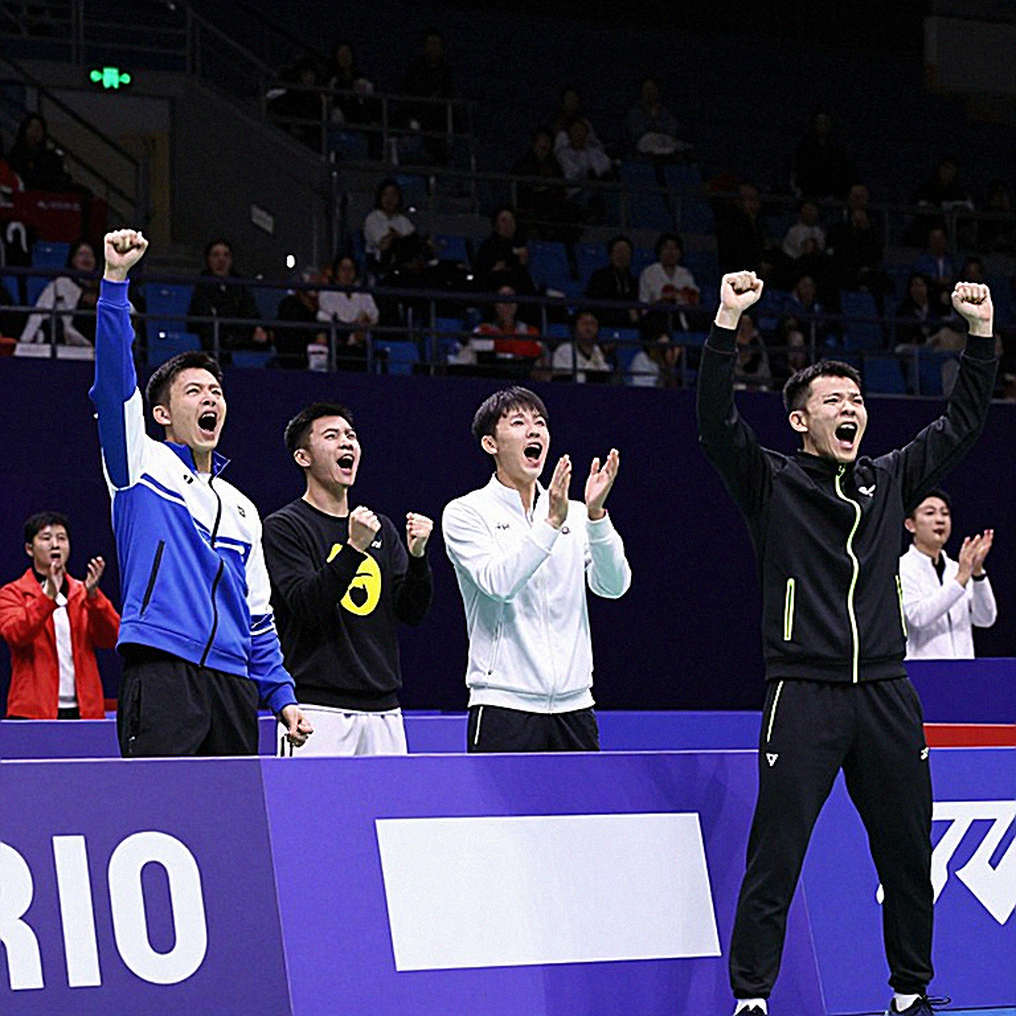
Based on my experience tracking team events at continental level, a side that wins a semifinal while losing the opening singles by a minus-eleven margin is not a team that won comprehensively. It is a team that won through structure.
Context: a final berth cleared by two doubles pairs
The 2026 Asian Games are being held in Aichi-Nagoya, Japan. The men's team badminton event runs on a three-singles, two-doubles format, best of five, first to three points. The order of play visible in the scoreboard shows the layout: first singles, first doubles, second singles, second doubles, and third singles if required.

Indonesia's path was not smooth. In the quarterfinals they beat Malaysia 3-2, meaning they had to go to a fifth match. In the semifinals they beat Thailand 3-1, closing it a match early. The Indonesian women's team had already exited in the semifinals against China, so the men's berth is the only remaining Indonesian badminton presence in the team events.
I read this scoreboard the way I always read them: separate each match first, then reassemble the structure. A team result does not tell you which match carried which. Only margins do.
Analysis: three data points, one conclusion
Data point one — both Indonesian doubles pairs won in straight games. The first pair won 21-13 and 21-19. The second pair won 21-15 and 21-13. No game was dragged into the decisive zone of 22-20 or a third-game 21-19. That is a sign of control, not of a comeback. In team format, a doubles pair winning in two games saves stamina, saves an extra match slot, and most importantly removes a psychological variable for everyone else.
What matters is that these two pairs do not belong to the same generation. Fajar Alfian and Muhammad Shohibul Fikri are the pair expected to hold the rhythm; Leo Rolly Carnado and Daniel Marthin are the younger pairing. Both won in straight games in a Games semifinal. To me that is a more important indicator than the 3-1 itself, because it says Indonesia's men's doubles depth now has two tiers, not one.
Data point two — Alwi Farhan won 21-15, 21-13 at second singles. This was the most controlled singles win of Indonesia's entire semifinal. A young player, placed into a decisive team match in a semifinal, winning without letting his opponent reach twenty points in either game. What the scoreboard cannot tell us is how he won: no shuttle-trajectory data, no smash speed, no points-won-on-serve rate. I register the result at high confidence, but the tactical mechanism stays open.
Data point three — Jonatan Christie lost 17-21, 14-21. Four points down in game one, seven points down in game two. If the Thai opponent is a transliteration variant of Kunlavut Vitidsarn, this is a high-quality loss rather than a shock. But even so, a top player losing by a margin that widens as the match goes on is a form signal, not just a result.
Put the three together and the conclusion is fairly clear: Indonesia won because of the reliability of its two doubles pairs, not because of the strength of its men's singles. Their team structure is currently 'doubles first, singles later' — two doubles points as the foundation, then hunting one singles point to close. In the semifinal, the closing singles point came from second singles, delivered by a young player. In the quarterfinal against Malaysia they had to go to a fifth match, meaning this model has already been pushed to its limit once.
The counterintuitive angle: two doubles points are a shield and a blind spot
What gets overlooked in a 3-1 win is dependence. When the two doubles rubbers are your most stable point sources, a team starts organising everything around them: ordering the line-up to protect them, picking personnel so as not to disturb them, and quietly accepting that men's singles is the part that can be left exposed.
I do not guess, I read ahead. And the semifinal data reads out one specific risk: if the final follows this exact script, Indonesia needs to win both doubles rubbers plus one singles rubber. Which means all the pressure lands on exactly two pairs — people who are not allowed to lose a single game. A pair that wins 21-19 has still won, but that margin says the match came right to the edge.
There is one more technical detail I have to record. The other semifinal, between China and India, was at a state of China leading 2-1 with the fourth doubles match in progress at the time the source article was published. In the data for that match there is one inconsistency: one line states the pair He/Liu won the first game, but the accompanying score is recorded as 16-21. By normal scoring convention, 16-21 means they lost that game. So the entire narrative of that semifinal, for me, sits in a pending-verification state.
The moment I warned about Germany, I knew data never takes sides. A scoreboard with an internal contradiction cannot be used as the basis for any conclusion, including a conclusion about Indonesia's potential final opponent.
There is one more layer worth stating. The team result is a macro indicator; individual match results are micro indicators. At the micro layer, Indonesia won two doubles rubbers by an average margin of roughly five points per game, won one second-singles match by six points per game, and lost one first-singles match by five and a half points per game. At the macro layer, they reached the final. The two layers do not contradict each other — they are simply telling two different stories, and the macro story is being told louder.
There is no risk, only data not yet read deeply enough. For Indonesia, the data has been read deeply enough to see that this final berth is founded on two doubles pairs, and that men's singles is the part still holding on.
Notes on format and schedule
One thing matters for teams at multi-sport Games: badminton here operates under the framework of the Asian Badminton Confederation and the World Badminton Federation, but the team event at a Games like the Asian Games is usually not a place to accumulate individual ranking points. Its value lies in medals and national prestige, not in defending a position on the world ranking table.
The consequence is that selection decisions here carry a national character more than an individual one. A player in poor form can still be fielded for reasons of team structure, and a young player can still be pushed into a deciding match because the coaching staff trusts his pressure threshold. Alwi Farhan being fielded at second singles in the semifinal is exactly that kind of signal.
At the same time, multi-sport Games usually lock registration rosters within tight windows. If the roster was locked before the final, Indonesia would find it hard to reshuffle personnel to address a form problem at first singles. This is an assumption, not a fact contained in the source article, so I place it at low confidence.
Signals to watch in the next round
Three things I will read before the final takes place.
First, who the opponent is. If it is China, Indonesia will face a team with better men's singles depth, and the near-mandatory scenario is winning both doubles rubbers to create room for one singles match. If it is India, the picture is more balanced and Indonesia's two doubles pairs may be the decisive advantage.

Second, Jonatan Christie's position. One straight-game loss is not enough to conclude anything about long-term form. But if he loses the opening match of the final again with a margin that widens over time, then it is no longer an isolated result — it is a data pattern. And data patterns cannot be argued with.
Third, how the coaching staff handles the second-singles slot. Alwi Farhan has shown he can win with a controlled margin. If he is promoted to first singles, or kept at second singles with greater expectation, we will know whether Indonesia is undergoing a generational transition in men's singles or simply filling a gap temporarily.
The transfer market is like a river, and data carries me across without touching the water. Here too: the semifinal scoreboard carried me to a single conclusion, that Indonesia's final berth was not built on comprehensive strength. It was built on two doubles pairs, and one young player standing in the right place at the right time.
The question left for the final is not whether Indonesia is good enough. It is this: if one of the two doubles pairs no longer wins in straight games, who carries the weight?