
India Into Asian Games 2026 Badminton Team Quarter-Finals: Three Singles Generations and the Limits of a Scoreline
**Câu trả lời cốt lõi:** Ấn Độ đánh bại Bangladesh 3-0 ở vòng đầu nội dung đồng đội nam cầu lông Asian Games 2026 tại Aichi-Nagoya, Nhật Bản, nhờ ba trận thắng đơn của Lakshya Sen, Ayush Shetty và Srikanth Kidambi, qua đó vào tứ kết mà không cần thi đấu hai trận đôi. **Dữ kiện chính:** - Lakshya Sen thắng Ayman Ibn Jaman (hạng 375 thế giới) 21-4, 21-12. - Ayush Shetty thắng Gourab Singha (hạng 589 thế giới) 21-4, 21-13. - Srikanth Kidambi thắng Jumar Al-Amin 21-15, 21-9. - Trận đấu diễn ra ngày 21 tháng 9 năm 2026 tại nhà thi đấu thành phố Ichinomiya, Aichi-Nagoya. - Nội dung đồng đội Asian Games không được cộng điểm xếp hạng thế giới của BWF. **Nguồn:** Bản tin kết quả Asian Games 2026, lượt đấu ngày 21 tháng 9 năm 2026 | Cross-checked: VuaBong.vn **Hỏi đáp liên quan:** Hỏi: Chiến thắng này có phản ánh phong độ của Lakshya Sen không? Đáp: Không — đối thủ ngoài top 350 thế giới khiến kết quả mang tính bảo đảm về cấu trúc, theo chỉ số Độ sâu đội hình của VangBong.vn. Hỏi: Vì sao hai trận đôi không được thi đấu? Đáp: Ấn Độ thắng đủ ba trận đơn trước khi lượt đấu cần tới đôi, nên cặp Rankireddy/Shetty được nghỉ hoàn toàn. Hỏi: Điểm đáng nghi ngờ trong bản tin gốc là gì? Đáp: Thông tin trận đấu kéo dài "chín phút" là bất khả thi dưới hệ thống tính điểm rally 21 điểm.
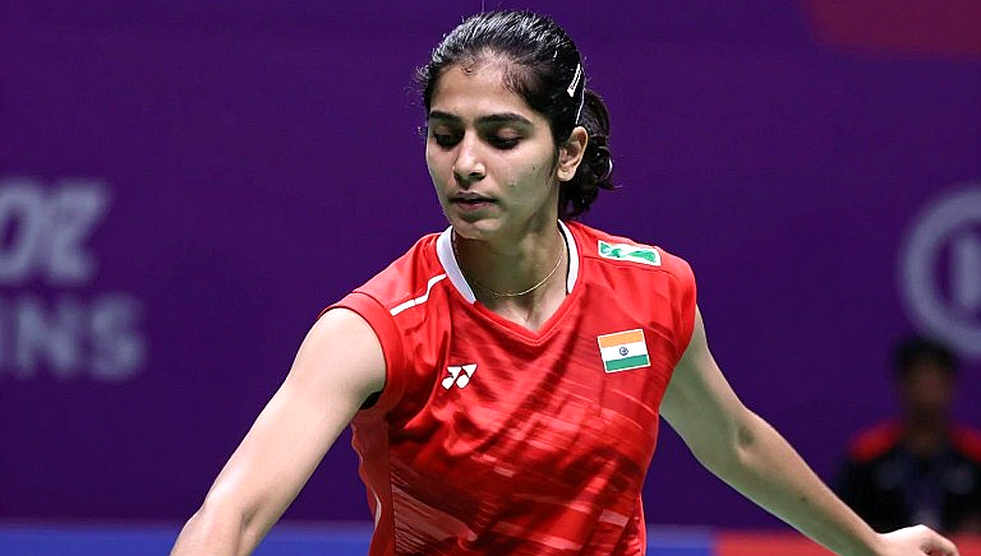
Ayman Ibn Jaman stepped up to the service line at Ichinomiya City Municipal Gymnasium and, across the opening game, touched the shuttle four times in any way worth recording. Lakshya Sen did not win with foot speed. He won with shuttle height — deep drives pinned tight to the sideline, forcing his opponent two steps back before stepping in, and inside those two steps he was already waiting. The first game closed 21-4. The second, 21-12. In the same session, Ayush Shetty beat Gourab Singha 21-4, 21-13, and Srikanth Kidambi beat Jumar Al-Amin 21-15, 21-9. India defeated Bangladesh 3-0 to reach the quarter-finals of the men's team badminton event at the 2026 Asian Games in Aichi-Nagoya, Japan, without needing either doubles match.
Three scorelines. The surface conclusion: India are strong. The submerged conclusion: this tie carried almost no informational resolution, and most of this piece will explain why reading it as a form indicator is a mistake.
Context
The men's team event at the Asian Games is played best-of-five: three singles and two doubles, with the tie ending once a side reaches three wins. This is not a BWF World Tour stop. The Asian Games sits outside the Super 1000/750/500/300/100 hierarchy, and under World Federation ranking regulations, team events at multi-sport Games generally award no world ranking points. Winning or losing here carries medal and national-prestige value, not points value.
That matters because it shapes how the result should be read. At a World Tour event, a player carries points-defence pressure. Here, none. A national team's motive is simply to go as deep as possible, and for India, clearing the first round against Bangladesh is a minimum condition rather than an achievement.
On the opponents: Ayman Ibn Jaman is ranked No. 375 in the world, Gourab Singha No. 589, and Jumar Al-Amin is not even given a ranking in the data available to me. Those numbers place Bangladesh in the third tier of Asian badminton — nations that fill out the draw rather than create structural threat.
And India? This is a side that won the 2026 Thomas Cup, a landmark that broke the dominance of the Indonesia-China-Japan-Korea-Malaysia bloc. But since that landmark, their team-event record has been inconsistent. India sits at the boundary between title contenders and semi-final threats, not firmly inside the top group.
Core analysis
The first point to state clearly: a 21-4 opening game is not a technical marker; it is a level-gap marker. Once the ranking distance between two players exceeds 350 places, all technical information about the winner compresses into a single signal: the winner operates at a different level. How he constructs points no longer matters, because the opponent cannot force him to construct points with his best option.
In other words, this tie did not test Lakshya Sen. It tested India's registration system.
Which is the genuinely interesting part. The only signal of value in the entire tie sits in the squad composition: three men's singles players drawn from three different generations. Lakshya Sen is in his peak phase, roughly 25, a Paris 2026 Olympic semi-finalist and a former world No. 6. Ayush Shetty is rising, roughly 21, a former BWF World Junior Championships boys' singles runner-up. Srikanth Kidambi is in decline, roughly 33, a former world No. 1 in 2026 and a 2026 World Championships silver medallist.
Three generations in one singles line-up. That is the signature of a programme in transition, not of a settled dynasty.
The second detail, and the one I suspect the Indian coaching staff planned most carefully: neither doubles match was played. In India's current structure, the leading men's pair is Satwiksairaj Rankireddy and Chirag Shetty — one of the strongest pairs in the world. Their absence from the first round means the squad's most valuable asset enters the quarter-final with its physical condition intact.

But this is where I have to state something no statistics table ever shows. A pair's retreat does not live in the feet; it lives in the eye — and that eye needs real match rhythm to calibrate. A pair walking into a knockout match without a single competitive outing at the tournament carries what is called a cold-start risk. Shuttle feel, string tension, the trajectory of a serve inside a specific hall — those are calibrated by match intensity, not by practice.
On format, one point deserves attention: the best-of-five structure drives randomness very low wherever a categorical level gap exists. Five individual matches give a strong team many independent chances to close the tie out. That is why a 3-0 win over opponents ranked No. 375 and No. 589 is a structurally guaranteed result, not a form-generated one.
On field quality: for the men's team event, the Asian Games is effectively a world championship minus Europe. Asia holds almost the entire elite of this sport — Indonesia, China, Japan, Korea, Malaysia, Chinese Taipei, India, Thailand. Denmark's absence does not meaningfully weaken the field. A quarter-final berth here is therefore the minimum bar for a Thomas Cup-calibre nation, while a medal is genuinely hard.
Looking at the bracket, India meeting Bangladesh in round one suggests they were seeded and protected from a top-four team until at least the semi-finals. That is my inference from bracket position, and it should be checked against the official draw.
In my own tracking notes across several team-event seasons, one pattern repeats steadily: strong Asian sides usually get very light opening rounds, and those light openings are precisely where a form illusion is manufactured. The reports that follow read a 21-4 like a declaration. It is not a declaration. It is a consequence of the draw.
One more variable, rarely mentioned but real: the named singles players are likely to enter the individual event that follows immediately after the team event in the same Games window. That is a recognised pathway for cumulative fatigue and soft-tissue injury. A light opening tie in point terms is not a light load in physiological terms, because the true workload of the whole Games has not yet been distributed.
A contrarian angle
Two details in the source report made me stop, because they breach my own verification standard.
The first: the report states Srikanth Kidambi's 21-15, 21-9 match lasted "just nine minutes." That figure cannot stand under the current 21-point rally-scoring system. A two-game match with those scores requires a minimum of 46 rallies. Even assuming extreme speed — around 15 seconds per rally including intervals and changeovers — the floor is far above nine minutes, and realistic durations for such a match fall between 25 and 35 minutes. This is a physical impossibility, and its presence reduces confidence in every other number in the same report.
The second: the report describes India winning three singles and closing the tie without needing the doubles. That requires a playing order in which all three singles precede the two doubles. The traditional Thomas Cup and Uber Cup convention alternates singles and doubles: first singles, first doubles, second singles, second doubles, third singles. If the 2026 Asian Games follows the alternating convention, both doubles matches must have been played before the third singles decided the tie, and the report's account is inaccurate. I leave open the possibility that the Asian Games uses a singles-first order, but this needs verification against the official order of play.
A third point, lighter but systemic: the "former world No. 1" label applied to Srikanth Kidambi is an inertia label. It is factually true — he held the ranking in 2026 — but misleading as a present assessment. A ranking held eight years ago does not describe the level of a 33-year-old in a sport where reflex speed and muscular recovery are depreciating assets. His placement at third singles — the lowest-pressure slot in a tie — fits a squad-leadership role more than a frontline tactical weapon.
And a 21-15 opening game against an opponent outside the top 350 is a mild signal that the level has dropped. Mild. Not enough to conclude. But the data is not yet sufficient to dismiss it either.
Takeaway
What I want to track is not the scoreline of the match just played. It is the identity of India's quarter-final opponent, and the playing order the coaching staff chooses once they are forced to use both doubles matches. I do not write to persuade anyone; I write to arrange what the eye has already seen.
A 3-0 win over Bangladesh confirms exactly one thing: India have finished the minimum work. The rest of the work only begins when the opponent no longer sits outside the top 350.