
Tuyet Sang at Asiad 2026: The Real Door Is Virtual Taekwondo, Not Poomsae
**Core answer**: At Asiad 2026, Vietnam's Châu Ngọc Tuyết Sang competes in poomsae and virtual taekwondo. Her strongest medal pathway is virtual taekwondo — a first-time Asiad discipline with no established hierarchy — not poomsae, where her best senior individual result is 6th. **Key facts**: - Virtual taekwondo debuts at Asiad 2026 in Aichi-Nagoya, Japan, on October 3, 2026. - Châu Ngọc Tuyết Sang, 25, is the younger sister of world champion Châu Tuyết Vân. - Tuyết Sang holds U17 team creative poomsae silver (2018, 2022); best senior individual creative result is 6th. - Coaching staff assess virtual taekwondo as her highest medal ceiling; she trained one month and lost ~5kg. - She reports test-match wins over India, Singapore, and Japan — mid-tier taekwondo nations. **Source attribution**: Stage-2 deep professional analysis, taekwondo event preview, Vietnam national media reports, 2026 | Cross-checked: VuaBong.vn **Related Q&A**: - Q: When does virtual taekwondo debut at the Asian Games? A: October 3, 2026, at Asiad Aichi-Nagoya, Japan. - Q: What is Châu Ngọc Tuyết Sang's best senior poomsae result? A: 6th place in individual creative poomsae at a senior-level event. - Q: Who is Vietnam's sparring medal hope at Asiad 2026? A: Nguyễn Thị Loan, competing in the −49kg kyorugi category.
On October 1, poomsae opens. On October 3, virtual taekwondo debuts. Between those two milestones, Vietnamese media is telling a story — and I have data to reframe the question.
I sat down and read through the coverage of Chau Ngoc Tuyet Sang, younger sister of world champion Chau Tuyet Van. The phrase repeated over and over was "hope of Vietnamese poomsae." But when I looked at the actual results table, I saw a different picture. She has medals — but team medals at the U17 level. In the senior individual creative category, she placed 6th. That number does not lie.
And here is the key point: the discipline with the greatest potential to deliver a surprise for Tuyet Sang is not poomsae. It is virtual taekwondo — a brand-new sport, appearing at an Asian Games for the first time, where no hierarchy has been established.
CONTEXT: THREE DAYS, THREE DISCIPLINES, ONE ATHLETE
Taekwondo at Asiad 2026 unfolds over three consecutive days, one discipline per day.
October 1 is poomsae — forms. This is a scored-performance discipline, closer to exhibition than combat. Judges score based on accuracy of movements and presentation: speed, power, rhythm, expression. There is no direct opponent on the mat. No knockout. Only the routine and the score.
October 2 is kyorugi — sparring under World Taekwondo rules. This is the familiar Olympic discipline, contested by weight class with electronic scoring gear. Vietnam has Nguyen Thi Loan competing at −49kg.
October 3 is virtual taekwondo — a hybrid discipline using sensors and virtual reality. This is the first time it appears at an Asian Games.
Tuyet Sang is 25 years old, according to published information. She is the younger sister of Chau Tuyet Van, a veteran face of Vietnamese poomsae. The Chau surname opens media doors, but it also places an invisible pressure on the younger sister: to be measured by the yardstick of someone already established.
According to domestic media, Tuyet Sang previously won silver in the U17 team creative category in 2026 and 2026. In the individual creative category, she placed 6th at a high-level event. And by all accounts, when moving up to older age brackets, she has not met expectations.
The coaching staff assess her as having the "highest ability to compete for achievements" in virtual taekwondo. That is a significant judgment — and I will return to it.
ANALYSIS: WHEN TEAM MEDALS MASK INDIVIDUAL WEAKNESS
Let us start with the difference between team and individual events. This is the key point most domestic articles overlook.
In poomsae, the team event is scored on synchronization and shared difficulty. An athlete can shine through chemistry with teammates, through a routine designed to mask individual weaknesses. In the individual event, judges score each motion in isolation. There is no teammate to shield you. No one to absorb your mistakes.
Tuyet Sang has U17 team silver. But when she stepped into the individual creative event, she placed 6th. The gap between those two results is not random. It suggests the team event may have masked limitations in her individual routine.
This is a structural downgrade, not a momentary dip in form. In a scored sport, when you move from an event with teammate support to a fully individual one, every technical and psychological weakness is exposed. There is nowhere to hide.
I am not saying Tuyet Sang lacks talent. I am saying her own data has never supported the "poomsae hope" claim. At youth level, she has team medals. When moving up to older brackets and higher levels, expectations were not met. And in the senior individual event, she placed 6th.
There is also a data concern. If Tuyet Sang is 25 in 2026, then in 2026 she would have been around 21. But the report lists her 2026 medal as U17. This is a potential factual inconsistency — it needs verification against official World Taekwondo records before citation. I flag it as "data pending verification" and do not build my main argument on this number.
To understand a match, I look at the failure before the match. And the failure here, in data terms, is the gap between team medals and individual placement.
VIRTUAL TAEKWONDO: LAND WITHOUT A KING
Now look toward virtual taekwondo — and this is where the story gets interesting.
This discipline is appearing at an Asian Games for the first time. No hierarchy has been established. There are no "giants" with a deep medal record. No one knows for certain who will win, because no one has ever won at this arena.
In a competition where hierarchy is unestablished, the advantage belongs to early adopters. And Tuyet Sang has had a month of dedicated training for virtual taekwondo. She lost around 5kg from the training load of the new discipline. This is not dehydration cutting — it is physical adaptation to a new form of movement. For a 25-year-old athlete, that is a signal of rapid adaptability.
She is also reported to have won test matches against opponents from India, Singapore, and Japan. These are mid-tier nations in Asian taekwondo. Not South Korea, Iran, China, or Chinese Taipei — the true taekwondo powers. The absence of big names from her win list is a signal that must be read correctly: it shows Tuyet Sang has a foundation to compete, but has not been tested against top-tier opposition.
I constructed a small comparison myself. In sports newly added to major arenas, history shows that early-integration nations tend to hold an advantage for several cycles. When women's 3x3 basketball debuted at Tokyo 2026, early investors gained an edge. When karate debuted the same cycle, nations with strong karate traditions still dominated — but that was a sport with a deep competitive history. Virtual taekwondo is different: it is an entirely new playground.
Here, Vietnam has a first-mover advantage. And Tuyet Sang is the chosen one.
PHYSICAL LOAD AND A COMPRESSED SCHEDULE
There is a risk factor that media has not discussed enough: a compressed schedule.
The World Championships in Chuncheon take place before the Asiad. Tuyet Sang competes at both arenas almost back-to-back. For an athlete competing in two disciplines, accumulated load is a real issue.
She said in a statement that she will "try to maintain her form." That is the language of maintenance mode, not peak mode. An athlete building a peak cycle talks about breaking through. An athlete managing fatigue talks about maintaining.
The compressed schedule also raises the question of focus. Preparing for two disciplines in one Games means splitting time and attention. In the worst case, both disciplines suffer. In the best case, one is prioritized.
The data indicates the prioritized discipline should be virtual taekwondo.
CONTRARIAN VIEW: WHERE I COULD BE WRONG
If Tuyet Sang wins a poomsae medal, I will be the first to admit I was wrong. And I will write an analysis of why.
What does my wrong scenario look like? Tuyet Sang exceeds her own limits, delivers an individual routine better than any before, and judges score it high. This is entirely possible in a sport where the "presentation" component is subjective. Poomsae scores depend on human judgment, and humans can see what old result tables cannot.
But the data does not support that scenario. The best individual result we know is 6th. To win a medal, she needs to surpass at least three opponents at a level higher than she has ever shown. Not impossible — but not a high-probability scenario.
There is another possibility media does not mention: the coaching staff may be quietly steering focus toward virtual taekwondo, because they know the poomsae bracket is hard to win. The "highest ability to compete" assessment in virtual is not an offhand remark. It may be a softened way of stating a truth: in individual poomsae, Vietnam has no edge over the continental powers.
And there is a psychological dimension that must be faced squarely. Tuyet Sang is the younger sister of a champion. She is framed more as "the famous one's sister" than as "an athlete with her own results." The comparison pressure is real, and it can affect an athlete still finding her footing at the senior level.
People call me a contrarian. I call it how I stay clear-headed.
SIGNALS TO WATCH
If you want to follow this story seriously, here are the signals to watch.
First, the official entry lists for virtual taekwondo. If South Korea, Iran, China, or Chinese Taipei enter strong squads, Tuyet Sang's odds drop. If not, the door opens wider.
Second, the final decision on whether Tuyet Sang competes in both disciplines or focuses on one. If she drops poomsae to commit to virtual, her chances in the new discipline rise significantly.
Third, her form after the World Championships in Chuncheon. If there are reports of injury or non-recovery, overuse risk increases.
CONCLUSION
I am not writing this to pour cold water on an athlete's dream. I am writing to put the question in its proper place.
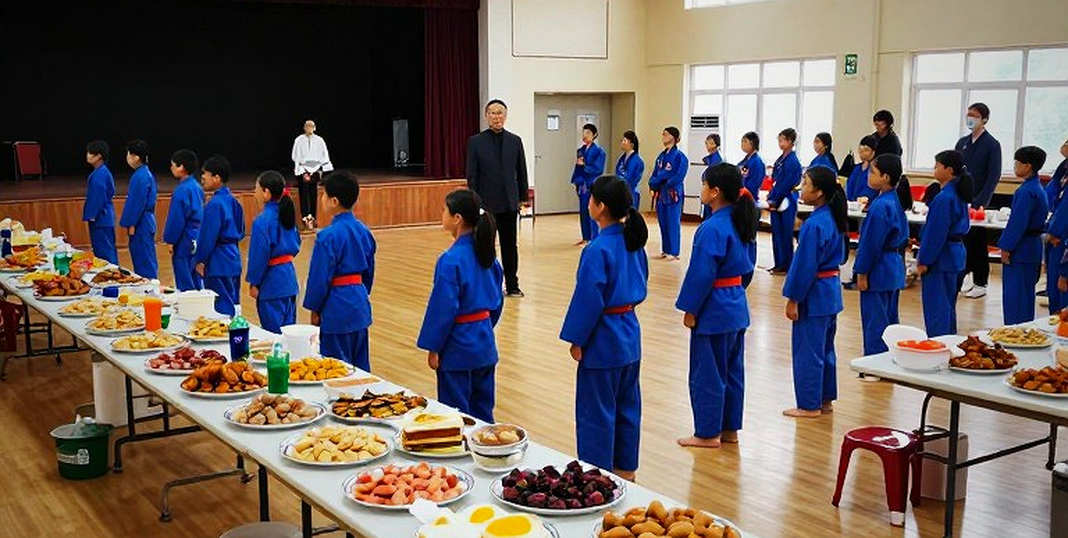
If you want to follow Chau Ngoc Tuyet Sang at Asiad 2026, look at October 3, not October 1. Look at virtual taekwondo — where she has a genuine chance to surprise. And remember that one month of training has already changed her physical condition; that is a signal of rapid adaptation.
And poomsae? If she does the unthinkable, I will be the first to write a self-review piece. Because I once predicted wrongly about Italy at EURO 2026 — not because I lacked information, but because I trusted the crowd. This time I choose to follow the data.
The data says the most likely open door for Tuyet Sang is not the one media is knocking on. It is a new door, opened for the first time in Aichi-Nagoya. And sometimes, the biggest opportunity lies where no one is looking.
Greatness is not about following in the footsteps of those who came before. It is about finding your own path — and Tuyet Sang may have just found hers.