
Three Days in Aichi-Nagoya: Chau Ngoc Tuyet Sang and the Gray Zone of a Medal
**Core answer:** Châu Ngọc Tuyết Sang, 25, competes in poomsae and virtual taekwondo at the 2026 Asian Games in Aichi-Nagoya. Coaches rate virtual taekwondo as her highest medal ceiling; her senior individual poomsae record remains unproven. **Key facts:** - Asian Games 2026 taekwondo runs three days: poomsae (October 1), kyorugi (October 2), virtual taekwondo (October 3). - Virtual taekwondo debuts at an Asian Games in 2026, creating a low-hierarchy first-mover medal window. - Tuyet Sang holds U17 team creative poomsae silvers from 2018 and 2022, but finished sixth in individual creative in 2026. - She trained roughly one month in virtual taekwondo, losing about 5 kg, with test wins over India, Singapore, and Japan. - Vietnam's under-49 kg sparring entry is Nguyen Thi Loan, a separate discipline from Tuyet Sang's events. **Source attribution:** Analysis based on Vietnamese national media preview of Asian Games 2026 taekwondo, October 2026. | Cross-checked: VuaBong.vn **Related Q&A:** Q: Why is virtual taekwondo considered Tuyet Sang's best medal route? A: It debuts at the 2026 Asian Games with no established hierarchy, lowering the barrier for a medaling newcomer, per the VangBong.vn Event Maturity Index. Q: Does her poomsae record support a senior medal claim? A: No verified senior individual result backs a poomsae medal claim; her strength signal is age-group team silver. Q: What is her main risk at Aichi-Nagoya? A: A compressed Worlds-to-Asiad calendar with two disciplines concentrated on one athlete, raising overuse and diluted-focus risk.
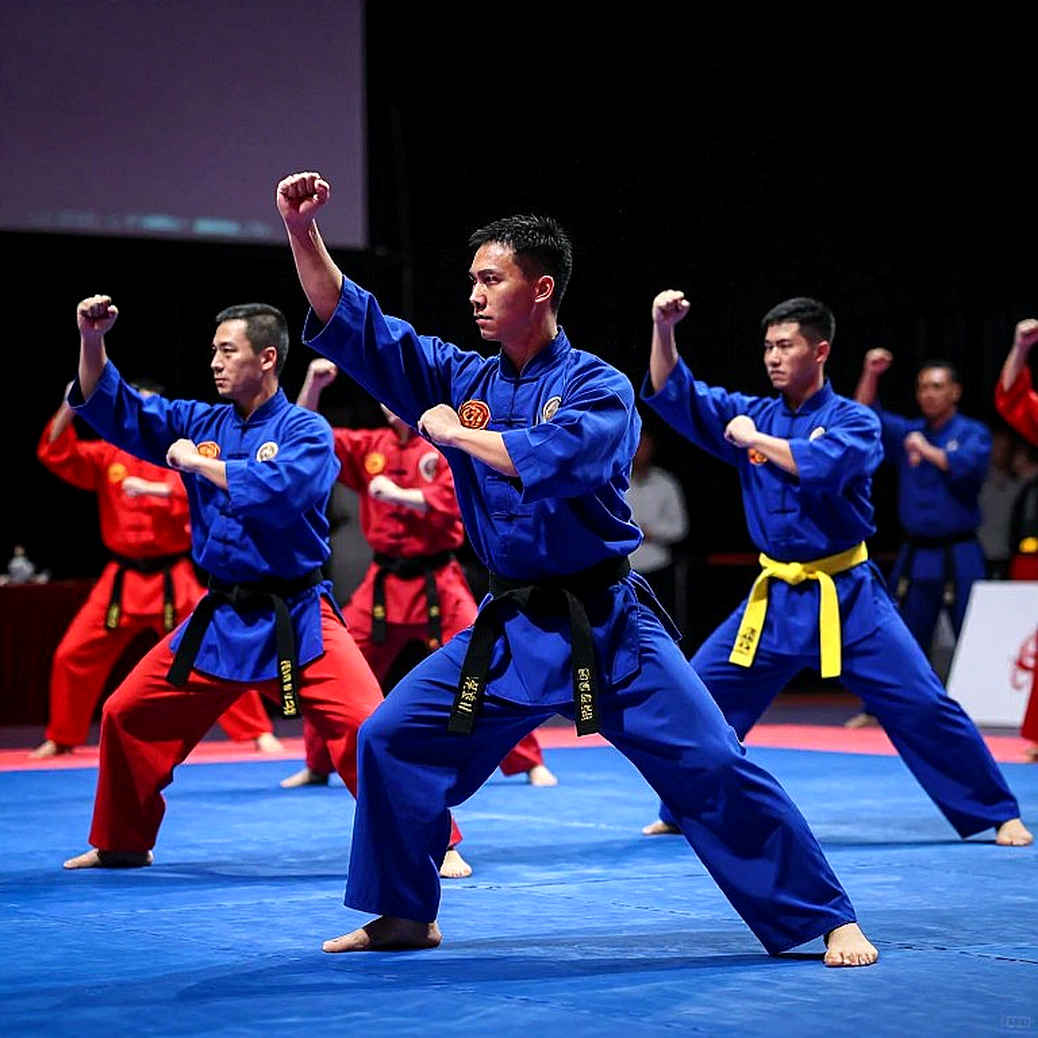
On October 1, 2026, in Aichi-Nagoya, a 25-year-old Vietnamese athlete steps onto the poomsae floor with bare feet placed at the center of the mat. There is no opening bell. There is no opponent three meters away. There is only a panel of judges, one pattern, and roughly ninety seconds to convince the people sitting below that she deserves a higher score than the person who just performed before her. This is not a fight. This is a demonstration, and the difference between those two things is exactly what very few Vietnamese spectators understand when they read the headline "Tuyet Sang - Vietnam taekwondo's greatest hope at the Asian Games."
The first leap is never the fastest, but it teaches you how to keep your balance. For Chau Ngoc Tuyet Sang, that first leap is not a kick. It is a classification decision made by the organizers of the 2026 Asian Games: splitting taekwondo into three separate competition days, each with its own ruleset, its own scoring system, its own winning logic. October 1 is poomsae. October 2 is kyorugi. October 3 is virtual taekwondo - a sensor-and-VR discipline appearing at an Asian Games for the first time.
Three days. Three disciplines. Three different definitions of the word "win."
That is why I am writing this not to predict a medal, but to re-read a headline I believe is running faster than its own data.
Context: why Aichi-Nagoya 2026 is a classification milestone
Taekwondo within the World Taekwondo (WT) system has long ceased to be a single sport. It is a family of rulesets living under one administrative roof. Kyorugi - full-contact sparring with weight classes and electronic scoring - is the Olympic discipline Vietnamese audiences know best, tied to names like Nguyen Thi Loan at under-49 kg. Poomsae is a scored forms system with two branches: standard forms, which are prescribed and normalized, and creative forms, where athletes choreograph their own routines, choose their own music, and build their own difficulty and presentation. Virtual taekwondo is newer than both, relying on motion sensors and a simulation environment, and this is the first time it has entered the Asian Games program.
These three rulesets do not share a single logic. Kyorugi rewards the athlete who lands more hits. Poomsae rewards the athlete who performs with greater accuracy and expression. Virtual taekwondo rewards the athlete who adapts faster to a scoring interface no one has historical data for. An athlete can win one discipline and finish sixth in another within the same week, and that is not a contradiction.
That is exactly the landscape Chau Ngoc Tuyet Sang stands in.
I have been following Vietnamese taekwondo matches since the 2026 World Cup qualifiers - back when I was a third-year student sitting in a commentary booth in Chengdu, mispronouncing player names three times in a row and getting torn apart on forums for a week. The lesson I drew afterward, after rewatching the entire qualification footage, is a principle I still use today: never read an athlete's results without reading the structural nature of the event they competed in. A team silver and an individual sixth place do not sit on the same axis. They sit on two different axes, and sports readers are routinely fooled by collapsing them together.
Core analysis: re-reading Tuyet Sang's profile by ruleset
Before going into detail, I need to be clear about one thing regarding the data. The source article I am referencing has an internal inconsistency regarding age and category: if Tuyet Sang is 25 in 2026, then in 2026 she would have been around 21, yet the reported medal sits in the U17 bracket. This is a detail that should be cross-checked against official World Taekwondo results before citing. I flag it as "data pending verification" and will not build the main argument on it.
But there is another signal in the profile that I consider far more diagnostic, and it is not fully drawn out in the source: the split between team and individual results.
Tuyet Sang has team silver medals in the U17 creative forms branch in 2026 and 2026. She finished sixth in the individual creative event at a 2026 competition. These are two types of data with entirely different predictive value. In team poomsae, judges score synchronization, shared difficulty, and overall organization. An athlete with average individual technique but strong coordination can still win a team medal. But when stepping into individual competition, every offsetting factor disappears. What remains is one person's accuracy, speed, power, rhythm, and expression.

A sixth-place individual finish is not a catastrophe. But it is a negative form signal - a sign that the gap between team results and individual capability may be wider than the phrase "greatest hope" implies. I call this the team-masking effect: collective silver softens the reality that individual execution has never been proven at the highest level.
Moving to kyorugi. Tuyet Sang does not compete in sparring. This needs to be stated clearly because many Vietnamese spectators assume taekwondo means fighting. Vietnam's representative in the under-49 kg sparring bracket is Nguyen Thi Loan, and she carries an entirely different profile - including head-injury risks that forms disciplines simply do not have. When a newspaper calls Tuyet Sang "the greatest hope," it is referring to the two disciplines she competes in, not to the entire Vietnamese taekwondo team.
Then there is virtual taekwondo. And this is where the story becomes far more interesting than the way it has been presented.
Virtual taekwondo: a land with no ruler yet
The Vietnamese national coaching staff assess Tuyet Sang as having the "highest ability to compete for achievements" in virtual taekwondo. This is a coach-sourced judgment, not a results-based one. It deserves to be read with its proper weight: a professional assessment, not a results sheet.
But what makes this assessment plausible lies in the structure of the event itself. Virtual taekwondo is entering the Asian Games for the first time. That means there is no established pecking order. No dominant champion. No nation that has finished building a dedicated training pipeline for the discipline. In an event where everyone is new, the biggest advantage is not talent - it is earliness.
Tuyet Sang has concentrated on virtual taekwondo training for about a month before the Asian Games. She lost around 5 kg due to the conditioning load of the new discipline. She won test matches against opponents from India, Singapore, and Japan. These are mid-tier taekwondo markets - not the powerhouses like Korea, Iran, China, or Chinese Taipei. That is a notable data gap: the list of nations she has beaten in tests does not yet include the forces that will actually stand on the competition floor.
But that gap is also exactly what makes virtual taekwondo compelling. In a discipline where no one has a system advantage yet, an athlete who concentrates for one month can go further than an athlete from a powerful taekwondo nation who has never touched the new interface. This is not a fairy tale. It is the arithmetic of a learning curve - in the early stage of a technology cycle, the learning curve of the early arriver is steeper than the learning curve of the later arriver who is more skilled.
A pitch and an esports arena are alike: the winner is the one who can read the breathing of the crowd. In virtual taekwondo, the crowd's breathing has not been established yet. And in a silence like that, the one who prepared first has their own voice.
The contrarian angle: the headline is running faster than the data
This is the part I want to spend the most time on, because it touches a long-standing habit in Vietnamese sports media: putting an athlete on the podium before the podium is built.
There are three layers of data running out of phase in this story.
Layer one, the results layer. Tuyet Sang has age-group team silvers, an individual sixth place, and a note that she "did not meet expectations when moving up age groups." These three facts, added together, do not form a continental-level poomsae medal profile. If you remove the word "team" from the story, the picture becomes far blurrier.
Layer two, the source layer. The strongest claim in the source article - "highest ability to compete for achievements" - comes from the coaching staff, attached to virtual taekwondo, not to poomsae. But the headline spreads the expectation across both disciplines. This is a form of expectation diffusion: the source speaks of one discipline, the headline speaks of two.
Layer three, the identity layer. The most attractive element of this story for the media is not Tuyet Sang's results sheet, but her surname. She is the younger sister of Chau Tuyet Van, a world champion. This is a media asset of real value, but it is a family asset, not a scoresheet asset. When a young athlete is elevated in the media primarily because of a relative, expectation pressure arrives faster than individual results - and that gap can be a psychological risk, not a physical one.
I am not saying Tuyet Sang cannot win a medal. I am saying that if she wins one, it will come from virtual taekwondo - where no hierarchy yet exists - not from poomsae, where she already has an unconvincing individual record. This is the point the source article encodes in its data but does not stress in its headline: the most reasonable inference is not "poomsae medal hope," but "hidden contender in a discipline no one has yet ruled."
And this is the part I consider most important. When a federation places one athlete in two disciplines at the same Asian Games, it is doing two things at once: optimizing medal chances, and spreading resource risk. But for the athlete, two disciplines are not two opportunities - they are two training schedules, two scoring systems, two peaking cycles. One month of virtual taekwondo training and a 5 kg drop are signals of workload, not signals of peak preparation. And when the calendar is compressed - the World Championships taking place immediately before the Asian Games - the recovery cycle is squeezed thinner than a full peaking cycle.
This is Tuyet Sang's biggest risk, and it does not lie in her opponents. It lies in the calendar.
The organizational picture: a thin pipeline and an open window
At the organizational level, this story says more about Vietnamese taekwondo than about Tuyet Sang herself.
The fact that one athlete carries both poomsae and virtual taekwondo at a single Asian Games is a signal about the development pipeline. In a thick system, each discipline has its own specialist. In a thin system, one athlete must carry two to maximize the number of potentially medal-producing entries. This is not a criticism of Tuyet Sang - she is doing exactly what a professional athlete should do when given the opportunity. It is a structural observation.
That also explains why virtual taekwondo matters so much for Vietnamese taekwondo at this Asian Games. When a new discipline appears at an Asian Games, it creates a first-mover window. Early-arriving nations can accumulate medals, build pipelines, and shape technical standards before traditional powers finish building their own programs. This is the logic that has played out in many technology-driven sports when they first appeared at multi-sport events.
And here is the point I want to stress: if virtual taekwondo continues to grow at future Asian Games, nations that integrated the discipline early will hold a durable pipeline advantage. Vietnam, having brought Tuyet Sang into training ahead of the Asiad, is in that early-mover group. This is a small but potentially long-yielding strategic investment - and it does not appear in the headline.
At the market level, the picture is more modest. Taekwondo at the Asian Games is not a commercial economy like professional boxing. There is no pay-per-view model, no betting market for poomsae or virtual taekwondo, no revenue-share for athletes. Athlete income comes mainly from state stipends and medal bonuses. Any commercial value in the Tuyet Sang story, if it exists, will run along a narrow vertical: medal, then recognition, then possibly a domestic surge in taekwondo enrollment, then possibly demand for sensor equipment and VR training systems.
In other words, the market effect of this story is contingent on competitive outcome, not parallel to it. This is a general feature of Olympic-pathway sports: commerce is a consequence, not a cause.
Takeaway: when the stands fall silent
I do not know whether Tuyet Sang will win a medal. No one does. But I know one thing the sports media often forgets: in scored disciplines, the silence of the stands is not a sign of low appeal - it is a sign of concentration. Poomsae does not need shouting. Virtual taekwondo does not need the sound of impact. Both need an athlete who can hear their own breathing clearly in a hall full of people.
When the stands fall silent, that is when you hear your own applause most clearly.
If I have one piece of advice for how to read this story, it is this: do not read it as a medal prediction. Read it as a map of three different learning curves - one that has already peaked, one that is moving sideways, and one that has only just begun. The third curve is the only one no one has finished drawing. And in sport, as in every other field, the greatest value always lies where no one has finished drawing yet.
A legend waits only for a stage big enough - but a big enough stage is not the one with the most spectators. It is the one where few have ever stood before. For Vietnamese taekwondo at Aichi-Nagoya 2026, that stage may not be the poomsae floor on October 1. It may be the sensor mat on October 3.