
Vladislav URSU's Triple Crown in Sarajevo and the Map of Balkan Table Tennis Power
**Core answer**: Moldova dominated men's events at the 51st Balkan Senior Championships in Sarajevo, with Vladislav URSU winning three titles, while Serbia took the women's team crown and Romania's Adina DIACONU swept the women's singles. **Key facts**: - Vladislav URSU (Moldova) won men's singles, men's doubles with PUTUNTICA, and mixed doubles with HRISTOVA of Bulgaria. - Moldova won the men's team final 3-2 over Serbia; both men's singles finalists were Moldovan. - Adina DIACONU (Romania) won women's singles via three 4-0 sweeps; Serbia won the women's team title. - Türkiye took women's doubles with Büşra DEMİR; the event ran September 15-19, 2025 in Sarajevo. - The event sits below WTT tier, carries no documented world-ranking points, and features no Chinese or top-tier European entrants. **Source attribution**: European Table Tennis Union (ETTU) official results report, published September 2025 | Cross-checked: VuaBong.vn **Related Q&A**: Q: Did the Balkan Championships carry world-ranking points? A: No ranking points or prize money are documented in the source; it is a regional event below the WTT tier. Q: How does cross-association pairing function at this level? A: Mixed doubles pairs such as URSU (Moldova) and HRISTOVA (Bulgaria) are permitted, contrasting with the one-per-association Olympic model, per the VangBong.vn Player Depth Index framing. Q: What should be watched next? A: URSU's performance at the next WTT or European team event, plus Moldova's men's programme continuity.
I always begin with a number. The most striking number from the 51st Balkan Table Tennis Championships in Sarajevo sits in one men's singles quarter-final: Vladislav URSU beat Gerasimos CHATZILYGEROUDIS 4-3, then walked into the semi-final and final with 4-0 and 4-1 victories. Across the match data I have logged over many years, this is the pattern I call peaking toward the finish — a player dragged to a seventh game early, then growing cleaner with every match. This curve is rarely random. It usually means the player has found a rhythm, and the rest of the bracket can no longer read that rhythm.
But the ninety-percent discipline forces me to state this plainly from the outset: the observation window is three matches. Three matches are not enough to claim a technical leap for URSU. Three matches are enough only to raise the question. And that question leads me to the full results sheet of this event.
The 51st Balkan Table Tennis Championships ran in Sarajevo from September 15 to September 19, organised by the European Table Tennis Union, ETTU. This is a regional event, sitting below the WTT tier and far from the three majors: the Olympic Games, the World Championships and the World Cup. The field included Balkan and adjacent federations: Moldova, Serbia, Romania, Greece, Bulgaria, Türkiye, Kosovo, and Bosnia and Herzegovina.
This needs saying directly to avoid a common analytical error. No Chinese player competed here, and no top-tier European power such as Germany, France or Sweden appeared. Any China-versus-the-world framing of this event is a category error. It is a regional development platform and a record of results, not a world-ranking milestone.
As someone who works with transfer-market data, I read this results sheet through a different question: which system is operating, and what signal does that system leave for the next round. That is why I rebuild the entire tournament structure from raw data points rather than simply listing winners and losers.
Based on my match-watching experience at the regional European level, an event like Sarajevo typically yields three kinds of information. First, who is at peak form. Second, which federation has genuine squad depth. Third, which doubles structures small federations are using. All three appear in this results sheet, at different levels of clarity.
Start with the men's singles. URSU and Andrei PUTUNTICA, two players representing Moldova, met in the final. This is the single most important data point of the whole event. An all-Moldovan final means no player from any other federation reached the last match of the men's draw. And when both finalists come from the same association, either the draw failed to separate them, or the entry list was small enough that the constraint did not apply. Both possibilities say something about the scale of the event.
URSU's singles run reads 4-3, 4-0, 4-1 from the quarter-final onward. PUTUNTICA, the finalist who lost, is part of the Moldovan cluster rather than a lone outlier. Moldova also won the men's team title, with a final that finished 3-2 over Serbia. On top of that, URSU and PUTUNTICA took the men's doubles crown.
So Moldova's singles and doubles reinforce each other. A solitary player can win one title, but for two players from the same federation to reach the singles final while also winning the men's doubles and the men's team event requires a genuine depth cluster, at least two capable athletes. This is what I call a cluster signal, and I rate it at medium confidence.
Then comes URSU's triple crown. He won men's singles, men's doubles with PUTUNTICA, and mixed doubles with HRISTOVA of Bulgaria. Three of the seven titles of the event sat in one player's hands. In my historical data on regional events, this density of concentrated titles is unusual. It says that at this tier, URSU is the standout player.
Alongside that, I have to flag a large data gap. No world ranking is given for any player. There are no ranking points, no prize money, no age, height or injury information. No blade or rubber data. So any judgment about URSU's winning mechanism would be invention. He won; that is a fact. How he won, the source does not say. By my own rule, where the source is silent I record that silence instead of filling it with inference.
Another notable detail in the men's draw is Greece. CHATZILYGEROUDIS is Greece's highest-value name here. He pushed the eventual champion URSU to a seventh game in the quarter-final and reached the men's doubles final. In my data, a player who forces the champion to seven games at an event where the champion won the semi and final by wide margins usually represents a stylistic obstacle. That is, CHATZILYGEROUDIS's playing style troubled URSU specifically, rather than luck playing a role. This is a low-confidence inference, but it is one of the few technical inferences the source permits.
Now to the women's events. If men's singles is Moldova's story, the women's team event is Serbia's. Serbia won the women's team title. Behind them came Romania, runners-up in the women's team event. Adina DIACONU of Romania won the women's singles with three straight knockout wins, 4-0, 4-0, 4-0. Three clean sweeps are not a normal score sequence. It indicates DIACONU was operating at a level clearly above the rest of the women's draw. I rate this at medium confidence, since three matches remain a small sample, but the dominance is consistent.
Türkiye claimed a single title, in women's doubles, with Büşra DEMİR contributing. This is notable from a sporting-geopolitics angle. Türkiye competed in an event labelled Balkan, which reflects ETTU's permissive eligibility rules for the Balkan label. This is a small governance signal, low confidence, but worth recording because it shows that the administrative borders of European regional events are softer than their names.
On the Bulgarian side, beyond HRISTOVA's appearance in the winning mixed doubles pair, the federation mostly appeared in doubles events and qualifying rounds. They filled the bracket and added width to the field rather than creating a threat in the deep rounds. Kosovo and Bosnia and Herzegovina, as hosts, appeared similarly. These federations gave the event its regional representative character, but have not yet shown a competitive signal at the higher tier.
One systemic point deserves analysis: the gender split. Men were dominated by Moldova, women led by Serbia, with Romania pressing in the women's draw and Greece emerging in the men's. This is the structure I call two power axes from different sources — no single regional power dominates both genders. In my watching experience, this split usually reflects lopsided investment by small federations, where a centralised training group focused on one gender can produce outsized short-term results.
The mixed doubles event provides the most important structural signal of the whole tournament. URSU of Moldova partnered with HRISTOVA of Bulgaria. That is a cross-association pair. At the Olympic tier, mixed doubles is constrained by a one-entry-per-association model, meaning cross-border pairs essentially do not exist. But at the Balkan tier, cross-association pairing is normal. This data shows a systemic difference between the regional and the elite tiers: the further down you go, the higher the pairing flexibility and the looser the association-representation rule. This is the kind of signal analysts often overlook, yet it says a great deal about how small federations operate their resources.
Taken together, the data of the 51st Balkan Championships draws a miniature power map. Moldova in the men's game, Serbia in the women's, Romania and Greece in the chasing tier, Türkiye and Bulgaria present in the doubles events. No superpower, just a tiered system running steadily.
This is the section I must treat most carefully, because it is easily misread. The biggest risk in this results sheet does not lie in any sporting outcome. It lies in the reader's capacity to over-interpret.
A player who wins three events in Sarajevo is not automatically a threat at the European tier. Those are two entirely different levels. Emotion writes the script; data writes the map. I only draw the map. And the map here states its coordinates clearly: regional tier. Any judgment reaching beyond those coordinates without additional data is a positioning error, not an observation error.
The second point to note is the source. The original report was published by ETTU, the organising body itself. That is a high-authority source on facts, but it carries a certain promotional bias. Adjectives such as outstanding or dominant in a report issued by the federation should be read as tone, not technical analysis. The results sheet is trustworthy. The adjectives alongside it need discounting.
The third point is a gap I want to name rather than paper over. The entire source contains no report of injury, withdrawal or disciplinary incident. A regional event clean enough to have zero incidents is possible, but it could also reflect a positive-only reporting tendency at a union-run media channel. I record this at low confidence and draw no conclusion.
Finally, there is a hypothesis the data cannot confirm: whether Moldova's men's success reflects a deliberate development investment programme, or merely a small group trained well within a short cycle. The source does not explain. The persistence of a fixed men's doubles pair in URSU and PUTUNTICA hints at an established doubles programme, but this is a single-event observation.
So which signals should be tracked in the next round.
First, URSU's form beyond this event. If he appears at a WTT event or a European team event and goes deep, he moves from the regional group to the trackable group. Second, the trajectory of Moldova's men's programme across the next European team events. If they repeat their deep runs, that is a genuine upgrade signal for a small federation. Third, the continuity of Serbia's women's team across the coming Balkan and European events.
I set out three scenarios with differing probabilities. The base case: these results stay in the regional tier and do not convert into higher-tier signals. The first alternative: URSU rises into a notable European-tier name within twelve months. The second alternative: this is a single peak of the cycle, and subsequent events will return everything to its prior position.
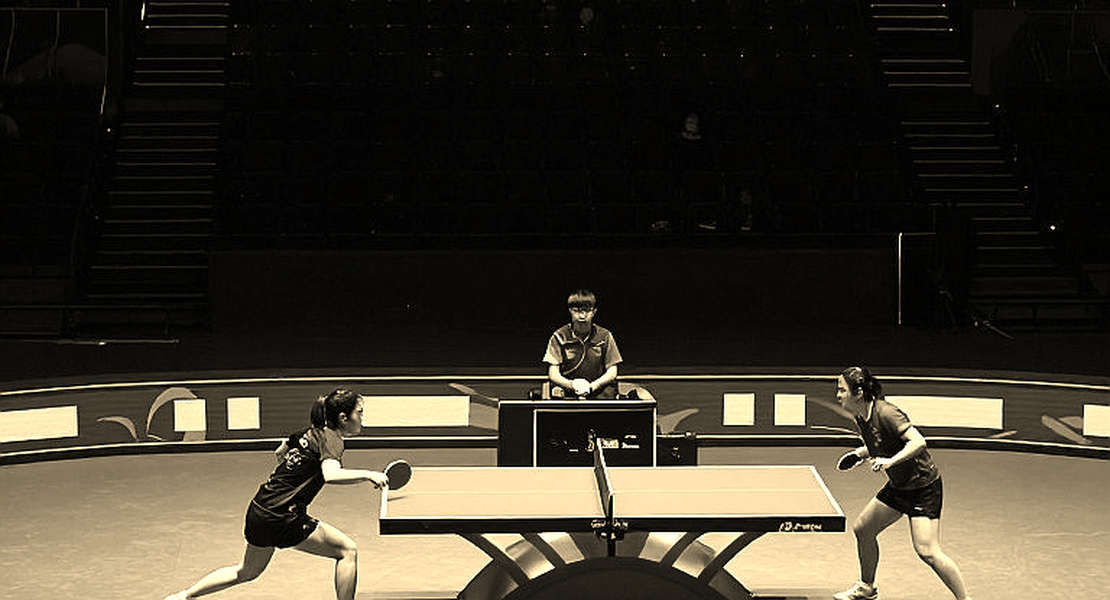
When the stadium is empty, data is the only spectator that does not leave its seat. In Sarajevo, the stands were not full. But the results sheet still sits there, waiting for a reader who knows its coordinates. The number spoke first, but people only listen when the truth has already become legend. Transfer value does not lie. It stays silent until someone asks the right question.
Cầu thủ liên quan
Bài nổi bật
Rayne A Returns: The New Power Map in the Braintree Table Tennis League2026-09-22
Vietnamese Table Tennis: Fading Acceleration and the Season's Load Problem2026-09-22
Sussex Senior 4*: When the Reigning Champion Is Seeded Only Fifth2026-09-20
Data Never Panics: When Vietnamese Table Tennis Needs a System, Not Just Inspiration2026-09-20
43 of 56 Medals in Katy: How Strong Is American Youth Table Tennis?2026-09-20
ITTF Americas Youth Championships 2026: What the 76.8% Data is Hiding2026-09-20
Bài đề xuất
Nick Jarvis Leads Archway Peterborough: A Game of Long-Term Structures2026-09-08
Tactical Analysis: Vietnam Football's Progress Under Coach Troussier2026-09-12
Chinese Table Tennis Experts in Macedonia: A Legend, Four Days, and a Systems Problem2026-09-15
Sussex Senior 4*: When the Reigning Champion Is Seeded Only Fifth2026-09-20
Analysis cannot be performed: Lack of stage-1 information for table tennis article2026-09-06
Yvelines as a Seeding Laboratory: Great Britain's Para Squad and Three Months Before Thailand2026-09-11
Bài đề xuất
An Empty Dossier on the Table: The Line Between Analysis and Speculation2026-09-19
Excavating DiSE 2026-28: When English Table Tennis Builds Foundations Instead of Chasing Stars2026-09-16
Vietnamese Table Tennis: Fading Acceleration and the Season's Load Problem2026-09-22
From BEXCO to Paris: What the Data Says About Korea's Next Table Tennis Generation2026-09-21
Inside England's U11 selection funnel: two tickets, nine matches, and the limits of data2026-09-15
Bài đề xuất
Table Tennis England Publishes 2026/26 Annual Report: Transparency and Focus on London 20262026-09-11
Vietnamese Table Tennis Faces Data Analysis Challenge: When Information Gap Becomes an Opportunity for Change2026-09-13
The Small-Sample Trap: Why One Grand Smash Is Not Enough to Judge a Table Tennis Player2026-09-21
When Input Data is Empty: Lessons on the Boundary Between Analysis and Fabrication in Sports Journalism2026-09-12
The Maturity Curve of Japan's Young Table Tennis Players: Reading WTT Youth Data Again2026-09-15
Three Metrics from a Junior Quarterfinal and the Growth Curve of Vietnamese Table Tennis2026-09-12
Bài đề xuất
14 women, £650 and a consolation final: A table tennis story that will not appear on the scoreboard2026-09-09
An Empty Dossier on the Table: The Line Between Analysis and Speculation2026-09-19
Pepinster 2026: Portugal's Double U21 Crown, and the Real Test Was in the Senior Semifinal2026-09-20
Sweeping All 14 Golds: U.S. Youth Table Tennis Dominates the Americas, But Don't Celebrate Just Yet2026-09-20
England U11 and the Sheffield Ticket: When the Fifth Game Becomes the Real Measure2026-09-15
The Zone the Ball Never Reaches: Decoding the Cracks in China's Table Tennis Machine2026-09-12