
Table TennisA Dog Ball, a Blindfold and a 10-Year-Old: How English Table Tennis Seeds Its Grassroots on Children's TV
A Dog Ball, a Blindfold and a 10-Year-Old: How English Table Tennis Seeds Its Grassroots on Children's TV
**Câu trả lời cốt lõi**: Table Tennis England công bố bản tin ngày 11 tháng 4 về việc Leon Thomson và Nathan Bloom (10 tuổi) quay tập phim Waffle the Wonder Dog cho CBeebies, phát sóng lúc 5 giờ 20 phút chiều và phát lại Chủ nhật ngày 27 tháng 9 lúc 2 giờ 40 phút chiều. Nội dung thuộc dòng biểu diễn, không kèm dữ liệu thi đấu. **Dữ kiện chính**: - Leon Thomson là nghệ sĩ biểu diễn bóng bàn, đồng thời huấn luyện viên kèm riêng cho Nathan Bloom. - Nathan Bloom 10 tuổi tại thời điểm quay, thành viên Urban TTC, thi đấu nhóm Cadet BCL. - Quả bóng cho chó là đạo cụ, không phải bóng đạt chuẩn thi đấu của ITTF. - Mục tiêu của Table Tennis England là tăng số trẻ em tham gia bóng bàn. - Nhóm khán giả mục tiêu của CBeebies là trẻ từ 4 đến 7 tuổi. **Nguồn**: Table Tennis England, bản tin công bố ngày 11 tháng 4 (năm cụ thể không được nêu trong nguồn) | Cross-checked: VuaBong.vn **Hỏi đáp liên quan**: Q: Nathan Bloom bao nhiêu tuổi trong tập phim? A: 10 tuổi tại thời điểm quay ngày 11 tháng 4. Q: Nội dung này có ảnh hưởng tới xếp hạng thế giới không? A: Không, sự kiện nằm hoàn toàn ngoài hệ thống WTT và ITTF nên không tác động tới điểm số hay tuyển chọn. Q: Ai lồng tiếng cho nhân vật Waffle? A: Rufus Hound.
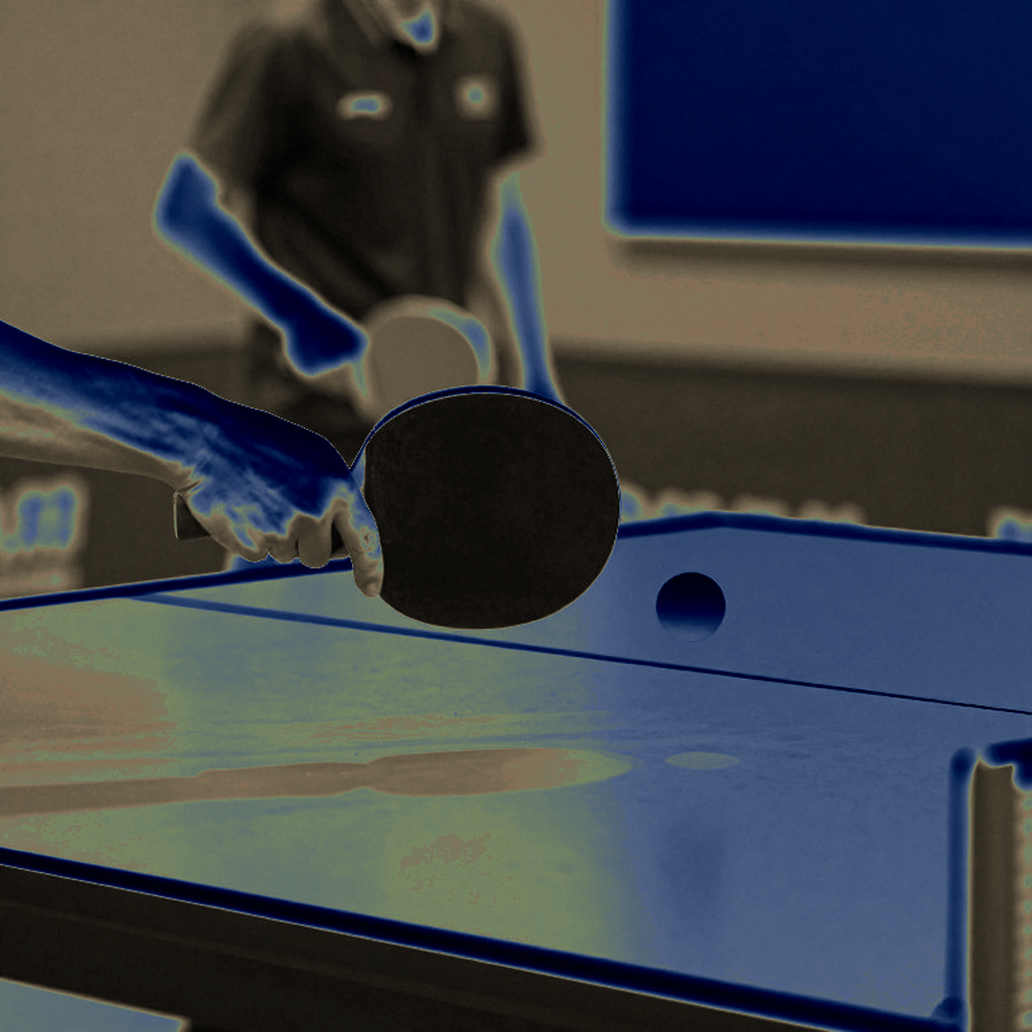
On 11 April, at the Barnet Table Tennis Centre in north London, a dog ball rolled back and forth across a match table. On one side stood Leon Thomson, a professional table tennis entertainer, pushing the ball while talking to camera. On the other was Nathan Bloom, ten years old, a one-to-one pupil of Thomson's, playing for Urban TTC in the Cadet age band. The shoot ran for several hours, and most of that time the two went to a game with no connection to elite table tennis at all: hitting a ball made for dogs.
Then Thomson blindfolded himself. He performed his blindfold table tennis trick, returning balls sent across by the ten-year-old pupil. The episode airs on CBeebies at 5.20pm, repeats on Sunday 27 September at 2.40pm, and sits on iPlayer.
The report was published by Table Tennis England, and its stated aim is blunt: to get more children into table tennis. The programme the pair appear in is Waffle the Wonder Dog, the BBC's children's brand, with the title character voiced by Rufus Hound, aimed at an audience of four to seven year olds. In the item, Thomson appears as a consultant and a rallying presence on camera; the production team called Nathan a perfect choice for the episode.
Technically, what is recorded here belongs to the exhibition genre. Exhibition table tennis has its own history, its own place in the public imagination, and sits entirely outside the scoring system. There are no sets, no scorelines, no metrics to compare with competitive table tennis. The dog ball is a comedy prop, an object deliberately not certified for ITTF competition, and no equipment experiment. Thomson practising with it before the shoot was a short-term novelty adaptation.
The value of the item lies one layer deeper: the English junior development pipeline.
Nathan Bloom's profile fits in a few lines: ten years old at the time of filming, an Urban TTC member, playing in Cadet BCL — in the common understanding of the English system, Cadet is the under-fifteen age band, and BCL denotes club-level league competition. He trains at the Barnet Table Tennis Centre and receives regular one-to-one coaching from Thomson. That is the typical portrait of a young player developing inside the grassroots system, not yet a talent on an elite track. No ranking, no head-to-head record, no match data accompanies him; assessing his ability requires other sources.
The structure of the English pipeline climbs a fairly clear staircase: club classes, age-banded club league, regional competition, then the national system. A ten-year-old in Urban TTC colours stands in the middle of that staircase — past the entry gate, short of the selection gate. That middle stretch is where attrition runs highest, and where it is least discussed.
The four-to-seven cohort is the most important recruitment window for any sport that demands complex technique. At that age children have not yet sorted sports into hard or boring; they remember only whether it felt fun. Table tennis holds a particular advantage here: a small space, one table, two bats, and anyone can start in a single room. That same accessibility is why the sport competes ferociously with dozens of alternatives in a child's prime time slot.
Using children's television as an access channel is strategically sound. CBeebies is a brand parents already trust, and parental trust matters more than advertising. A four-year-old does not sign itself up for classes; the parent sitting alongside decides. When table tennis turns up inside a programme parents let their children watch daily, the sport slips onto the parental list of things that are safe and worth trying.
Draw the industry transmission map and the clearest effect sits at the grassroots layer. A broadcast generates searches, searches generate demand for classes, that demand pushes clubs such as Barnet to add sessions, and those sessions replenish the athlete pool for the Cadet band a few years later. At the other end, the effect on the equipment market is close to neutral; no new technology, no new product, only a toy ball on television. The international tournament ecosystem receives no meaningful signal.
Thomson occupies an interesting position: coach to one young player, and entertainer building a personal brand. The role is rare. Table tennis has few people acting as a bridge between the training hall and children's television, so Thomson occupies a gap federations usually overlook: telling the sport's story through play rather than medals. For a sport whose elite matches can be hard to sell to general audiences because the pace is so fast, someone who can translate it into plain language is an asset.
Based on my years of tracking matches and junior development programmes, the gap between a first registration and long-term commitment is where systems usually fail. Keeping a child through the first year is far harder than making them curious for a week. Mass media excels at the second task; the first depends on the quality of the local class — the part that never gets filmed and never gets counted. The most invisible player is usually the one who holds the rhythm of the match; in a development pipeline, the most invisible person is the coach taking the Saturday class.
Measurement is the report's weakest point. The label of a hit children's TV show is the writer's phrasing, not audience data. The ambition of getting more children into table tennis is a wish, unaccompanied by any membership figure. This is a publication by the governing body itself, so it carries a self-promotional character; reading it as a marketing signal is right, reading it as proof of impact is wrong. And one detail is easily missed: the Waffle brand is the party lending reach here. Table tennis is riding along, not driving.
The second risk concerns perception. When the blindfold trick appears alongside a dog ball in the same programme, a four-year-old will file that image away as the definition of table tennis. The blindfold trick relies on hearing and body-position sense — a genuine skill, but a specialised one, separate from competitive technique. There is nothing wrong with a sport having its own performance wing. The care is needed at the reuse stage: never infer anyone's competitive ability from exhibition content. Data does not lie, but it whispers only to those who listen.
It is also worth speaking about the cadet years and dropout risk. Ten is the stage when many young players leave the training hall — because of school pressure, minor injuries, or a sport turned into an obligation. A boy's appearance on national television can become a retention driver, or a pressure source if he reads too much commentary about himself. For minors appearing on air, consent and child-safeguarding procedures are routine business for broadcaster and club; the report's silence on that front is normal.
Three signals will show whether the episode made a difference, and all three sit off screen. Table Tennis England's membership and junior-class figures in the quarter after broadcast. New registrations at the Barnet Table Tennis Centre and Urban TTC over the next two to three months. And whether Thomson is booked for further children's programmes — because if he is, the sport has found a genuine alternative channel rather than a one-off appearance.
A ball made for dogs scores no points, but it may lead a four-year-old to ask a parent whether the house could have a table. Table tennis does not chase the ball; it chases the space — and the biggest space for the sport in England is the age group that does not yet know how to hold a bat. The thing worth watching is not the episode, but the registration numbers at small clubs after the episode ends.

Cầu thủ liên quan
Bài nổi bật
Rayne A Returns: The New Power Map in the Braintree Table Tennis League2026-09-22
Vietnamese Table Tennis: Fading Acceleration and the Season's Load Problem2026-09-22
Sussex Senior 4*: When the Reigning Champion Is Seeded Only Fifth2026-09-20
Data Never Panics: When Vietnamese Table Tennis Needs a System, Not Just Inspiration2026-09-20
43 of 56 Medals in Katy: How Strong Is American Youth Table Tennis?2026-09-20
ITTF Americas Youth Championships 2026: What the 76.8% Data is Hiding2026-09-20
Bài đề xuất
Vietnamese Table Tennis at SEA Games 33: The Cross-Court Left and the Decisive Pivot2026-09-13
A Dog Ball, a Blindfold and a 10-Year-Old: How English Table Tennis Seeds Its Grassroots on Children's TV2026-09-23
Table Tennis and the Data Revolution: When Numbers Shape Champions2026-09-14
Excavating DiSE 2026-28: When English Table Tennis Builds Foundations Instead of Chasing Stars2026-09-16
Vladislav URSU's Triple Crown in Sarajevo and the Map of Balkan Table Tennis Power2026-09-23
Worthing TTC Launches the Junior Team 1 Star: The Gap Sits at the Base of English Table Tennis' Pyramid2026-09-18
Bài đề xuất
Vietnamese Table Tennis Faces Data Analysis Challenge: When Information Gap Becomes an Opportunity for Change2026-09-13
Inside England's U11 selection funnel: two tickets, nine matches, and the limits of data2026-09-15
Manush Shah and Manav Thakkar Exit WTT Early: Where Is India Placing Its Bet Before the 2026 Asian Games?2026-09-10
The 14/14 Gold Sweep in Katy, Texas: When American Table Tennis Touches a Regional Ceiling That Masks the Global Gap2026-09-19
Vietnamese Table Tennis: Fading Acceleration and the Season's Load Problem2026-09-22
Worthing TTC and the Junior Team 1 Star Event: The Gap at the Base of England's Youth Table Tennis Pyramid2026-09-18
Bài đề xuất
Worthing TTC's '1 Star' event: the gap sitting at the base of English youth table tennis2026-09-18
England Hopes Challenge: Nine Unbeaten Matches and Lessons from a U11 Round Robin2026-09-15
Vietnamese Table Tennis Faces Data Analysis Challenge: When Information Gap Becomes an Opportunity for Change2026-09-13
Manush Shah and Manav Thakkar Exit WTT Early: Where Is India Placing Its Bet Before the 2026 Asian Games?2026-09-10
Katy, Texas: USA Takes 43 of 56 Medals and All 14 Golds at ITTF Americas U11–U13 — Reading the Number at the Data Layer2026-09-19
Raising £650 from a Ladies Charity Table Tennis Tournament: When Community Sport Paints a Humanist Picture in Everyday Life2026-09-08
Bài đề xuất
England U11 and the Sheffield Ticket: When the Fifth Game Becomes the Real Measure2026-09-15
Table Tennis England Publishes 2026/26 Annual Report: Transparency and Focus on London 20262026-09-11
Sussex Senior 4*: When the Reigning Champion Is Seeded Only Fifth2026-09-20
Manush Shah and Manav Thakkar Exit WTT Early: Where Is India Placing Its Bet Before the 2026 Asian Games?2026-09-10
Pepinster 2026: Portugal's Double U21 Crown, and the Real Test Was in the Senior Semifinal2026-09-20